Explore expanded metal in Saskatoon, including steel and aluminum sheets, sizes, local sourcing, winter durability, industrial uses and custom options.
Expanded metal in Saskatoon, Saskatchewan, is used for industrial machinery guards, agricultural equipment, metal fabrication, protective fencing, architectural screens, trailer components, and selected construction applications. Buyers can source expanded metal from local metal suppliers or compare custom manufacturing options from international suppliers, depending on project specifications, order quantities, and delivery requirements.
Saskatoon's cold winters, seasonal temperature changes, snow accumulation, and exposure to road de-icing materials can influence the selection of metal grades, protective coatings, and installation details. Choosing the right expanded metal requires an understanding of material properties, diamond opening dimensions, strand width, sheet thickness, and the intended operating environment.
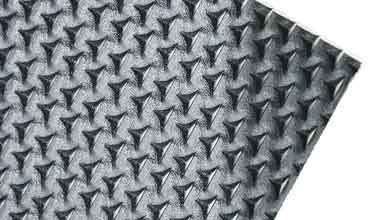
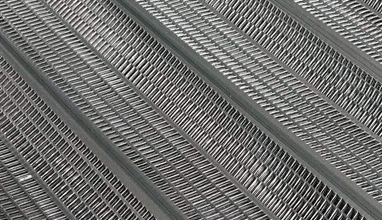
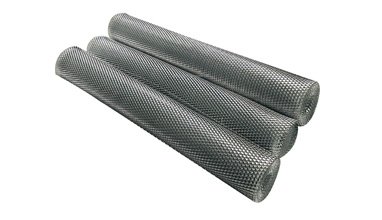
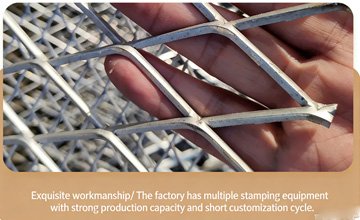
Expanded metal is manufactured by slitting and stretching a solid metal sheet to form interconnected openings, usually in a diamond pattern. Unlike conventional welded wire mesh, its strands and bonds are formed from the original metal sheet rather than assembled from separate intersecting wires.
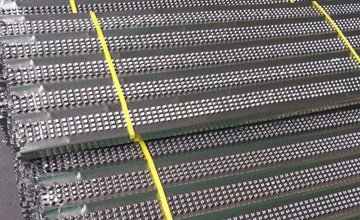
Common materials include carbon steel, galvanized steel, aluminum alloys, stainless steel 304, and stainless steel 316. Raised and flattened expanded metal are available in different specifications for industrial and architectural purposes.
This guide explains how to select expanded metal for projects in Saskatoon, including local supplier options, typical sheet specifications, cold-weather considerations, agricultural and industrial applications, Canadian construction requirements, custom fabrication, pricing factors, and importing from China.
For additional product information, visit the ANPING METAL MESH Product Center.
What Is Expanded Metal and How Is It Used in Saskatoon?
Expanded metal is an open-mesh metal product manufactured through a slitting and stretching process.
The finished sheet contains continuous metal strands forming a repeating pattern of openings.
Depending on the material and product specifications, expanded metal can be cut, formed, framed, or incorporated into larger fabricated assemblies.
In Saskatoon, expanded metal may be considered for several applications:
Agricultural machinery and equipment guards.
Industrial safety enclosures.
Protective screens and partitions.
Trailer and utility vehicle components.
Fabricated gates and fencing.
Architectural facade screens.
Equipment ventilation covers.
Specialized construction lath.
Engineered grating and access structures.
Not all expanded metal products are suitable for every application.
A decorative aluminum screen, a machinery guard, and a structural grating panel may require different dimensions, material properties, fabrication methods, and performance verification.
Why Saskatoon's Climate Matters for Expanded Metal Selection
Saskatoon experiences cold winters, snowfall, seasonal freeze-thaw conditions, and substantial temperature variation throughout the year.
These conditions can affect exposed metal components and the supporting structures to which they are attached.
The City of Saskatoon also uses salt, sand, and other de-icing materials during winter road maintenance.
Metal installations located near roads, parking areas, and equipment exposed to de-icing chemicals may therefore experience different corrosion conditions from sheltered indoor installations.
Cold-Temperature Material Performance
Not every metal grade performs identically at low temperatures.
Material selection should consider the required toughness, mechanical properties, expected loads, and applicable specifications.
For critical industrial or structural applications, the engineer should review the material grade and relevant temperature-dependent performance requirements.
Snow and Ice Exposure
Exterior expanded metal screens and framed assemblies may be exposed to snow accumulation, ice formation, and repeated melting and freezing.
The design should account for drainage, attachment details, maintenance access, and the applicable structural loads.
Road Salt and Corrosion
Steel exposed to moisture and chloride-containing de-icing materials can experience accelerated corrosion.
Appropriate galvanizing, coating systems, or corrosion-resistant alloys may be required.
Thermal Expansion
Metal panels expand and contract as temperatures change.
Large architectural panels should incorporate suitable movement allowances and attachment details.
The correct requirements depend on material, size, installation conditions, and engineering design.
Expanded Metal Materials for Saskatoon Applications
Selecting the appropriate metal is one of the most important purchasing decisions.
The following table compares commonly used materials and their potential applications.
| Material | Main Characteristics | Potential Saskatoon Applications |
|---|---|---|
| Carbon Steel | Practical fabrication and mechanical properties; may require coating | Machinery guards, industrial partitions |
| Hot-Dip Galvanized Steel | Zinc coating improves atmospheric corrosion resistance | Outdoor fencing, farm equipment guards |
| Aluminum Alloy | Relatively low weight and decorative finishing options | Architectural screens, ceilings |
| Stainless Steel 304 | General corrosion resistance | Equipment screens, interior and industrial uses |
| Stainless Steel 316 | Improved resistance to selected chloride environments | Salt-exposed and specialized industrial areas |
The most suitable material depends on the actual operating conditions rather than location alone.
1. Carbon Steel Expanded Metal
Carbon steel expanded metal is commonly used in general industrial fabrication.
It can be incorporated into machinery guards, protective equipment covers, warehouse partitions, and metal enclosures.
Carbon steel offers practical fabrication characteristics, but uncoated steel may corrode when exposed to moisture.
For outdoor applications, painting, galvanizing, or another appropriate corrosion protection system may be required.
2. Hot-Dip Galvanized Expanded Metal
Hot-dip galvanized expanded metal incorporates a zinc coating to improve resistance to atmospheric corrosion.
It may be suitable for selected agricultural, industrial, and outdoor applications in Saskatchewan.
Potential applications include:
Agricultural equipment guards.
Outdoor partitions.
Protective fence panels.
Warehouse and service-yard enclosures.
Suitable trailer components.
General outdoor fabrication.
The required coating specification depends on exposure, design life, and maintenance requirements.
Hot-dip galvanizing and electro-galvanizing are different processes and should not be treated as equivalent.
3. Aluminum Expanded Metal
Aluminum expanded metal is often considered for architectural and decorative applications because of its relatively low density.
It can be produced in different alloy grades, opening patterns, and surface finishes.
Typical applications include:
Decorative building screens.
Exterior sunshades.
Interior partitions.
Ceiling systems.
Ventilation covers.
Architectural facade components.
Aluminum forms a natural oxide layer and can provide useful corrosion resistance in many environments.
However, it is not immune to all corrosion, and the selected alloy and finish should match the exposure conditions.
For architectural projects, designers must also consider wind loads, panel deflection, thermal movement, and supporting frames.
4. Stainless Steel 304 Expanded Metal
Stainless steel 304 provides good general corrosion resistance and may be used in suitable industrial, decorative, and protective applications.
It can be considered for equipment guards, protective screens, and selected indoor or outdoor installations.
The appropriate finish and maintenance requirements depend on the operating environment.
5. Stainless Steel 316 Expanded Metal
Stainless steel 316 generally provides improved resistance to chloride-related corrosion compared with stainless steel 304.
It may be considered where exposure to road salts, industrial chemicals, or other demanding conditions justifies the additional material cost.
However, stainless steel 316 is not completely corrosion-proof.
Material selection should be based on the actual environment, mechanical requirements, fabrication details, and maintenance plan.
Standard Expanded Metal Sizes and Specifications
Expanded metal is supplied in different metric and imperial formats.
The correct specifications depend on the material grade, opening geometry, original sheet thickness, and application.
Common Expanded Metal Sheet Sizes
| Nominal Size | Approximate Metric Size | Potential Applications |
|---|---|---|
| 2 × 4 ft | 610 × 1220 mm | Small fabricated components |
| 3 × 6 ft | 914 × 1829 mm | Protective screens |
| 4 × 8 ft | 1220 × 2440 mm | General fabrication |
| 4 × 10 ft | 1220 × 3050 mm | Larger industrial panels |
| 1000 × 2000 mm | 1000 × 2000 mm | Metric sheet fabrication |
| 1250 × 2500 mm | 1250 × 2500 mm | Architectural panels |
| Custom Dimensions | According to drawings | Project-specific applications |
These are commonly encountered dimensional formats, not confirmed stock specifications from every supplier.
A true 4 × 8 ft sheet measures approximately 1219 × 2438 mm. The 1220 × 2440 mm format is a rounded commercial equivalent.
Where precise dimensions are important, buyers should confirm the finished size and cutting tolerance.
SWD — Short Way of Diamond
SWD describes the short-way dimension of the repeating diamond pattern.
It is distinct from the clear opening width.
LWD — Long Way of Diamond
LWD describes the long-way dimension of the diamond pattern.
Together with SWD, it identifies the main pattern geometry.
SWO and LWO — Clear Opening Dimensions
SWO and LWO refer to the short-way and long-way clear openings.
They are important when selecting mesh for machinery guards, protective screens, ventilation, or applications requiring specific opening clearances.
Strand Width
Strand width is the width of the metal strips forming the expanded pattern.
It affects metal content, weight, open area, appearance, and mechanical characteristics.
Original Sheet Thickness
Original thickness refers to the thickness of the base metal before expansion.
For raised expanded metal, the overall finished thickness may differ from the original metal thickness.
Mesh Orientation
Expanded metal has directional geometry.
The required orientation may affect panel appearance, fabrication layout, framing, and installation.
For additional specifications, refer to our Expanded Metal Dimensions Chart.
Raised vs. Flattened Expanded Metal
Raised and flattened expanded metal differ in surface profile and processing.
| Feature | Raised Expanded Metal | Flattened Expanded Metal |
|---|---|---|
| Manufacturing | Slitting and stretching | Expansion followed by rolling |
| Surface Profile | Three-dimensional | Relatively flat |
| Appearance | Textured diamond mesh | Flatter mesh surface |
| Potential Applications | Industrial guards, selected grating | Screens, partitions, decoration |
| Dimensional Changes | Based on expanded form | Rolling may alter geometry |
| Additional Processing | Standard expansion | Flattening operation |
Raised expanded metal is not automatically certified for anti-slip or structural uses.
Flattened expanded metal is not automatically free of sharp edges.
Buyers should select the required form according to the complete application.
Expanded Metal for Agricultural Equipment in Saskatchewan
Agricultural equipment is an important application category for expanded metal.
Suitable expanded metal can be incorporated into fabricated components that require mechanical protection while allowing visibility or ventilation.
Potential applications include:
Tractor and machinery guards.
Harvester equipment covers.
Protective ventilation panels.
Trailer side components.
Agricultural equipment enclosures.
Farm workshop partitions.
Selected storage equipment guards.
For agricultural machinery, exposed edges, vibration, impact, material thickness, and frame attachment should be considered.
The mesh must also be compatible with the intended operating conditions.
Machinery Guards
Expanded metal can provide a physical barrier around selected moving equipment.
The required opening dimensions and safety distances depend on applicable machine guarding requirements.
Trailer Components
Expanded metal may be incorporated into properly designed trailer sides, racks, and equipment enclosures.
Any structural or load-bearing component must be evaluated according to the relevant engineering and transportation requirements.
Outdoor Farm Installations
Where expanded metal is exposed to rain, snow, agricultural chemicals, or other environmental conditions, protective finishing may be necessary.
The coating should be selected according to the intended service environment.
Expanded Metal for Industrial Machinery Protection
Industrial facilities may use expanded metal for protective guards, equipment covers, partitions, and service enclosures.
The material can offer a combination of physical separation, visibility, and ventilation.
Common industrial uses include:
Equipment enclosures.
Protective machine guards.
Warehouse partitions.
Ventilation covers.
Maintenance-area screens.
Fabricated protective barriers.
For machinery guarding, the complete system should be designed according to applicable safety requirements.
Mesh opening size alone does not establish the required protection level.
The frame, fastening method, material properties, and distance from hazardous components must also be considered.
Expanded Metal for Construction and Stucco in Saskatoon
Specialized expanded metal lath can be used in certain plastering and stucco systems.
The product provides an open metal structure that supports appropriate plaster applications.
However, expanded metal lath differs from ordinary expanded metal sheets used for industrial protection or fencing.
It should not automatically be substituted for structural concrete reinforcement.
For exterior stucco applications, buyers should consider:
The specified lath type.
Corrosion protection.
Fastener compatibility.
Supporting substrate.
Moisture management.
Expansion and control joints.
Applicable construction requirements.
For additional technical information, see our Expanded Metal Lath for Stucco Guide.
Expanded Metal for Architectural Facades
Expanded metal is used in architectural projects as a decorative or functional screen.
Aluminum expanded metal may be considered for building facades, sunshades, and exterior visual screening.
Potential applications include:
Commercial office buildings.
Parking structures.
Decorative building envelopes.
Architectural feature walls.
Sunshade panels.
Ventilation screens.
For Saskatoon projects, designers should evaluate the complete assembly according to applicable wind loads, snow and ice exposure, supporting frames, thermal movement, and coating requirements.
Expanded metal facade performance depends on the entire installation rather than the sheet alone.
For further design considerations, read our Expanded Metal Mesh Facade Guide.
Expanded Metal for Fencing and Property Barriers
Expanded metal can be fabricated into fences, gates, privacy screens, and protective barriers.
The material and geometry should be selected according to the intended use.
Important considerations include:
Desired visibility.
Required mesh opening.
Frame and post design.
Material thickness.
Corrosion exposure.
Fastening methods.
Applicable local requirements.
Where expanded metal is used for security, the complete assembly should be evaluated rather than relying solely on the mesh thickness.
Where to Buy Expanded Metal in Saskatoon
Buyers in Saskatoon can contact local metal suppliers or metal fabrication businesses for standard or cut-to-size expanded metal products.
Local sourcing may be particularly suitable for smaller orders, urgent maintenance work, or projects where physical inspection is important.
SteelMet Supply
SteelMet Supply is a Saskatoon metal supplier listing expanded metal among its available product categories.
Its published material list includes aluminum expanded metal and various raised and flattened steel expanded metal specifications.
Examples listed by the supplier include:
1/2-inch aluminum expanded metal.
3/16-inch flattened expanded metal.
1/4-inch flattened expanded metal.
1/2-inch flattened expanded metal.
3/4-inch flattened expanded metal.
Several raised expanded metal options.
These are examples from the supplier's published product range, not confirmed real-time inventory.
Buyers should contact the business for exact dimensions, material grades, price, and stock availability.
Supplier reference: SteelMet Supply – Metal Supply.
Shear Fabrication Ltd.
Shear Fabrication is a Saskatoon-based metal fabrication and material supply business.
Its published material information identifies expanded metal as one of its products.
The company also describes raised and flat expanded metal options and custom cutting services.
This type of supplier may be worth contacting when local cutting or fabrication is required.
Buyers should confirm the available metal grades, sizes, stock, and processing capabilities directly.
Supplier reference: Shear Fabrication – Material Sales.
Local Purchase vs. Direct Import
For small quantities of commonly available expanded metal, purchasing locally may be more convenient.
For larger orders or specialized mesh dimensions, international sourcing may be worth evaluating.
The correct comparison should include the full delivered cost and equivalent product specifications.
Buying Expanded Metal from China for Saskatoon Projects
International sourcing may be considered when the required quantity, specifications, or customization justify import logistics.
Potential purchasing requirements include:
Specific metal grades.
Custom diamond dimensions.
Non-standard strand widths.
Larger production quantities.
Surface finishing.
Custom cutting.
Project-specific packaging.
However, direct importing may not be economical for every order.
A small residential or repair project may be better served by a local supplier.
For wholesale distributors, industrial contractors, or larger fabrication projects, comparing international quotations may provide additional purchasing options.
Canada Import Requirements for Expanded Metal
Commercial importers in Canada must consider customs classification, valuation, duties, taxes, and import documentation.
The Canada Border Services Agency (CBSA) provides official guidance for importing commercial goods.
Importers should identify the correct tariff classification and determine whether any duties, surtaxes, trade measures, or product-specific requirements apply.
Certain steel and aluminum products originating in China are covered by Canada's China Surtax Order.
However, buyers should not assume that every expanded metal product is subject to the same tariff treatment.
The exact classification, material, origin, and applicable rules must be checked before calculating import costs.
For official guidance, consult the CBSA Guide to Importing Commercial Goods.
Shipping Expanded Metal from China to Saskatoon
Saskatoon is an inland Canadian city.
International expanded metal shipments may travel by ocean freight to a suitable Canadian gateway, followed by rail or road transport to Saskatchewan.
The appropriate route depends on the Chinese loading port, cargo dimensions, destination arrangements, carrier schedules, and customs requirements.
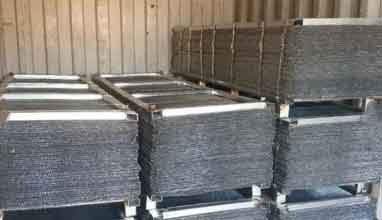
Sea Freight for Larger Orders
Sea freight may be considered for larger sheet or panel shipments.
The loading plan depends on the sheet dimensions, bundle sizes, material weight, and container capacity.
Rail or Road Transportation
After arrival at the relevant Canadian gateway, inland transportation may be arranged toward Saskatoon.
The shipment route and transfer arrangements should be confirmed with a freight forwarder.
Smaller Shipments
For selected smaller or urgent products, alternative shipping options may be available.
However, large metal sheets may be subject to dimensional and weight restrictions.
Transit Time
Production lead time, ocean transportation, customs clearance, and inland delivery should be estimated separately.
There is no universal delivery time applicable to all orders from China to Saskatoon.
EXW, FOB and CIF Quotations
International suppliers may quote expanded metal using different trade terms.
EXW — Ex Works
The seller makes the goods available at the agreed location, with subsequent responsibilities allocated under the agreed terms.
FOB — Free on Board
FOB applies to suitable sea shipments and identifies the named loading port.
For example:
FOB Tianjin, China — Incoterms 2020.
CIF — Cost, Insurance and Freight
CIF includes agreed freight and insurance to a named destination seaport.
However, it does not automatically include customs clearance, duties, taxes, or onward delivery to Saskatoon.
For projects requiring delivered pricing to an inland destination, the buyer and supplier should clearly define the appropriate delivery arrangement.
How to Calculate the Total Landed Cost
An international purchasing decision should consider more than the factory price.
A simplified cost calculation is:
Total Landed Cost = Product Value + Applicable Freight and Insurance + Import Duties and Taxes + Clearance and Handling + Inland Delivery
Avoid counting any charge twice if it is already included in the quoted trade term.
| Cost Component | Description |
|---|---|
| Product Value | Expanded metal sheets or panels |
| Export Packaging | Bundles, pallets or crates |
| International Freight | Ocean or other transportation |
| Cargo Insurance | Insurance where arranged |
| Import Duties | Applicable customs tariff |
| Additional Trade Measures | Surtax or other measures where applicable |
| Import Taxes | Applicable Canadian taxes |
| Customs Clearance | Broker and declaration costs |
| Inland Transportation | Delivery to Saskatoon |
| Final Handling | Local unloading and handling |
The correct cost estimate should be prepared using the actual product classification, shipment characteristics, and agreed transportation arrangements.
Canadian Building Code and Project Compliance
For construction and architectural applications, product compliance must be evaluated according to the relevant project requirements.
Saskatchewan has adopted the National Building Code of Canada and other national construction codes through provincial regulations.
The City of Saskatoon administers applicable building standards and permitting processes.
However, the presence of an expanded metal product in a construction project does not automatically mean it meets all relevant building code requirements.
Compliance may depend on:
Material grade.
Structural performance.
Fire-related requirements.
Support and attachment design.
Corrosion protection.
Wind and snow loads.
Accessibility and safety requirements.
Engineering drawings.
Required test reports.
For architectural facades, walkway systems, protective barriers, and other safety-sensitive applications, the complete assembly should be reviewed by qualified professionals.
Official references:
Government of Saskatchewan – National Construction Codes
City of Saskatoon – Building Standards
What Affects Expanded Metal Prices in Saskatoon?
Expanded metal prices depend on product specifications, processing requirements, supplier arrangements, and delivery costs.
The most important variables include:
Material Grade
Steel, aluminum, and stainless steel have different raw material and fabrication costs.
Original Sheet Thickness
Thickness affects material consumption and manufacturing requirements.
Diamond Opening Geometry
SWD, LWD, and strand width influence the finished mesh weight and appearance.
Raised or Flattened Form
Flattened expanded metal requires an additional rolling operation.
Surface Finish
Galvanizing, powder coating, anodizing, and other finishes may increase processing costs.
Sheet Dimensions
Custom-cut dimensions may affect material waste and fabrication requirements.
Order Quantity
Larger orders may provide production or freight efficiencies, depending on the supplier.
Delivery Location
A factory-based quotation from China and a locally delivered Saskatoon quotation include different costs.
For meaningful price comparisons, buyers should request equivalent specifications and clearly defined delivery terms.
How to Choose the Right Expanded Metal for Saskatoon
The correct expanded metal product depends on its intended function.
Step 1: Define the Application
Determine whether the product is intended for agricultural machinery, industrial guarding, architecture, fencing, or another use.
Step 2: Select the Material
Choose the material grade according to mechanical requirements and expected corrosion exposure.
Step 3: Confirm the Mesh Pattern
Specify SWD, LWD, strand width, and actual clear openings where necessary.
Step 4: Select the Thickness
Choose the original metal thickness according to the required product characteristics and engineering specification.
Step 5: Choose Raised or Flattened
Select the surface profile according to fabrication, appearance, and functional requirements.
Step 6: Confirm the Sheet Size
Provide the required length, width, and dimensional tolerances.
Step 7: Specify the Coating
Select appropriate corrosion protection or decorative finishing.
Step 8: Confirm Documentation
For safety-sensitive applications, identify the material documents, engineering information, and testing required.
Step 9: Calculate Total Costs
Compare local purchasing costs against the complete imported landed cost where relevant.
Expanded Metal RFQ Checklist for Saskatoon Buyers
A complete request for quotation should contain the information needed to identify the product.
| Required Information | Example |
|---|---|
| Product Type | Raised / Flattened / Heavy Duty / Decorative |
| Material | Carbon Steel / Galvanized Steel / Aluminum / Stainless Steel |
| Material Grade | Required alloy or steel grade |
| Original Sheet Thickness | Required thickness or gauge |
| SWD | Short Way of Diamond |
| LWD | Long Way of Diamond |
| Strand Width | Required dimension |
| Clear Opening | SWO / LWO where necessary |
| Sheet Dimensions | Width × Length |
| Mesh Orientation | According to drawings |
| Surface Finish | Mill / Galvanized / Powder Coated |
| Application | Agriculture / Industrial / Facade / Fencing |
| Quantity | Number of sheets or total area |
| Destination | Saskatoon, Saskatchewan, Canada |
| Required Documents | Material certificates or test reports as specified |
| Trade Terms | EXW / FOB / Other agreed arrangement |
| Technical Drawings | PDF / CAD / Reference Photos |
For custom fabrication, buyers should also provide edge details, cut tolerances, frame requirements, and installation drawings.
Frequently Asked Questions About Expanded Metal in Saskatoon
1. Where can I buy expanded metal in Saskatoon?
Saskatoon metal suppliers such as SteelMet Supply and Shear Fabrication list expanded metal among their product offerings. Buyers should contact the businesses directly to confirm stock, sizes, materials, and pricing.
2. Is expanded metal suitable for Saskatoon's cold winters?
Expanded metal may be suitable for cold-weather applications when the material grade, coating, supporting structure, and installation are appropriately specified. Performance should not be assumed solely from the product type.
3. What is the difference between raised and flattened expanded metal?
Raised expanded metal retains the three-dimensional structure formed during expansion. Flattened expanded metal undergoes rolling to create a flatter profile.
4. Which material is suitable for outdoor expanded metal applications?
Appropriately galvanized steel, suitable aluminum alloys, and selected stainless steel grades may be considered. The correct material depends on the specific exposure conditions.
5. Is galvanized expanded metal suitable for farm equipment?
Galvanized expanded metal may be suitable for certain farm equipment guards and outdoor agricultural components. The required material properties and coating should match the application.
6. Can expanded metal be used for grain-handling equipment?
Expanded metal may be used in suitable protective or equipment-screening components. Opening size, mechanical strength, contamination risks, and machinery safety requirements must be evaluated.
7. Can expanded metal be used for trailer flooring?
Only appropriately specified and engineered products should be used for load-bearing trailer flooring. Ordinary expanded metal sheets should not be assumed to have the required capacity.
8. Can expanded metal be used as a security screen?
Expanded metal can form part of a protective screen assembly. Security performance depends on the mesh, frame, fasteners, installation, and any required testing.
9. Can expanded metal prevent insects from entering buildings?
Conventional expanded metal often has openings too large for fine insect exclusion. A suitable insect-screen mesh or combined protective assembly should be used where necessary.
10. What is a common expanded metal sheet size?
The 4 × 8 ft format is commonly used in metal fabrication, but local suppliers may offer other sizes. Exact availability should be confirmed.
11. Can expanded metal be cut to custom dimensions?
Custom cutting may be available depending on supplier capabilities and product specifications. Local fabricators may also offer cutting services.
12. What expanded metal is appropriate for architectural facades?
Suitable aluminum and steel expanded metal panels may be considered. The complete facade design must account for structural loads, corrosion, fire requirements, and installation details.
13. Can expanded metal be used for stucco and plastering?
Specialized expanded metal lath is used in suitable stucco and plaster systems. It should not automatically replace structural concrete reinforcement.
14. Does expanded metal require winter maintenance?
Outdoor installations may require cleaning and inspection, particularly where salt, moisture, coating damage, or heavy debris are present.
15. Does expanded metal meet Canadian building codes?
Compliance depends on the actual product, application, installation, and applicable building requirements. No general expanded metal product should be considered automatically code-compliant.
16. Can expanded metal be imported from China to Saskatoon?
Yes, subject to Canadian import requirements and suitable shipping arrangements. Buyers should confirm classification, applicable duties and surtaxes, customs documentation, and inland transportation.
17. How long does shipping from China to Saskatoon take?
Transit time depends on production, departure port, shipping route, customs clearance, and inland transport. A current shipment-specific estimate is required.
18. What affects expanded metal pricing in Saskatoon?
Material grade, thickness, mesh dimensions, surface finish, cutting requirements, quantity, and delivery arrangements all influence price.
19. Can expanded metal be supplied with a custom powder-coated finish?
Suitable products may be powder coated according to the required material and coating system. Color and performance requirements should be agreed upon before production.
20. What information should I provide for a quotation?
Provide the material, thickness, SWD, LWD, strand width, sheet dimensions, surface finish, application, quantity, destination, and any required technical documentation.
Conclusion: Selecting Expanded Metal for Saskatoon Projects
Expanded metal can be used in a wide range of Saskatchewan applications, including agricultural machinery protection, industrial equipment guards, fabricated fencing, architectural screens, and specialized construction products.
Saskatoon's climate introduces practical considerations such as cold-weather material performance, snow exposure, road salts, corrosion protection, and thermal movement.
The correct product should be selected using the complete technical specification rather than general claims about strength or durability.
For smaller orders, local suppliers may offer practical purchasing and fabrication arrangements.
For larger quantities or specialized requirements, international sourcing may be worth considering after evaluating customs obligations, transportation, and the full delivered cost.
ANPING METAL MESH provides expanded metal product information and supports specification-based enquiries for international buyers.
Request an Expanded Metal Quotation for Saskatoon
Looking for expanded metal sheets for agricultural equipment, industrial guards, fabricated fencing, architectural screens, or wholesale distribution in Saskatoon?
Send us your required material, original sheet thickness, SWD, LWD, strand width, sheet dimensions, surface finish, quantity, and delivery destination.
For custom projects, technical drawings and reference photographs can help clarify your requirements.
Please also indicate whether you have an appointed freight forwarder or customs broker in Canada and which delivery arrangements you prefer.
Carbon Steel Expanded Metal | Galvanized Mesh | Aluminum Expanded Metal | Stainless Steel Mesh | Raised and Flattened Sheets | Custom Specifications | B2B Procurement
Visit our Expanded Metal Products or Contact ANPING METAL MESH to discuss your requirements and request a quotation.
Need help choosing a metal mesh?
Share your material, dimensions, intended use and required quantity. We can review the details for a quotation.