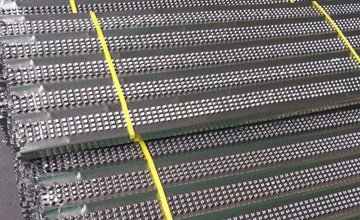
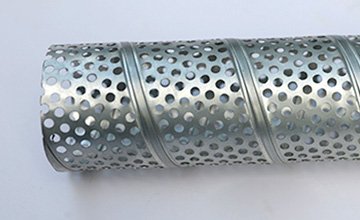
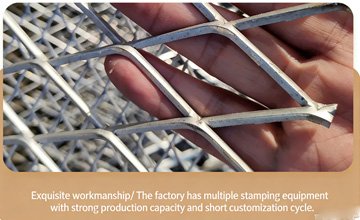
Compare expanded metal prices per sheet and m², including steel, aluminum and stainless steel. Explore specifications, cost factors and wholesale buying tips.
Expanded Metal Price 2026: Global Cost Overview
Expanded metal prices depend on material grade, original sheet thickness, diamond opening dimensions, strand width, surface finish, order quantity, and delivery terms.
For international buyers, expanded metal is commonly priced per square meter (USD/m²), per sheet, or occasionally by weight. However, a price cannot be compared accurately without confirming the complete product specifications.
Expanded metal is manufactured by slitting and stretching a solid metal sheet to form a continuous network of interconnected openings. Unlike welded wire mesh, expanded metal does not require separate wires to be joined at their intersections.
Common materials include carbon steel, galvanized steel, aluminum alloys, stainless steel 304, and stainless steel 316.
Expanded metal is used in architectural facades, security panels, industrial machinery guards, ventilation screens, construction lath, fencing, and appropriately engineered walkways.
This guide explains how expanded metal prices are calculated, provides historical pricing examples, and helps international importers, contractors, distributors, and industrial buyers prepare accurate purchasing specifications.
For product options and technical information, visit the Expanded Metal Product Center.
Expanded Metal Price List: Historical USD/m² References
Expanded metal prices are influenced by raw material costs, production requirements, and commercial conditions.
The following table preserves price examples from an earlier 2025 reference document.
These figures have not been independently verified as completed transactions or current 2026 supplier quotations.
Historical 2025 Expanded Metal Price Examples
| Product Type | Material | Thickness Range | Historical Reference (USD/m²) |
|---|---|---|---|
| Expanded Metal Lath | Galvanized Steel | 0.3–0.5 mm | $3.20–$6.80 |
| Standard Expanded Mesh | Galvanized Steel | 0.8–1.5 mm | $4.30–$9.50 |
| Flattened Expanded Mesh | Galvanized Steel / Aluminum | 1.0–2.0 mm | $5.50–$17.50 |
| Aluminum Expanded Mesh | Aluminum 3003 / 1060 | 0.8–2.0 mm | $7.80–$16.80 |
| Heavy-Duty Expanded Metal | Carbon Steel | 3.0–6.0 mm | $12.50–$26.50 |
| Stainless Steel Expanded Mesh | SS304 | 1.0–2.0 mm | $14.80–$31.20 |
| Stainless Steel Expanded Mesh | SS316 | 1.0–2.0 mm | $18.50–$39.50 |
| Decorative Facade Panels | Powder-Coated Aluminum | 1.5–2.5 mm | $9.80–$23.50 |
| Small Hole Expanded Mesh | Aluminum / Stainless Steel | 0.5–1.2 mm | $8.50–$21.50 |
Important Pricing Disclaimer: These are historical, unverified examples from a 2025 draft, not confirmed 2026 prices or binding offers from ANPING METAL MESH.
The original table does not identify complete SWD, LWD, strand width, finished sheet weight, coating specification, order quantity, or a named delivery location. The quoted categories may therefore represent different product configurations and should not be compared as equivalent specifications.
A current quotation should be obtained for the actual material, dimensions, quantity, and delivery requirements.
Why Expanded Metal Prices Cannot Be Compared by Thickness Alone
Two expanded metal sheets can have the same material, thickness, and overall dimensions but different prices.
This is because expanded metal weight and manufacturing characteristics also depend on the diamond pattern and strand dimensions.
For example, a sheet with a relatively small opening and wide strands may contain a different amount of metal from a sheet with larger openings and narrower strands.
The finished cost is also affected by the expanding process, additional fabrication, finishing, packaging, and commercial terms.
For accurate purchasing decisions, buyers should compare products based on complete technical specifications.
Expanded Metal Price by Material Type
Different metal grades have different costs, mechanical characteristics, corrosion resistance, and applications.
Material selection should reflect the project requirements rather than the initial purchase price alone.
1. Carbon Steel Expanded Metal Price
Carbon steel expanded metal is commonly used in industrial manufacturing, fabrication, protective barriers, equipment enclosures, and suitable grating applications.
It offers practical mechanical properties and can be processed through cutting, forming, and welding where appropriate.
Typical Applications:
Industrial machine guards.
Warehouse partitions.
Equipment covers.
Protective enclosures.
General metal fabrication.
Selected heavy-duty industrial structures.
Uncoated carbon steel may require a protective finish for outdoor applications.
Its price is influenced by steel grade, original sheet thickness, diamond pattern, order quantity, and finishing requirements.
2. Galvanized Expanded Metal Price
Galvanized expanded metal is steel expanded metal protected by a zinc coating.
Galvanizing helps improve resistance to atmospheric corrosion in suitable environments.
Typical Applications:
Outdoor industrial fencing.
Warehouse enclosures.
Protective screens.
Construction applications.
Agricultural equipment protection.
General outdoor fabrication.
The price depends on both the steel substrate and the required zinc coating.
Hot-dip galvanizing and electro-galvanizing involve different coating processes.
Buyers should confirm the coating specification and manufacturing sequence rather than assuming all galvanized products provide identical protection.
3. Aluminum Expanded Metal Price
Aluminum expanded metal is commonly used in architectural and decorative applications because of its relatively low weight and finishing possibilities.
Common alloy options include aluminum 3003 and 1060, depending on manufacturing and project requirements.
Typical Applications:
Building facade panels.
Architectural sunshades.
Decorative ceilings.
Interior partitions.
Ventilation grilles.
Commercial building screens.
Aluminum expanded metal pricing depends on alloy grade, thickness, opening pattern, strand width, sheet dimensions, and surface finish.
For facade projects, buyers should calculate the complete system cost, including frames, coatings, fasteners, and installation.
4. Stainless Steel 304 Expanded Metal Price
Stainless steel 304 expanded metal is used in projects requiring general corrosion resistance.
It can be considered for selected industrial screens, equipment guards, architectural panels, and manufacturing applications.
Stainless steel generally involves different raw material and fabrication costs from ordinary carbon steel.
The final quotation should specify the exact material grade and product dimensions.
5. Stainless Steel 316 Expanded Metal Price
Stainless steel 316 generally provides improved resistance to chloride-related corrosion compared with stainless steel 304.
It may be appropriate for selected coastal environments, marine-related facilities, and industrial projects involving more demanding exposure conditions.
However, stainless steel 316 is not permanently corrosion-proof.
Its suitability depends on the environment, surface condition, fabrication method, and maintenance requirements.
For projects involving saltwater or chemical exposure, buyers should confirm material compatibility before ordering.
Expanded Metal Price Per Square Meter vs. Per Sheet
International suppliers may use different pricing units.
The most common methods include price per square meter, price per sheet, and price per kilogram.
Understanding these units helps buyers compare quotations accurately.
Expanded Metal Price Per Square Meter
For products quoted by square meter:
Product Cost = Total Sheet Area × Price Per m²
For a rectangular panel, the area is calculated using the finished sheet dimensions.
Sheet Area (m²) = Length (m) × Width (m)
For example, a nominal 1220 × 2440 mm expanded metal sheet has an area of approximately 2.98 m².
If the hypothetical quotation is USD 10.00/m²:
2.98 m² × USD 10.00 = approximately USD 29.80 per sheet.
This is a calculation example, not a current supplier price.
Expanded Metal Price Per Sheet
When suppliers provide prices per sheet, the quotation should clearly specify the finished dimensions.
A 1000 × 2000 mm sheet and a 1220 × 2440 mm sheet have different areas and should not be compared using the sheet price alone.
For accurate comparison:
Price Per m² = Price Per Sheet ÷ Sheet Area
For example, a hypothetical 1220 × 2440 mm panel priced at USD 30.00 would cost approximately USD 10.08/m².
Expanded Metal Price Per Kilogram
Some industrial orders are quoted by weight.
This method may be useful for comparing certain bulk metal products.
However, the finished mesh weight must be confirmed.
The weight depends on material density, sheet dimensions, strand geometry, opening pattern, and finishing.
For shipping and project planning, request an actual or verified weight specification instead of estimating weight from sheet thickness alone.
For related background information, see our Expanded Metal Mesh Weight Calculator Guide.
Main Factors Affecting Expanded Metal Prices
1. Raw Material Cost
Steel, aluminum, and stainless steel raw material costs fluctuate over time.
These fluctuations may affect supplier quotations.
Buyers should confirm the quotation validity period before placing large orders.
2. Original Sheet Thickness
Sheet thickness affects manufacturing characteristics and material consumption.
Thicker material may increase weight and production costs.
However, thickness must be evaluated together with strand width and opening geometry.
3. Diamond Opening Dimensions
Expanded metal patterns are commonly specified using:
SWD – Short Way of Diamond.
LWD – Long Way of Diamond.
Strand width.
Original sheet thickness.
These parameters influence appearance, metal distribution, open area, and manufacturing requirements.
4. Strand Width
Strand width refers to the width of the interconnected metal strips.
Different strand widths can create substantial differences in mesh weight and performance.
A quotation that specifies only material and sheet thickness is therefore incomplete.
5. Surface Treatment
Common surface treatments include:
Mill finish.
Hot-dip galvanizing.
Powder coating.
Anodizing for suitable aluminum alloys.
Brushed or polished stainless steel finishes.
Different finishes involve different processing requirements.
The finishing cost depends on the material, coating specification, quantity, and surface preparation.
6. Raised vs. Flattened Expanded Metal
Raised expanded metal retains the three-dimensional shape created during expansion.
Flattened expanded metal undergoes additional rolling to create a flatter surface.
Flattening adds processing requirements, which can affect price.
The actual price difference should be confirmed rather than assuming a universal percentage.
7. Sheet Dimensions
Common sheet sizes and customized dimensions may have different production costs.
Custom cutting can affect material waste, processing requirements, and packaging.
A suitable sheet layout can sometimes reduce the total quantity required for a project.
8. Order Quantity
Larger purchasing quantities may improve manufacturing and shipping efficiency.
However, bulk discounts depend on the actual specification, production schedule, and commercial agreement.
There is no universal discount rate applicable to every expanded metal order.
9. Packaging and International Shipping
Expanded metal mesh may be heavy or occupy substantial cargo volume.
International freight depends on:
Sheet dimensions.
Product weight.
Packaging arrangement.
Total order quantity.
Departure and destination ports.
Shipping method.
Agreed delivery terms.
A reliable shipping quotation requires a verified packing plan.
Expanded Metal Sizes and Specifications That Affect Price
Expanded metal specifications are essential for obtaining accurate quotations.
Common Sheet Dimensions
| Sheet Dimensions | Approximate Metric Dimensions | Typical Use |
|---|---|---|
| 2 × 4 ft | 610 × 1220 mm | Small panels and fabrication |
| 4 × 8 ft | 1220 × 2440 mm | General industrial sheets |
| 4 × 10 ft | 1220 × 3050 mm | Larger fabrication panels |
| 1000 × 2000 mm | 1000 × 2000 mm | Industrial applications |
| 1250 × 2500 mm | 1250 × 2500 mm | Architectural panels |
| Custom Size | According to drawings | Project-specific applications |
These are dimensional examples rather than guaranteed stock specifications.
Actual availability depends on material, opening pattern, thickness, and manufacturing capability.
SWD and LWD
SWD and LWD describe the short and long directions of the diamond pattern.
For projects requiring precise opening clearance, buyers should also confirm the actual clear opening dimensions.
These may be identified as SWO and LWO.
Strand Width and Original Thickness
Strand width and original sheet thickness are important for determining the finished mesh characteristics.
Both should be provided when requesting technical quotations.
Raised or Flattened Form
Raised and flattened expanded metal have different surface profiles.
The required form should be confirmed before ordering.
For more detailed specifications, read our Expanded Metal Dimensions Chart.
Expanded Metal Prices by Application
Different applications require different product specifications.
The appropriate product should be selected according to performance requirements rather than choosing the lowest-priced mesh.
Construction and Plastering
Expanded metal lath is a specialized product used in suitable plaster and stucco systems.
It differs from standard expanded metal sheets used for industrial protection or architectural decoration.
The required lath type, coating, sheet dimensions, and installation method should follow the relevant construction specifications.
Read our Expanded Metal Lath for Stucco Guide for additional information.
Security Fencing and Screens
Expanded metal can be fabricated into selected security screens, barriers, and fence panels.
Common material options include galvanized steel and stainless steel.
The complete protection system must be evaluated according to mesh dimensions, frames, fixings, and installation details.
Mesh price alone does not represent the cost of a complete security system.
Architectural Facades
Aluminum expanded metal is commonly considered for decorative building facades.
These systems can provide visual screening, partial shading, ventilation, and distinctive geometric patterns.
The complete facade cost may include:
Expanded metal panels.
Powder coating or another finish.
Supporting frames.
Brackets and fasteners.
Cutting and fabrication.
Engineering design.
Installation and maintenance access.
For related technical information, see our Expanded Metal Mesh Facade Guide.
Industrial Machinery Protection
Expanded metal is used in selected equipment guards, ventilation covers, and protective enclosures.
The required specifications depend on opening dimensions, mechanical performance, safety distances, and frame design.
Machinery guarding applications should meet the applicable safety requirements.
Heavy-Duty Industrial Grating
Heavy-duty expanded metal can be used in appropriately engineered walkway, stair tread, and industrial platform systems.
Load-bearing suitability depends on material, opening geometry, strand dimensions, support spacing, and expected loads.
Ordinary expanded metal should not be substituted for specified structural grating without appropriate engineering evaluation.
Coastal and Marine-Related Applications
Coastal applications may require corrosion-resistant materials or protective finishes.
Stainless steel 316, suitable aluminum alloys, and properly protected steel systems may be considered depending on the environment.
Material selection should be based on the actual exposure conditions and service requirements.
How to Calculate the Total Cost of an Expanded Metal Order
The total product cost and the total imported cost are different.
International buyers should distinguish the quoted product value from transportation, insurance, customs, and inland delivery expenses.
Step 1: Calculate the Required Area
Determine the total finished area of expanded metal required.
For example, if a project requires 100 sheets measuring 1220 × 2440 mm:
100 sheets × approximately 2.98 m² = approximately 298 m².
If cutting, overlap, or fabrication waste is expected, include an appropriate allowance.
Step 2: Apply the Unit Price
If the hypothetical unit price is USD 10.00/m²:
298 m² × USD 10.00 = approximately USD 2,980.
This is an illustrative calculation only.
Actual product prices must be obtained from a current quotation.
Step 3: Add Fabrication and Finishing Costs
Custom fabrication may include:
Cutting.
Bending.
Framing.
Welding.
Powder coating.
Special packaging.
These operations may be included in the quoted product price or charged separately.
Step 4: Add International Freight and Insurance
The applicable transportation and insurance costs depend on the agreed Incoterm.
For imported goods, the product price alone may not represent the delivered cost.
Step 5: Include Import Duties and Taxes
Import duties, applicable taxes, port charges, and customs clearance costs vary according to the destination country and product classification.
Buyers should confirm the applicable requirements before shipment.
Step 6: Calculate Inland Delivery
If the final destination is a warehouse, industrial facility, or construction site, inland transportation should also be included.
A simplified calculation is:
Total Landed Cost = Product Value + Applicable Freight and Insurance + Import Duties and Taxes + Clearance and Handling + Inland Delivery
The components must be adjusted to avoid double-counting costs already included under the agreed trade term.
EXW, FOB and CIF Expanded Metal Prices
International quotations may use different trade terms.
Understanding these terms helps buyers compare offers accurately.
EXW – Ex Works
Under EXW, the seller makes the goods available at the agreed location.
The buyer generally assumes responsibility for transportation and related arrangements from that point, subject to the agreed Incoterms rules.
FOB – Free on Board
FOB is used for suitable sea shipments and identifies the named port of loading.
For example:
FOB Tianjin, China – Incoterms 2020
FOB includes responsibilities associated with delivering the goods on board the vessel at the agreed loading port.
FOB does not normally include international ocean freight to the destination.
CIF – Cost, Insurance and Freight
CIF includes the agreed cost, insurance, and freight to a named destination port under the relevant Incoterms rules.
For example:
CIF Karachi, Pakistan – Incoterms 2020
CIF does not automatically include destination import duties, customs clearance, or inland transportation.
Why “FOB Factory” Should Be Avoided
FOB refers to a named port of shipment rather than a factory location.
A factory-based quotation is more appropriately described using EXW when that term matches the actual agreement.
Buyers should request the named location or port together with the selected Incoterm.
How to Get a More Competitive Expanded Metal Price
Reducing purchasing costs should not require compromising essential specifications.
The following practices can help buyers compare offers more effectively.
1. Compare Identical Specifications
Make sure every supplier is quoting the same material grade, opening pattern, strand width, thickness, sheet dimensions, and finish.
2. Optimize Sheet Dimensions
Review panel layouts to reduce cutting waste.
A larger sheet may sometimes offer better project economics, but transportation and fabrication requirements must also be considered.
3. Choose Suitable Materials
Avoid selecting a higher-cost material when the project does not require its properties.
At the same time, do not substitute a lower-grade material for applications with strict corrosion or mechanical requirements.
4. Plan Bulk Quantities
Combining compatible requirements may improve production and logistics efficiency.
However, volume pricing should be confirmed by the supplier.
5. Evaluate Finishing Requirements
Confirm whether galvanizing, powder coating, or another finish is necessary for the intended environment.
Avoid unnecessary finishing costs while maintaining the required performance.
6. Calculate the Complete Landed Cost
Compare product value, packaging, international transportation, taxes, customs clearance, and inland delivery.
The lowest factory price may not always result in the lowest total purchasing cost.
Expanded Metal Quotation Checklist for International Buyers
A complete request for quotation helps suppliers understand the required specifications.
| Required Information | Example |
|---|---|
| Product Type | Raised / Flattened / Small Hole / Heavy Duty |
| Material | Carbon Steel / Galvanized Steel / Aluminum / Stainless Steel |
| Material Grade | Aluminum 3003 / SS304 / SS316 / Other |
| Original Sheet Thickness | Thickness in mm |
| Diamond Pattern | SWD × LWD |
| Strand Width | Required width in mm |
| Clear Opening | SWO × LWO where necessary |
| Sheet Dimensions | Length × Width |
| Surface Finish | Mill / Galvanized / Powder Coated |
| Quantity | Sheets or total m² |
| Application | Construction / Fencing / Facade / Industrial |
| Destination | Country and delivery port |
| Delivery Terms | EXW / FOB / CIF / Other |
| Documentation | Technical drawings and inspection requirements |
Buyers should also confirm the estimated product weight, packaging details, production lead time, and quotation validity.
For custom products, dimensioned drawings or reference samples are particularly useful.
Frequently Asked Questions About Expanded Metal Prices
1. How much does expanded metal cost per square meter?
The price depends on material grade, sheet thickness, diamond opening dimensions, strand width, surface finish, quantity, and delivery terms.
Historical price examples are provided above, but current pricing requires a specification-based supplier quotation.
2. What is the price of a 4 × 8 ft expanded metal sheet?
The price varies by product specification.
A nominal 1220 × 2440 mm sheet has an area of approximately 2.98 m².
To estimate the sheet price, multiply the quoted USD/m² price by the sheet area.
3. Which expanded metal material is the cheapest?
Lightweight carbon steel products may have a lower initial unit price than some aluminum or stainless steel alternatives.
However, opening dimensions, thickness, coating, and quantity can change the comparison.
The lowest initial price is not necessarily the lowest long-term cost.
4. Is galvanized expanded metal more expensive than carbon steel?
Galvanizing adds coating materials and processing requirements.
The final price difference depends on the base metal, zinc coating specification, manufacturing process, and order quantity.
5. Is flattened expanded metal more expensive than raised expanded metal?
Flattened expanded metal requires additional rolling or leveling.
This may increase manufacturing cost, but the actual difference varies by specification and production conditions.
6. How much does aluminum expanded metal cost?
Aluminum expanded metal prices depend on alloy grade, thickness, diamond dimensions, strand width, sheet size, and finishing requirements.
Architectural projects may also involve framing and installation costs.
7. Why does stainless steel expanded metal cost more?
Stainless steel contains alloying elements that affect raw material and processing costs.
Different grades, such as SS304 and SS316, have different compositions and performance characteristics.
The actual price difference should be confirmed for equivalent mesh specifications.
8. Are shipping costs included in expanded metal prices?
Not automatically.
Shipping responsibilities depend on the agreed trade term and named location.
An EXW quotation has a different supply scope from an FOB or CIF quotation.
9. Can expanded metal be manufactured in custom dimensions?
Depending on manufacturing feasibility, customized dimensions, diamond patterns, strand widths, thicknesses, and surface finishes may be available.
Technical drawings are recommended for custom projects.
10. What is the minimum order quantity for expanded metal?
There is no universal MOQ applicable to every product.
Minimum quantities depend on material, manufacturing method, stock availability, customization, and supplier policy.
11. Can I request samples before placing a bulk order?
Sample availability, charges, testing requirements, and international freight costs should be confirmed with the supplier.
Samples may be useful when appearance, opening precision, or finishing requirements are important.
12. How can I obtain an accurate expanded metal price quotation?
Provide the material grade, thickness, SWD, LWD, strand width, sheet size, surface finish, order quantity, application, and preferred delivery terms.
A complete specification helps suppliers prepare comparable quotations.
Conclusion: Understanding Expanded Metal Prices in 2026
Expanded metal prices depend on material, manufacturing specifications, surface treatment, quantity, and delivery requirements.
Carbon steel and galvanized steel are widely used for industrial and protective applications, aluminum is commonly considered for architectural projects, and stainless steel may be suitable for selected corrosion-sensitive environments.
For international buyers, the most important purchasing consideration is comparing complete product specifications rather than relying on general prices per sheet or per square meter.
Historical price tables can provide background information, but they should not replace current quotations.
Before placing an order, confirm the material, diamond pattern, strand dimensions, sheet size, finish, required quantity, commercial terms, and shipping arrangements.
ANPING METAL MESH provides expanded metal product information and supports project-based specification enquiries for international B2B buyers.
Request a Custom Expanded Metal Price Quotation
Looking for expanded metal for construction, security fencing, industrial machinery protection, architectural facades, or wholesale distribution?
Send us your required material, original sheet thickness, SWD, LWD, strand width, sheet dimensions, surface finish, order quantity, and destination.
Our team can review the specifications and discuss suitable product options and quotation arrangements.
Carbon Steel Expanded Metal | Galvanized Mesh | Aluminum Expanded Metal | Stainless Steel Mesh | Custom Panels | Bulk Supply
Visit our Expanded Metal Products or Contact ANPING METAL MESH to request a quotation.
Need help choosing a metal mesh?
Share your material, dimensions, intended use and required quantity. We can review the details for a quotation.