Learn about expanded metal panel types, materials, diamond opening dimensions, surface finishes and applications. Compare architectural facade panels, flattened mesh, heavy-duty steel panels and custo
What Are Expanded Metal Panels?
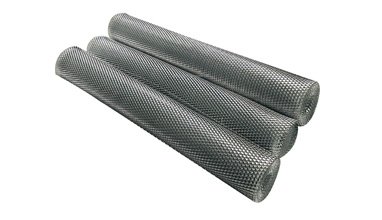
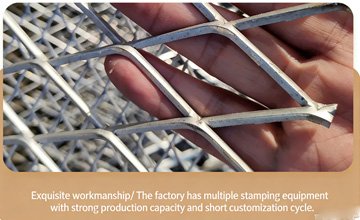
Expanded metal panels are metal sheets manufactured by slitting and stretching solid metal into a continuous pattern of interconnected openings. The openings are typically diamond-shaped, although specialized manufacturing methods can produce other decorative designs.
Unlike welded wire mesh, expanded metal is not assembled from separate intersecting wires. The strands and connecting bonds are formed from the original metal sheet.
Expanded metal panels are used in architectural facades, construction, industrial machinery protection, security screens, decorative partitions, ceiling systems, ventilation grilles, and selected heavy-duty industrial applications.
They can be manufactured from different metals, including aluminum alloys, carbon steel, galvanized steel, and stainless steel.
The main technical characteristics of expanded metal panels include:
Diamond opening dimensions.
Original metal sheet thickness.
Strand width.
Overall panel dimensions.
Raised or flattened surface profile.
Material grade.
Surface finish.
Open area percentage.
Mesh orientation.
Framing and installation requirements.
These characteristics influence the appearance, weight, corrosion resistance, fabrication requirements, and functional performance of the finished product.
For international buyers, the correct panel specification depends on its intended application rather than appearance alone.
ANPING METAL MESH provides metal mesh product information and supports specification-based enquiries for architectural, industrial, construction, and decorative applications.
You can explore related products through our Expanded Metal Product Center.
How Are Expanded Metal Panels Manufactured?
Expanded metal panels are produced through a manufacturing process that combines slitting and stretching.
The metal sheet passes through specialized equipment that forms interconnected openings while expanding the material.
The resulting product retains continuous metal strands and bonds.
1. Raw Material Selection
Manufacturing begins with selecting a suitable base metal.
Common materials include carbon steel, aluminum, stainless steel, and suitably galvanized steel.
The material grade should be selected according to the required mechanical properties, corrosion exposure, weight, and fabrication requirements.
2. Metal Slitting and Expansion
During the expanding process, the sheet is cut in a controlled staggered pattern and stretched to form openings.
The final geometry depends on the equipment, tooling, metal grade, and production settings.
Diamond openings are the most common expanded metal pattern.
3. Raised Expanded Metal Formation
Conventional expanding produces a textured surface with angled metal strands.
This is commonly called raised or standard expanded metal.
The finished mesh has a three-dimensional surface profile.
4. Flattening Process
Some raised expanded metal products pass through additional rolling equipment.
This creates flattened expanded metal with a relatively flat surface.
Flattening can change the mesh geometry and finished thickness, so raised and flattened products should be specified separately.
5. Cutting and Fabrication
Expanded metal sheets may be cut into specified panel dimensions.
Additional fabrication can include:
Edge trimming.
Bending.
Forming.
Framing.
Welding to supporting components.
Mechanical fastening preparation.
Other project-specific processing.
6. Surface Finishing
Finishing options depend on the base metal and application.
Examples include galvanizing for suitable steel products, powder coating, anodizing for compatible aluminum alloys, and selected stainless steel finishes.
Main Types of Expanded Metal Panels
Expanded metal panels are commonly categorized by their manufacturing form, opening geometry, material, and intended application.
1. Standard Raised Expanded Metal Panels
Standard raised expanded metal retains the three-dimensional surface produced during expansion.
The interconnected strands form angled surfaces around the diamond openings.
Main Characteristics:
Continuous metal construction.
Raised diamond pattern.
Different metal thicknesses.
Multiple opening dimensions.
Textured surface.
Suitable for general fabrication.
Typical Applications:
Equipment guards.
Industrial partitions.
Protective enclosures.
General metal fabrication.
Selected industrial grating systems.
Raised expanded metal can be useful where its surface texture and geometry meet the application's requirements.
However, its mechanical performance depends on the complete product specifications and support conditions.
2. Flattened Expanded Metal Panels
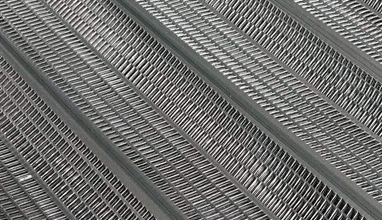
Flattened expanded metal is manufactured by rolling raised expanded metal to create a flatter surface.
The rolling process changes the surface profile and may also alter the dimensions of the finished product.
Main Characteristics:
Relatively flat surface.
Consistent decorative appearance.
Diamond-pattern openings.
Suitable for further fabrication.
Different material and finish options.
Typical Applications:
Decorative wall panels.
Interior partitions.
Ceiling systems.
Furniture components.
Display fixtures.
Equipment covers.
Flattened expanded metal is often considered for applications where a smooth visual appearance or integration into a flat panel assembly is important.
The cut edges may still require finishing or protection.
3. Architectural Expanded Metal Facade Panels
Architectural expanded metal panels are used in decorative building exteriors, sunshade systems, facade screens, and other architectural assemblies.
Aluminum is commonly considered because of its relatively low weight and decorative finishing options.
Main Characteristics:
Different diamond patterns.
Architectural surface finishes.
Various panel dimensions.
Decorative color options.
Potential for visual screening and shading.
Compatibility with suitable supporting frames.
Typical Applications:
Office buildings.
Shopping centers.
Parking structures.
Commercial facades.
Public buildings.
Architectural sunshade screens.
Facade panels must be selected as part of the complete building system.
Important engineering considerations include wind load, thermal movement, supporting structures, fire requirements, drainage, corrosion, and maintenance access.
For additional information, read our Expanded Metal Mesh Facade Guide.
4. Heavy-Duty Expanded Metal Panels
Heavy-duty expanded metal panels use specifications appropriate for industrial applications requiring greater mechanical capacity.
These products may involve thicker base sheets and wider strands.
Typical Applications:
Machinery guards.
Equipment access structures.
Industrial platforms.
Stair treads.
Selected grating systems.
Heavy-duty protective enclosures.
Not every thick expanded metal panel is suitable for load-bearing flooring.
For walkways, platforms, or stair treads, the required load capacity, support spacing, material properties, and installation arrangement must be evaluated.
5. Small Hole Expanded Metal Panels
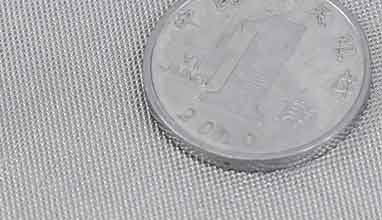
Small hole expanded metal panels have relatively fine interconnected openings.
They may be used for decorative, protective, screening, or ventilation applications.
Typical Applications:
Protective ventilation grilles.
Speaker covers.
Equipment screens.
Decorative panels.
Filter support elements.
Selected precision-fabricated components.
For filtration applications, the clear opening dimensions and process conditions must be verified.
Small hole expanded metal may serve as a support layer rather than the primary filtration medium.
6. Decorative Expanded Metal Panels
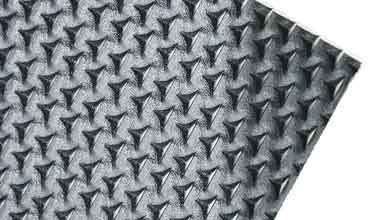
Decorative expanded metal panels can use different diamond proportions, panel orientations, surface finishes, and framing arrangements.
Certain specialized manufacturing methods can also create non-standard opening geometry.
Typical Applications:
Interior feature walls.
Architectural facade screens.
Commercial interiors.
Exhibition displays.
Decorative ceilings.
Retail partitions.
Architectural installations.
For custom decorative patterns, buyers should provide dimensioned drawings and reference photographs so the design can be evaluated for manufacturing feasibility.
Expanded Metal Panel Types and Specification Comparison
The following table provides illustrative panel specifications based on the product categories discussed in this guide.
| Panel Type | Material | Reference Thickness | Pattern | Finish | Typical Application |
|---|---|---|---|---|---|
| Architectural Facade | Aluminum 3003 | 1.5–2.5 mm | Diamond / Decorative | Powder Coated | Exterior Screens |
| Flattened Panel | Aluminum / Steel | 1.0–2.0 mm | Flattened Diamond | Mill / Suitable Coating | Interior Decoration |
| Heavy-Duty Panel | Carbon Steel | 3.0–6.0 mm | Industrial Diamond | Galvanized / Coated | Engineered Grating |
| Small Hole Panel | Aluminum / Stainless Steel | 0.8–1.2 mm | Fine Diamond | Mill / Selected Finish | Grilles and Screens |
| Decorative Panel | Aluminum Alloy | 1.2–2.0 mm | Custom Pattern | Color Coated | Architecture |
| Corrosion-Resistant Panel | SS304 / SS316 | 1.0–2.0 mm | Diamond | Brushed / Polished | Industrial / Coastal |
Specification Notice: These thickness ranges are reference examples, not verified stock specifications or guaranteed manufacturing limits. Actual availability depends on material grade, opening dimensions, strand width, panel size, and manufacturing capability.
Key Technical Specifications for Expanded Metal Panels
Accurate specifications are essential for obtaining suitable expanded metal products.
The most important dimensions include SWD, LWD, strand width, original sheet thickness, and overall panel size.
1. SWD – Short Way of Diamond
SWD describes the short-way dimension of the repeating expanded metal diamond pattern.
The measurement convention should be identified in the product drawing.
SWD should not automatically be interpreted as the clear opening width.
2. LWD – Long Way of Diamond
LWD describes the long-way dimension of the expanded metal pattern.
Together, SWD and LWD define the primary diamond geometry.
These dimensions influence the appearance and configuration of the mesh.
3. SWO and LWO – Clear Opening Dimensions
SWO means Short Way of Opening.
LWO means Long Way of Opening.
These dimensions describe the available clear opening in the mesh.
They are especially important for applications involving screening, access prevention, ventilation, and dimensional clearance.
4. Strand Width
Strand width refers to the width of the interconnected metal strips.
It affects metal content, appearance, rigidity, weight, and open area.
Two expanded metal panels with the same outside dimensions and opening pattern may have different characteristics if their strand widths differ.
5. Original Sheet Thickness
Original sheet thickness describes the thickness of the base metal before the expanding process.
For raised expanded metal, the overall finished thickness may differ from the original sheet thickness.
Buyers should confirm which thickness is being quoted.
6. Overall Panel Dimensions
Expanded metal panels can be supplied in different sizes.
Examples of commonly requested dimensions include:
| Panel Size | Approximate Metric Dimensions |
|---|---|
| 2 × 4 ft | 610 × 1220 mm |
| 4 × 8 ft | 1220 × 2440 mm |
| 4 × 10 ft | 1220 × 3050 mm |
| 1000 × 2000 mm | 1000 × 2000 mm |
| 1250 × 2500 mm | 1250 × 2500 mm |
| Custom Size | According to Drawing |
A 4 × 8 ft sheet measures approximately 1219 × 2438 mm exactly in imperial conversion; 1220 × 2440 mm is a common rounded commercial size.
The required dimensions and tolerances should be confirmed before fabrication.
7. Open Area
Open area is the percentage of the panel surface occupied by openings.
It affects visual transparency and potential airflow and light transmission.
However, open area alone does not determine the performance of an entire ventilation or shading system.
8. Pattern Orientation
Expanded metal has directional geometry.
The diamond pattern may be oriented horizontally or vertically relative to the installed panel.
This can affect visual appearance, shading, screen visibility, and framing requirements.
Architectural drawings should identify the required orientation.
For further dimensional guidance, read our Expanded Metal Dimensions Chart.
Main Advantages of Expanded Metal Panels
Expanded metal panels offer a combination of functional and visual characteristics.
Their suitability depends on material choice, mesh geometry, surface finish, and the completed installation.
1. Continuous Metal Structure
Expanded metal is formed from a continuous metal sheet.
Its interconnected strands are created without welding individual wires together.
This structure is useful for many industrial and architectural applications.
However, strength and durability must still be evaluated using the appropriate specifications.
2. Open and Relatively Lightweight Design
Expanded metal contains openings rather than a completely solid surface.
Depending on the mesh geometry, this can reduce metal content per covered area compared with a solid sheet.
For architectural work, actual panel weight should be verified using the chosen material and pattern.
3. Ventilation and Light Transmission
The openings permit some airflow and light transmission.
The amount depends on mesh geometry, strand orientation, panel angle, and the supporting system.
4. Architectural Appearance
Expanded metal offers a distinctive geometric appearance.
Different patterns, colors, orientations, and finishes can create varied visual effects.
It is particularly useful for architectural projects requiring open screens rather than solid cladding.
5. Fabrication Flexibility
Depending on the material and specification, expanded metal may be cut, framed, bent, or otherwise fabricated.
This allows it to be incorporated into different industrial and architectural assemblies.
6. Material and Finish Options
Expanded metal is available in different metals and can receive suitable protective or decorative finishes.
This offers choices for indoor, outdoor, industrial, and architectural applications.
7. Recyclable Metal Materials
Common metals used to manufacture expanded metal, including steel and aluminum, can be recycled through appropriate recycling processes.
Actual recyclability depends on coatings, attached components, and available recycling infrastructure.
Popular Applications of Expanded Metal Panels
1. Architectural Facade Cladding
Expanded metal panels can be used as secondary exterior screens and decorative building envelope elements.
They are often mounted in front of walls or glazing using suitable framing systems.
Aluminum expanded metal is commonly considered for decorative facade projects.
Typical Applications:
Commercial offices.
Shopping centers.
Hotels.
Parking structures.
Public buildings.
Decorative exterior walls.
Facade design should account for wind loads, panel movement, support conditions, fixing systems, corrosion exposure, and maintenance.
2. Sunshade and Sunscreen Panels
Expanded metal can be used as an external shading element.
The mesh pattern allows some sunlight to pass through while creating partial shading.
Its effectiveness depends on:
Opening dimensions.
Strand width.
Mesh orientation.
Building location.
Solar angles.
Distance from glazing.
Panel installation angle.
Any expected reduction in cooling demand should be established through project-specific building analysis.
3. Interior Walls and Ceilings
Flattened and decorative expanded metal panels can be used in interior walls, room dividers, and ceiling systems.
Different materials and surface finishes can help achieve specific design goals.
For suspended ceilings, the supporting grid, fire requirements, panel retention, and maintenance access must be considered.
4. Security Fencing and Screens
Expanded metal can be fabricated into selected fencing, window screens, protective doors, and security partitions.
Galvanized steel and stainless steel may be considered where corrosion resistance is required.
The security performance of a completed system depends on the mesh, frame, fasteners, installation, and any applicable testing.
5. Industrial Machinery Protection
Expanded metal is commonly used in machine guards, equipment enclosures, and protective covers.
Its open construction can provide visibility and ventilation.
For machinery guarding, opening sizes, access distances, and the complete protective assembly should follow the applicable safety requirements.
6. Industrial Walkways and Platforms
Appropriately specified heavy-duty expanded metal can be used in certain walkway and platform systems.
The required design depends on expected loads, support spacing, material properties, and installation conditions.
Ordinary expanded metal panels should not automatically be used as structural flooring.
7. Ventilation Grilles and Equipment Screens
Expanded metal can be incorporated into ventilation grilles and protective equipment screens.
Small hole expanded metal may be suitable where relatively fine openings are required.
Actual airflow performance should be evaluated for the complete assembly.
8. Industrial Filter Supports
Expanded metal is sometimes used as a supporting layer for industrial filters.
It can provide mechanical support for other filtration media.
For precision particle filtration, the performance of the complete filter assembly must be considered.
Materials Used for Expanded Metal Panels
Material selection influences corrosion resistance, mechanical performance, appearance, weight, and cost.
Aluminum Alloy 3003 and 1060
Aluminum alloys such as 3003 and 1060 can be used for suitable expanded metal applications.
Aluminum offers relatively low weight and good corrosion resistance in many environments.
It is commonly considered for:
Architectural facades.
Decorative panels.
Sunshade screens.
Ceiling systems.
Interior partitions.
Different aluminum alloys have different forming and mechanical properties.
The required grade should be selected according to the project specification.
Carbon Steel
Carbon steel is commonly used for industrial protection, equipment guards, general fabrication, and suitable heavy-duty products.
Outdoor steel applications may require protective coating systems.
Galvanized Steel
Galvanized steel expanded metal uses zinc coating to improve resistance to atmospheric corrosion.
It may be appropriate for selected outdoor fencing, industrial partitions, and protective screens.
The zinc coating specification should match the operating environment.
Stainless Steel 304
Stainless steel 304 provides good general corrosion resistance and is widely used in industrial and architectural products.
The actual suitability depends on the installation environment and required performance.
Stainless Steel 316
Stainless steel 316 generally offers improved chloride-related corrosion resistance compared with stainless steel 304.
It may be considered for certain coastal or industrial environments.
However, no stainless steel should be assumed to be corrosion-proof under all conditions.
Surface Finishes for Expanded Metal Panels
Surface finishing affects appearance and corrosion protection.
1. Mill Finish
Mill finish refers to the supplied metal surface without an additional decorative coating.
Its suitability depends on the material and environment.
2. Hot-Dip Galvanizing
Hot-dip galvanizing applies zinc to suitable steel products.
It is used to improve corrosion resistance in appropriately specified applications.
Buyers should confirm coating requirements, fabrication compatibility, and treatment of cut edges.
3. Powder Coating
Powder coating is commonly used for decorative architectural panels.
It offers a wide range of colors and can provide a protective finish when the coating system is appropriately specified.
4. Anodizing
Anodizing is used for compatible aluminum products.
It produces an oxide-based surface treatment that may improve selected surface characteristics and provide decorative finishing options.
Actual appearance depends on the alloy and process.
5. Brushed and Polished Stainless Steel
Brushed and polished finishes are used for selected stainless steel products.
They can produce different surface textures and appearances.
The required finish should be confirmed through specifications or samples.
6. Raised and Flattened Surface Profiles
Raised and flattened describe the physical form of expanded metal.
They are not corrosion-resistant coatings.
A flattened panel can also receive an appropriate finishing treatment.
Custom Expanded Metal Panels for Architectural and Industrial Projects
Customized expanded metal panels may require modifications to the opening pattern, material, sheet size, framing, surface finish, or installation details.
The manufacturing feasibility should be reviewed for each non-standard specification.
Custom Panel Dimensions
Panels may be cut to suit project-specific dimensions.
For architectural projects, accurate sizes and tolerances are especially important where multiple panels must align.
Custom Diamond Openings
SWD, LWD, strand width, and related dimensions can be specified according to the intended design.
Not every opening combination is available with every material and thickness.
Decorative Patterns
Specialized production methods may support modified diamond designs and other decorative configurations.
For non-standard shapes, buyers should provide drawings and confirm tooling feasibility.
Custom Colors
Suitable aluminum and steel expanded metal panels can receive selected decorative coatings.
A color standard such as RAL may be used when a specific appearance is required.
Framing Options
Expanded metal panels may be incorporated into steel or aluminum frames.
The attachment method depends on the panel material, dimensions, expected loads, and installation requirements.
Custom Fabrication
Additional processing may include:
Cutting and trimming.
Forming and bending.
Framing.
Edge finishing.
Surface coating.
Preparation for fasteners.
Other agreed fabrication operations.
Custom projects should be supported by technical drawings.
Expanded Metal Panels vs. Perforated Metal Panels
Expanded metal and perforated metal are related open-metal products, but they are manufactured differently.
Expanded metal is produced by slitting and stretching a metal sheet.
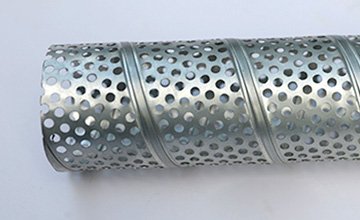
Perforated metal is produced by forming openings in a sheet, commonly through punching or other cutting methods.
| Feature | Expanded Metal Panels | Perforated Metal Panels |
|---|---|---|
| Manufacturing Method | Slitting and stretching | Punching or other hole-forming |
| Common Pattern | Diamond openings | Round, square, decorative holes |
| Metal Construction | Continuous strands and bonds | Sheet material remaining around holes |
| Surface Profile | Raised or flattened | Generally flat sheet-based |
| Main Dimensions | SWD, LWD, strand width | Hole size, pitch, open area |
| Applications | Screens, guards, facades, grating | Ventilation, screens, decoration |
Neither product is automatically stronger, lighter, or cheaper in every configuration.
Selection should depend on the required material, appearance, open area, structural conditions, and fabrication needs.
Installation Guidelines for Expanded Metal Panels
Expanded metal panels can be installed using different framing and attachment systems.
The correct method depends on the project type.
1. Verify Panel Dimensions
Before installation, confirm panel dimensions, pattern orientation, edge conditions, and surface finish.
Architectural panels should match the approved drawings.
2. Check Supporting Frames
Panels may be attached to suitable steel or aluminum supporting frames.
The frame design must account for the expected loads and environmental conditions.
3. Select Suitable Fasteners
Possible fixing methods include bolts, brackets, clamps, framed connections, and other engineered systems.
The materials and fixing details should be compatible with the installed panels.
4. Consider Thermal Expansion
Exterior metal panels expand and contract with temperature changes.
The design should provide appropriate allowances for movement.
5. Inspect Edges and Connections
Cut expanded metal can have exposed or sharp edges.
Suitable finishing should be provided where required.
Before completing installation, inspect connections, frames, coating condition, and panel alignment.
6. Follow Project Requirements
Facade, structural, and safety-related installations should follow approved engineering documents and applicable local standards.
Maintenance of Expanded Metal Panels
Maintenance requirements depend on the material, surface finish, environmental exposure, and installation design.
Aluminum Expanded Metal Panels
Clean using methods compatible with the selected surface treatment.
Avoid abrasive products that may damage decorative coatings.
Galvanized Steel Panels
Inspect for corrosion, exposed steel, and coating damage.
Where necessary, use a suitable repair coating system.
Stainless Steel Panels
Stainless steel may require periodic cleaning, especially in coastal or industrial environments.
Salt deposits and other contaminants should be managed according to the material grade and maintenance plan.
Framed Panel Systems
Frames, brackets, fasteners, and supporting connections should be checked according to the requirements of the complete installation.
What Affects Expanded Metal Panel Prices?
Expanded metal panel quotations depend on several technical and commercial variables.
1. Material Grade
Aluminum, carbon steel, galvanized steel, and stainless steel have different material costs.
2. Original Sheet Thickness
Thickness affects metal consumption and manufacturing requirements.
3. Opening Dimensions
SWD, LWD, and strand width influence the pattern, finished weight, appearance, and production requirements.
4. Surface Finish
Galvanizing, powder coating, anodizing, and other finishes add different processing requirements.
5. Panel Size
Custom-cut dimensions can affect material use and fabrication costs.
6. Framing and Accessories
Framed architectural panels may require brackets, fasteners, and other installation components.
7. Order Quantity
Larger orders may offer production and logistics efficiencies, depending on specifications and supplier arrangements.
8. Transportation
Shipping cost depends on the shipment weight, packaging dimensions, destination, and agreed delivery terms.
Expanded Metal Panel RFQ Checklist for International Buyers
When requesting an expanded metal panel quotation, buyers should provide complete technical information.
| Required Information | Example |
|---|---|
| Product Type | Raised / Flattened / Architectural / Heavy Duty |
| Material | Aluminum / Carbon Steel / Galvanized Steel / Stainless Steel |
| Material Grade | Aluminum 3003 / SS304 / SS316 / Other |
| Original Sheet Thickness | Required thickness in mm |
| SWD | Short Way of Diamond |
| LWD | Long Way of Diamond |
| Strand Width | Required width |
| Clear Opening | SWO and LWO where necessary |
| Overall Panel Size | Length × Width |
| Pattern Orientation | Horizontal / Vertical |
| Surface Finish | Mill / Galvanized / Powder Coated / Anodized |
| Color | RAL or other specified reference |
| Edge Treatment | Trimmed / Framed / Other |
| Quantity | Number of panels |
| Application | Facade / Ceiling / Guard / Industrial |
| Destination | Country and delivery port |
| Technical Drawings | PDF / CAD / Reference Photograph |
For customized architectural projects, buyers should also provide installation drawings, frame details, and any required performance or inspection specifications.
Frequently Asked Questions About Expanded Metal Panels
1. What are expanded metal panels?
Expanded metal panels are metal sheets formed by slitting and stretching a continuous metal sheet to create interconnected openings.
They are used for decorative screens, building facades, protective enclosures, ventilation, and industrial applications.
2. What is the difference between expanded metal panels and expanded metal sheets?
The terms are sometimes used interchangeably.
An expanded metal sheet generally refers to the mesh material, while an expanded metal panel may describe a cut, finished, framed, or fabricated component.
The actual supply scope should be confirmed with the supplier.
3. Which material is commonly used for building facade panels?
Aluminum expanded metal is frequently considered because of its relatively low weight and decorative finishing options.
The final material grade must be selected according to project requirements.
4. What sizes are available for expanded metal panels?
Commonly requested sheet dimensions include approximately 1220 × 2440 mm, 1000 × 2000 mm, and other standard or custom sizes.
Actual availability depends on material and manufacturing specifications.
5. Can expanded metal panels be used on exterior walls?
Yes. Appropriately designed expanded metal panels can be used for exterior architectural screens and facade systems.
The completed design must account for supporting structures, wind loads, corrosion, fire requirements, and installation details.
6. Are expanded metal panels suitable for coastal environments?
Suitable materials and coatings can be selected for coastal applications.
Stainless steel 316 and appropriate aluminum alloys may be considered, depending on exposure conditions.
7. Can expanded metal panels be powder coated?
Suitable metal panels can receive powder coating.
The required coating system should be compatible with the material and environment.
8. What is the difference between raised and flattened expanded metal?
Raised expanded metal retains the three-dimensional surface created during expansion.
Flattened expanded metal undergoes additional rolling to create a flatter surface.
9. Can expanded metal panels provide privacy?
Expanded metal can produce different levels of visual screening.
The result depends on opening size, panel orientation, lighting, and viewing angle.
10. Can expanded metal panels be used for industrial flooring?
Certain heavy-duty expanded metal products can be used in engineered flooring and grating systems.
Load capacity and support requirements must be verified.
11. Can expanded metal panels be customized?
Custom material grades, dimensions, opening patterns, finishes, framing, and fabrication may be possible depending on manufacturing feasibility.
Drawings and reference samples are recommended.
12. How can I request an expanded metal panel quotation?
Provide the required material, original sheet thickness, SWD, LWD, strand width, panel size, surface finish, order quantity, and destination.
Technical drawings can help suppliers review non-standard requirements.
Conclusion: Choosing Expanded Metal Panels for Your Project
Expanded metal panels provide flexible solutions for architectural facades, interior decoration, industrial protection, screening, and selected construction applications.
Different raised, flattened, small-hole, decorative, and heavy-duty products have different characteristics.
Aluminum is commonly considered for architectural projects, galvanized steel for selected outdoor protective applications, and stainless steel for environments requiring corrosion resistance.
However, the most suitable product depends on the complete technical specification and the intended environment.
For international B2B purchasing, buyers should confirm material grade, opening geometry, original thickness, strand width, panel dimensions, surface finish, framing requirements, and quantity before ordering.
ANPING METAL MESH provides expanded metal product information and supports project-based enquiries for international buyers.
Request Custom Expanded Metal Panels
Looking for expanded metal panels for building facades, architectural screens, industrial machinery protection, or decorative applications?
Send us your required material, original sheet thickness, SWD, LWD, strand width, panel dimensions, surface finish, order quantity, and delivery destination.
For customized projects, technical drawings and reference photographs are especially helpful.
Aluminum Expanded Metal Panels | Galvanized Steel Panels | Stainless Steel Expanded Metal | Decorative Mesh | Custom Sizes | B2B Procurement
Explore our Expanded Metal Products or visit Contact ANPING METAL MESH to discuss your project and request a quotation.
Need help choosing a metal mesh?
Share your material, dimensions, intended use and required quantity. We can review the details for a quotation.