Expanded metal prices in Uganda depend on material type, sheet size, original metal thickness, diamond opening dimensions, surface finish, and supplier.For contractors, steel fabricators, hardware dis
Expanded metal prices in Uganda depend on material type, sheet size, original metal thickness, diamond opening dimensions, surface finish, and supplier.
For contractors, steel fabricators, hardware distributors, and industrial buyers in Uganda, expanded metal is available in several forms, including mild steel sheets, coated steel mesh, construction lath, and specialized decorative or heavy-duty products.
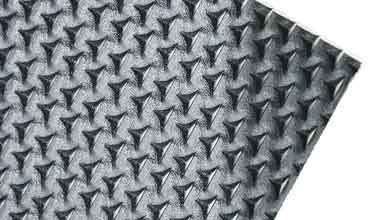
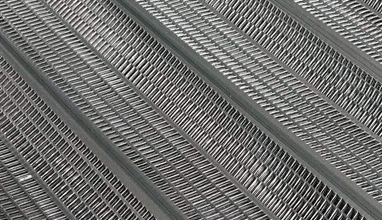
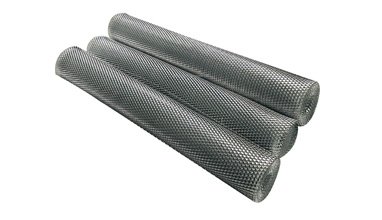
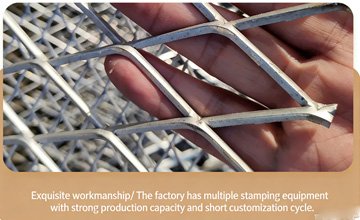
Expanded metal is manufactured by slitting and stretching a solid metal sheet to produce interconnected openings, usually in a diamond pattern. Unlike welded wire mesh, it is formed from continuous metal strands without separate welded wire intersections.
In Uganda, expanded metal is commonly used for window and door guards, gate infill, construction lath, protective screens, fabrication, industrial equipment protection, and selected architectural applications.
This 2026 buying guide explains local expanded metal sheet price references, common sizes, technical specifications, importing from China, and the factors affecting the total cost of purchasing expanded metal in Uganda.
How Much Does Expanded Metal Cost in Uganda in 2026?
Expanded metal prices in Uganda vary significantly between products and suppliers.
The cost of a full 8 × 4 ft sheet cannot be directly compared with a narrower 6 × 2 ft construction sheet. The metal grade, thickness, diamond opening dimensions, coating, and tax treatment must also be considered.
Uganda Expanded Metal Sheet Price Reference — November 2026
A November 2026 market-price report comparing online listings from Roofings Group and Steel and Tube Industries (STIL) published the following indicative figures.
| Supplier Referenced | Product Description | Sheet Size | Reported Price (UGX/Sheet) |
|---|---|---|---|
| Roofings Group | Mild steel, 1.2 mm, 1 × 2 inch pitch | 8 × 4 ft | UGX 24,352.50 |
| Roofings Group | Mild steel, 1.2 mm, 1/2 × 1 inch pitch | 8 × 4 ft | UGX 31,662.50 |
| STIL | Expanded metal, 1.2 mm, larger openings | 4 × 8 ft | UGX 33,000 |
| STIL | Expanded metal, 1.2 mm, smaller openings | 4 × 8 ft | UGX 40,400 |
| Roofings Group | Aluzinc expanded metal, G26 | 6 × 2 ft | UGX 26,817.50 |
| Roofings Group | Aluzinc expanded metal, G26 | 8 × 2 ft | UGX 28,772.50 |
Price Reference: These values were reported by Expanded Metal Prices in Uganda (2026) from seller listings checked in November 2026. Roofings prices were reported as excluding tax. The VAT treatment of the STIL prices was not confirmed. These figures have not been independently verified as current checkout prices and are not quotations from ANPING METAL MESH.
Buyers should contact the sellers directly before using the figures for purchasing or project budgeting.
A separate local product listing can be found at Steel and Tube Industries – Diamond Expanded Metal.
Why Does the Same Sheet Size Have Different Prices?
Two expanded metal sheets may have identical outside dimensions but different prices because of their opening geometry.
A smaller diamond pattern can produce a different metal distribution and finished weight from a larger diamond pattern. Processing requirements may also differ.
The following information should be compared:
Material and grade.
Original sheet thickness.
Short Way of Diamond (SWD).
Long Way of Diamond (LWD).
Strand width.
Raised or flattened surface.
Surface coating.
Sheet dimensions.
Applicable taxes.
Delivery charges.
Without these details, price comparisons may be misleading.
Expanded Metal Price Per Sheet vs. Per Square Meter in Uganda
Ugandan buyers may encounter quotations per sheet or per square meter.
For project planning, it is useful to convert prices into a consistent unit.
Calculating Sheet Area
The sheet area formula is:
Area (m²) = Length (m) × Width (m)
An 8 × 4 ft sheet measures approximately 2.438 × 1.219 meters.
Its total area is approximately 2.97 m².
Calculating Price Per Square Meter
The price per square meter is calculated as:
Price Per m² = Sheet Price ÷ Sheet Area
For example, using a reported sheet price of UGX 33,000 for a nominal 8 × 4 ft product:
UGX 33,000 ÷ 2.97 m² = approximately UGX 11,100/m².
This is a mathematical conversion of the reported product price, not an independent market quotation.
Why Narrow Construction Sheets Cost Differently
A 6 × 2 ft expanded metal sheet has a smaller area than an 8 × 4 ft sheet.
However, the price per square meter may be higher because of material specifications, production methods, coating, packaging, or supplier pricing policies.
Buyers should not assume that the cheapest sheet is the cheapest product per square meter.
Main Types of Expanded Metal Available for Ugandan Projects
Expanded metal products are available in different materials and configurations.
1. Mild Steel Expanded Metal
Mild steel expanded metal is commonly used in metal fabrication, protective screens, window guards, gate panels, and general industrial applications.
Typical Applications:
Window and door guards.
Fabricated gates.
Equipment enclosures.
Protective barriers.
General steel fabrication.
Mild steel is often practical for fabrication, but uncoated steel may corrode when exposed to rain or moisture.
Outdoor projects should consider appropriate painting, galvanizing, or another protective system.
2. Galvanized Expanded Metal Mesh
Galvanized expanded metal is steel mesh protected by a zinc coating.
It is considered for outdoor applications where corrosion protection is important.
Typical Applications:
Fencing panels.
Outdoor protective screens.
Industrial partitions.
Agricultural equipment guards.
Construction-related fabrication.
The coating specification should match the actual exposure conditions.
Hot-dip galvanizing and electro-galvanizing are different processes, and buyers should confirm the required coating type.
3. Expanded Metal Lath
Expanded metal lath is a specialized product used in suitable plastering and rendering systems.
It is generally lighter than many industrial expanded metal sheets and is designed for particular construction applications.
Typical Applications:
Plaster support.
Wall rendering.
Ceiling plaster systems where specified.
Selected construction details.
Expanded metal lath should not automatically be substituted for structural concrete reinforcement or conventional heavy-duty expanded metal sheets.
Read our Expanded Metal Lath for Stucco Guide for more information.
4. Aluminum Expanded Metal
Aluminum expanded metal is commonly considered for architectural and decorative projects.
It offers a relatively low weight and useful corrosion resistance in suitable environments.
Typical Applications:
Building facade screens.
Decorative partitions.
Architectural sunshades.
Ceiling systems.
Ventilation grilles.
Aluminum pricing depends on the alloy, sheet thickness, opening pattern, strand dimensions, and required finish.
5. Heavy-Duty Expanded Metal
Heavy-duty expanded metal can be used for selected industrial and engineered applications.
It may be manufactured with thicker metal and wider strands.
Typical Applications:
Industrial machinery guards.
Protective equipment covers.
Access structures.
Engineered walkway systems.
For load-bearing uses, the required load capacity and supporting structure must be verified.
Ordinary expanded metal sheets should not automatically be used as walkway grating.
6. Stainless Steel Expanded Metal
Stainless steel expanded metal is used where additional corrosion resistance is required.
Common grades include SS304 and SS316.
SS316 generally offers improved resistance to chloride-related corrosion compared with SS304, although the appropriate grade depends on the operating environment.
Typical Applications:
Industrial equipment protection.
Water-related facilities.
Selected processing equipment.
Decorative metal screens.
Specialized corrosion-sensitive applications.
Key Factors Affecting Expanded Metal Prices in Uganda
1. Material Type
Carbon steel, coated steel, aluminum, and stainless steel have different raw material and processing costs.
A quotation should identify the material grade rather than using only the term "expanded metal."
2. Sheet Thickness
Original sheet thickness influences material consumption, weight, and mechanical properties.
However, thicker metal is not automatically suitable for every structural application.
Strand width, pattern geometry, and supporting conditions also matter.
3. Diamond Opening Size
Expanded metal is commonly described using SWD and LWD.
These dimensions identify the short and long directions of the diamond pattern.
Smaller openings can affect material distribution and processing requirements, but the relationship between opening size and price varies across product designs.
4. Strand Width
Strand width is the width of the metal strips forming the interconnected mesh.
It influences material content, mesh weight, appearance, and mechanical characteristics.
5. Surface Treatment
Common surface options include:
Mill finish.
Galvanizing.
Painting.
Powder coating.
Anodizing for compatible aluminum alloys.
The cost depends on the coating specification, preparation, quantity, and material.
6. Sheet Dimensions
Different sheet sizes involve different material quantities, fabrication requirements, and transport arrangements.
Custom-cut sizes may affect production cost and material waste.
7. Purchase Quantity
Larger orders can sometimes improve manufacturing and freight efficiency.
However, discounts and minimum order quantities depend on the supplier and product specification.
8. Transportation and Taxes
Imported expanded metal may involve international freight, customs-related charges, taxes, port handling, transit transportation, and inland delivery.
These costs should be considered when comparing local suppliers with overseas exporters.
Common Expanded Metal Sheet Sizes in Uganda
Local suppliers and international manufacturers may offer different expanded metal formats.
The following dimensions are commonly referenced in purchasing and fabrication.
| Sheet Size | Approximate Metric Size | Typical Use |
|---|---|---|
| 6 × 2 ft | 1829 × 610 mm | Narrow construction sheets |
| 8 × 2 ft | 2438 × 610 mm | Construction lath and fabrication |
| 8 × 4 ft | 2438 × 1219 mm | General industrial sheets |
| 1000 × 2000 mm | 1000 × 2000 mm | Metric fabrication |
| 1220 × 2440 mm | 1220 × 2440 mm | Commercial sheet format |
| Custom Dimensions | According to drawings | Specialized projects |
These are dimensional references, not guaranteed stock sizes.
Buyers should confirm the exact finished dimensions with the supplier.
Understanding SWD and LWD
SWD means Short Way of Diamond.
LWD means Long Way of Diamond.
They describe the repeating expanded metal pattern and should be distinguished from the actual clear opening dimensions.
Strand Width and Original Thickness
Strand width and original sheet thickness are essential technical parameters.
They influence metal content, weight, fabrication requirements, and product performance.
For more details, see our Expanded Metal Dimensions Chart.
Main Applications of Expanded Metal in Uganda
Expanded metal can be used in a wide range of construction and industrial applications.
1. Window and Door Guards
Expanded metal can be fabricated into protective window and door assemblies.
The complete security system should include appropriate framing, fixings, and installation details.
The mesh alone does not establish a particular anti-intrusion performance level.
2. Gate Fabrication and Fencing
Expanded metal panels may be incorporated into metal gates, industrial barriers, and selected fencing applications.
The correct opening size and material thickness depend on the project.
For outdoor use, corrosion protection should be considered.
3. Building Construction
Specialized expanded metal lath can be used in appropriate plastering and rendering systems.
The selected product should meet the project requirements.
4. Architectural Facades
Aluminum expanded metal may be considered for decorative building screens, sunshades, and facade components.
For commercial projects in Kampala, Entebbe, and other Ugandan cities, the completed facade should be evaluated for wind loads, support structures, corrosion resistance, and maintenance.
See our Expanded Metal Mesh Facade Guide.
5. Industrial Machinery Protection
Industrial facilities may use expanded metal for machine guards, protective covers, and ventilation panels.
The opening size and complete guard design should meet applicable safety requirements.
6. Agricultural Fabrication
Expanded metal may be incorporated into suitable enclosures, equipment guards, and fabricated agricultural components.
When used near livestock, attention should be given to exposed edges, opening dimensions, and animal safety.
7. Water Treatment and Industrial Facilities
Selected expanded metal products may be used as equipment guards, ventilation screens, and supporting components.
The material should be selected according to the specific corrosion and operating environment.
Buying Expanded Metal in Uganda vs. Importing from China
Ugandan buyers can purchase expanded metal from local steel suppliers or evaluate international sourcing.
Neither option is universally cheaper.
Purchasing from Local Suppliers
Local procurement may be suitable for smaller orders or projects requiring readily available material.
Potential Advantages:
Smaller order quantities.
Local product inspection.
Shorter domestic delivery.
Simpler payment arrangements.
Less import administration for the final customer.
Local suppliers may have limited availability of certain special patterns, materials, or custom dimensions.
Importing Expanded Metal from China
International sourcing can be considered for larger orders and specialized specifications.
Potential Advantages:
Additional material options.
Custom mesh dimensions, subject to manufacturing feasibility.
Opportunities to combine compatible product requirements.
Export quotations for bulk orders.
However, importing requires planning for international transportation, import procedures, taxes, insurance, and final delivery.
When Is Importing Worth Considering?
Importing may be worth evaluating when the required quantity is sufficiently large or local suppliers cannot provide the required specification.
For small quantities of standard expanded metal, purchasing from a local supplier may be more practical.
The correct comparison should use the total delivered cost for equivalent products.
How to Ship Expanded Metal from China to Uganda
Uganda is landlocked, so sea freight shipments commonly use an East African seaport followed by inland transportation.
One common route involves shipping goods from China to Mombasa, Kenya, followed by road transportation toward Uganda.
Other routes may be possible depending on the freight arrangements.
Step 1: Confirm the Chinese Loading Port
The appropriate loading port depends on the supplier's location and freight arrangements.
Step 2: Select the Destination and Transit Route
The buyer and freight forwarder should confirm whether the shipment will move through Mombasa or another suitable gateway.
Step 3: Confirm Cargo Specifications
Expanded metal shipments should be planned using verified information about:
Number of sheets.
Sheet dimensions.
Product weight.
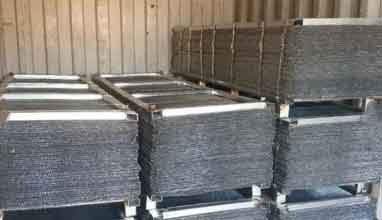
Bundle dimensions.
Gross shipment weight.
Packaging method.
Step 4: Arrange Customs and Transit Documentation
Import arrangements may involve export documents, transit procedures, Ugandan import declarations, and product-specific compliance requirements.
Step 5: Arrange Inland Delivery
The final destination may be Kampala, Jinja, Entebbe, Mbarara, Gulu, Mbale, or another location.
Inland transportation expenses should be calculated separately unless they are explicitly included in the commercial agreement.
How Long Does Delivery Take?
Delivery time depends on manufacturing, the shipping schedule, transshipment arrangements, port operations, customs processing, and inland transportation.
Buyers should request a current route-specific logistics estimate.
Fixed delivery guarantees should not be assumed from general transit-time examples.
EXW, FOB and CIF Expanded Metal Prices
International quotations may use different Incoterms.
EXW – Ex Works
EXW generally refers to goods being made available at a specified location.
The buyer normally handles subsequent transportation and import responsibilities, subject to the agreed terms.
FOB – Free on Board
FOB is used for suitable sea shipments and specifies the named port of loading.
For example, a quotation might use FOB Tianjin, China.
FOB does not normally include international ocean freight to East Africa.
CIF – Cost, Insurance and Freight
CIF includes agreed cost, freight, and insurance to a named destination seaport.
For example, CIF Mombasa refers to the named port in Kenya.
CIF Mombasa does not automatically include inland transportation to Kampala, Ugandan customs clearance, or import taxes.
Why Delivery Terms Matter
Buyers should compare quotations on a consistent basis.
A factory price and a fully delivered Kampala price are not equivalent.
Import Duties, VAT and Customs Costs in Uganda
International purchasing requires buyers to consider the full cost of importing the product.
The exact tax treatment depends on the product classification, customs value, and applicable import rules.
Uganda VAT
The Uganda Revenue Authority states that the standard VAT rate is 18% for taxable supplies and imports unless a different treatment applies.
The final import tax calculation should be confirmed for the specific goods.
Customs Valuation
Customs valuation may consider the cost, insurance, and freight associated with the imported goods, subject to the applicable regulations.
Importers should verify the relevant valuation and tariff treatment before ordering.
Common Import Documents
Documents may include:
Commercial invoice.
Packing list.
Bill of lading.
Certificate of origin where required.
Customs declaration documents.
Transit documentation.
Product-specific compliance documents where applicable.
The exact documents depend on the shipment and customs procedures.
For official guidance, consult the Uganda Revenue Authority.
How to Calculate the Landed Cost of Expanded Metal in Uganda
The landed cost includes more than the initial supplier price.
A simplified calculation is:
Landed Cost = Product Cost + Freight + Insurance + Applicable Duties and Taxes + Clearance Charges + Inland Transportation
Avoid double-counting charges already included in the supplier's agreed delivery terms.
Example Calculation Method
Suppose a buyer receives an export quotation for expanded metal sheets.
Before deciding whether to import, the buyer should confirm:
Product value under the selected Incoterm.
Freight and insurance to the agreed seaport.
Transit and transportation expenses to Uganda.
Applicable duties and taxes.
Customs clearance and handling charges.
Delivery cost to the final warehouse or construction site.
This produces a more meaningful comparison with local supplier prices than using the factory price alone.
How to Get a Better Expanded Metal Price in Uganda
1. Compare Equivalent Specifications
Ensure that local and international suppliers quote the same metal grade, thickness, opening pattern, strand width, and sheet dimensions.
2. Calculate Prices Per Square Meter
Converting sheet quotations to prices per square meter can make comparisons easier.
However, sheets must still have equivalent specifications.
3. Choose Appropriate Materials
Use material properties that match the actual application.
Avoid choosing an unnecessarily expensive metal, but do not compromise required safety or corrosion performance.
4. Optimize Sheet Dimensions
Review project layouts to reduce cutting waste.
The most convenient stock sheet may not always create the lowest overall fabrication cost.
5. Plan Purchasing Quantities
Larger orders may improve production or transportation efficiency, depending on supplier arrangements.
6. Confirm Logistics Before Payment
For international shipments, verify the freight route, port charges, inland transport responsibilities, and customs arrangements.
7. Check the Complete Landed Cost
A lower factory price does not always produce a lower delivered cost in Uganda.
Expanded Metal RFQ Checklist for Ugandan Buyers
To obtain an accurate quotation, provide the following information.
| Required Information | Example |
|---|---|
| Product Type | Standard / Flattened / Lath / Heavy Duty |
| Material | Mild Steel / Galvanized Steel / Aluminum / Stainless Steel |
| Material Grade | Required grade or coating |
| Original Sheet Thickness | Thickness in mm |
| SWD | Short Way of Diamond |
| LWD | Long Way of Diamond |
| Strand Width | Width in mm |
| Sheet Dimensions | 8 × 4 ft / 8 × 2 ft / Custom |
| Surface Finish | Mill / Galvanized / Powder Coated |
| Quantity | Number of sheets or total m² |
| Application | Fencing / Construction / Industrial / Facade |
| Destination | Kampala / Jinja / Mbarara / Other |
| Delivery Term | EXW / FOB / CIF / Other |
| Technical Drawings | PDF / CAD / Reference Photograph |
Providing these details helps suppliers understand the requirement and prepare a comparable quotation.
Frequently Asked Questions About Expanded Metal Prices in Uganda
1. What is the price of expanded metal in Uganda in 2026?
Prices vary depending on supplier, sheet size, thickness, material, and opening pattern.
A November 2026 third-party market report listed selected 8 × 4 ft mild steel expanded metal sheets from Roofings Group at approximately UGX 24,352.50–31,662.50 before tax, and selected STIL 4 × 8 ft products at UGX 33,000–40,400 with VAT treatment not stated.
Buyers should confirm the latest seller prices directly.
2. What is a common expanded metal sheet size in Uganda?
Local suppliers list formats such as 6 × 2 ft, 8 × 2 ft, and 8 × 4 ft.
Actual availability depends on the supplier and product specification.
3. What affects expanded metal prices in Uganda?
Important factors include material grade, sheet thickness, SWD, LWD, strand width, sheet size, surface finish, order quantity, taxes, and transportation.
4. Is mild steel expanded metal suitable for outdoor fencing?
Mild steel expanded metal can be fabricated into fencing systems.
However, outdoor products may require appropriate corrosion protection.
5. What is the difference between galvanized and mild steel expanded metal?
Mild steel expanded metal may be supplied without a protective coating.
Galvanized expanded metal uses a zinc coating to improve corrosion resistance.
6. Can expanded metal be used for window and door guards?
Yes, expanded metal may be incorporated into window and door protection systems.
The required security performance depends on the complete assembly.
7. Is importing expanded metal from China cheaper than buying in Uganda?
Not necessarily.
International sourcing may be worth considering for large or customized orders, but freight, customs costs, taxes, and inland delivery must be included.
8. Does CIF Mombasa include delivery to Kampala?
No. CIF Mombasa generally concerns the agreed shipment to the named seaport.
Inland transportation, Ugandan customs clearance, and import charges normally require separate arrangements.
9. What VAT rate applies in Uganda?
The Uganda Revenue Authority identifies an 18% standard VAT rate for taxable supplies and imports, subject to applicable exemptions or other rules.
Buyers should confirm the actual treatment of the goods.
10. Can expanded metal be ordered in custom sizes?
Custom dimensions and opening patterns may be available depending on manufacturing capability.
Technical drawings are recommended for specialized requirements.
11. Can heavy-duty expanded metal be used for industrial walkways?
Certain heavy-duty products can be used in engineered walkway systems.
The required load capacity, support spacing, and installation details must be verified.
12. What information is needed for a wholesale quotation?
Buyers should provide material grade, original sheet thickness, opening dimensions, strand width, sheet size, finish, quantity, and destination.
Conclusion: Comparing Expanded Metal Prices in Uganda
Expanded metal prices in Uganda depend on technical specifications, local supplier conditions, taxes, and transportation costs.
Mild steel expanded metal is used for fabrication and protective applications. Galvanized products may be considered for outdoor exposure, while aluminum and stainless steel offer additional options for architectural and specialized industrial requirements.
For smaller orders, local suppliers may provide practical purchasing arrangements.
For larger or customized projects, international sourcing may be worth evaluating after calculating the full landed cost.
The most accurate purchasing comparison uses equivalent product specifications and clearly defined commercial terms.
ANPING METAL MESH provides expanded metal product information and supports specification-based enquiries for international buyers.
Request an Expanded Metal Quotation for Uganda
Looking for expanded metal mesh for construction, security screens, steel fabrication, industrial protection, or wholesale distribution in Uganda?
Send us your required material, thickness, SWD, LWD, strand width, sheet size, surface finish, estimated quantity, and delivery destination.
Please also indicate whether you have an appointed freight forwarder or customs clearing agent and whether you require a factory-based quotation or assistance evaluating an international shipping option.
Mild Steel Expanded Metal | Galvanized Mesh | Aluminum Expanded Metal | Heavy-Duty Mesh | Custom Specifications | B2B Supply
Explore our Expanded Metal Products or Contact ANPING METAL MESH to discuss your requirements and request a quotation.
Need help choosing a metal mesh?
Share your material, dimensions, intended use and required quantity. We can review the details for a quotation.