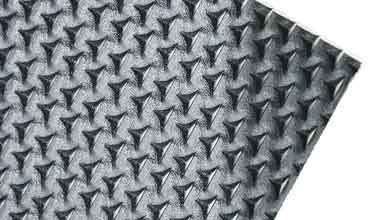
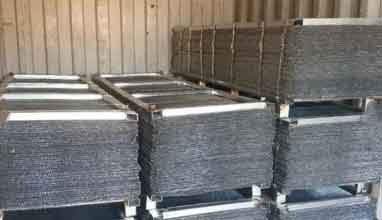
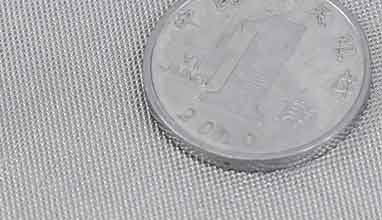
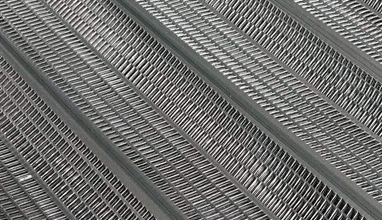
Explore expanded metal prices by material, thickness and mesh type. Compare galvanized steel, aluminum and stainless steel, understand pricing factors and request a factory quotation.
Expanded metal prices vary according to material type, sheet thickness, strand width, diamond opening dimensions, surface finish, and order quantity. Galvanized steel, aluminum, and stainless steel products each have different manufacturing costs and application requirements. Therefore, a meaningful expanded metal price list should identify both the product specifications and the pricing conditions.
For importers, contractors, metal fabricators, distributors, and architectural designers, comparing prices per square meter is only the first step. Sheet weight, production processes, packaging, transportation, and delivery terms can significantly affect the final purchasing cost.
ANPING METAL MESH provides expanded metal product options for construction, industrial, architectural, and decorative applications. This guide explains the main product categories, indicative price references, cost factors, standard specifications, and the information buyers should provide when requesting a factory quotation.
Expanded Metal Price List by Product Type
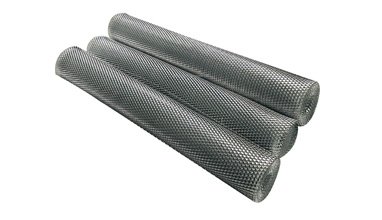
Expanded metal is available in several product categories, including galvanized steel mesh, aluminum mesh, stainless steel mesh, expanded metal lath, and heavy-duty industrial products.
The following table presents indicative price ranges from our original pricing reference. These figures are preliminary budget references, not independently verified live offers. Actual prices must be confirmed against the complete product specification, order quantity, and quotation terms.
| Product Category | Material | Thickness Range | Indicative Price (USD/m²) | Common Applications |
|---|---|---|---|---|
| Expanded Metal Lath | Hot-Dip Galvanized Steel | 0.3–0.5 mm | $3.50–$7.00 | Plaster, stucco, rendering |
| Standard Expanded Mesh | Galvanized Steel | 0.8–1.2 mm | $4.50–$9.00 | Fencing, guards, construction |
| Flattened Expanded Mesh | Galvanized Steel | 1.0–1.5 mm | $5.50–$11.00 | Wall cladding, interiors |
| Aluminum Expanded Mesh | Aluminum Alloy 3003 | 0.8–1.5 mm | $8.00–$16.00 | Facades, screens, decoration |
| Heavy-Duty Expanded Metal Grating | Carbon Steel | 3.0–5.0 mm | $12.00–$25.00 | Walkways, platforms, stairs |
| Stainless Steel Expanded Mesh | SS304 | 1.0–2.0 mm | $15.00–$30.00 | Industrial and architectural use |
| Stainless Steel Expanded Mesh | SS316 | 1.0–2.0 mm | $18.00–$38.00 | Marine and selected coastal applications |
| Decorative Facade Panels | Powder-Coated Aluminum | 1.5–2.5 mm | $10.00–$22.00 | Building facades, architectural design |
| Small Hole Expanded Mesh | Aluminum / Stainless Steel | 0.5–1.0 mm | $9.00–$20.00 | Filters, ventilation, precision screening |
Pricing note: These figures are carried over from the supplied preliminary price reference and have not been verified as current transaction prices. They should not be presented as guaranteed FOB offers until the sales team confirms the corresponding mesh geometry, material grade, weight, finish, minimum order quantity, and named delivery terms. The price basis must also be confirmed as EXW or FOB at a specified port.
For customized products, request a quotation using the actual technical drawing or sample.
Expanded Metal Price by Material Type
Material selection is one of the most important factors affecting the cost and suitability of expanded metal.
Different metals have different raw material prices, forming characteristics, weights, corrosion resistance, and finishing requirements.
1. Galvanized Steel Expanded Metal
Galvanized expanded metal is commonly selected for general construction, fencing, equipment protection, and industrial screening.
The zinc coating provides corrosion protection to the underlying steel in suitable environments.
Its pricing depends on:
Base steel grade and thickness
Strand width and mesh opening
Zinc coating specification
Raised or flattened finish
Sheet dimensions and order quantity
Galvanized steel is often an economical choice for general outdoor applications, provided the coating specification matches the exposure conditions.
2. Aluminum Expanded Metal
Aluminum expanded metal is widely used for architectural and decorative applications where lower panel weight is desirable.
Common applications include:
Building facade panels
Balcony privacy screens
Ceiling decoration
Ventilation grilles
Interior partitions
Sun-shading systems
Alloy selection, original sheet thickness, mesh geometry, and surface treatment affect the final price.
Powder coating and anodizing may introduce additional manufacturing costs.
View our Small Hole Aluminum Expanded Metal Mesh for a precision mesh product option.
3. Stainless Steel 304 Expanded Metal
SS304 expanded metal is used in industrial and architectural applications requiring corrosion resistance and a metallic finish.
Typical applications include:
Industrial screening
Machine guards
Ventilation panels
Decorative partitions
Equipment enclosures
Selected processing environments
The final price depends on the actual alloy specification, thickness, strand dimensions, and surface condition.
4. Stainless Steel 316 Expanded Metal
SS316 is commonly considered for environments involving chloride exposure and more demanding corrosion conditions.
It is used in selected marine-related facilities, coastal architecture, industrial equipment, and chemical-processing environments.
Compared with SS304, SS316 generally offers improved resistance to certain forms of chloride-related corrosion. However, no stainless steel grade is completely corrosion-proof in every environment.
Material selection should reflect the actual exposure conditions, installation details, and maintenance requirements.
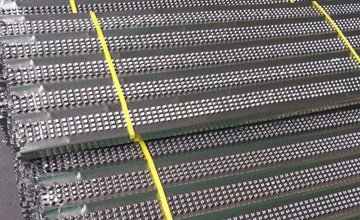
5. Expanded Metal Lath
Expanded metal lath is designed for plastering, stucco, rendering, and related construction applications.
Its open structure helps provide a mechanical key for plaster and mortar.
Important purchasing specifications include:
Material thickness
Mesh opening
Sheet dimensions
Galvanizing specification
Weight per sheet or square meter
Expanded metal lath should be evaluated separately from standard fencing mesh and industrial grating because the products have different structures and intended applications.
Key Factors That Affect Expanded Metal Prices
A price list provides a starting point, but the final quotation depends on the exact product configuration.
1. Raw Material Cost
Steel, aluminum, and stainless steel have different raw material costs.
Changes in metal prices, alloy composition, and material availability can affect manufacturing quotations.
Galvanized steel is often selected for cost-sensitive applications, while stainless steel is generally a higher-cost option.
2. Material Thickness
Thicker starting sheets generally require more raw material and can increase production and transportation costs.
For example, lightweight expanded metal lath and heavy-duty industrial mesh cannot be compared using thickness alone.
The finished strand dimensions and weight per square meter should also be considered.
3. Diamond Opening Size
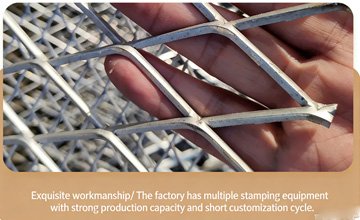
Expanded metal is manufactured by slitting and stretching a solid metal sheet into a repeating pattern.
The opening geometry affects material distribution, strand configuration, open area, and production requirements.
Smaller openings are not automatically more expensive in every design. The complete relationship between SWD, LWD, strand width, thickness, and material consumption determines the production cost.
4. Surface Treatment and Finish
Surface treatment can add to the initial manufacturing price.
Common options include:
Mill finish
Hot-dip galvanizing
Electro-galvanizing
Powder coating
Aluminum anodizing
Stainless steel passivation
Polishing
The appropriate finish depends on the base metal and intended operating environment.
5. Raised vs Flattened Expanded Metal
Raised expanded metal retains the three-dimensional profile formed during the expansion process.
Flattened expanded metal undergoes an additional rolling operation to reduce the raised profile and create a smoother surface.
The additional processing may increase manufacturing costs. The actual difference depends on the product configuration and production arrangement.
6. Sheet Size and Custom Cutting
Standard sheet dimensions may simplify production, handling, and packaging.
Custom panel sizes can require additional cutting, edge treatment, or fabrication.
However, custom cutting may reduce on-site labor and material waste, so the overall project cost should be considered.
7. Order Quantity
Order quantity affects production scheduling, material purchasing, setup costs, and shipping arrangements.
Larger orders may provide opportunities for better unit pricing, depending on the product and production requirements.
There is no universal discount percentage for every order. Request a quantity-based quotation for accurate comparison.
Expanded Metal Price by Application
Different industries require different mesh configurations. Choosing the correct product for the application is important for both purchasing cost and final performance.
Construction and Plastering
Expanded metal lath is used in plastering, stucco, and selected rendering systems.
Buyers should specify material thickness, mesh configuration, sheet dimensions, and coating requirements.
Security Fencing and Enclosures
Galvanized expanded metal is commonly used for industrial barriers, machine guards, perimeter fencing, and protective enclosures.
Opening size, strand dimensions, panel rigidity, and supporting frames should be considered.
Architectural Facades and Decoration
Aluminum and powder-coated expanded metal panels are used in building facades, decorative walls, sunshades, and ventilation systems.
Custom colors, raised or flattened profiles, and panel dimensions can influence the overall quotation.
Explore our expanded metal facade decoration applications for additional design information.
Industrial Walkways and Platforms
Certain heavy-duty expanded metal products are designed for walkways, platform flooring, and stair treads.
The correct product must be evaluated against loading conditions, support spacing, deflection, fixing arrangements, and relevant safety requirements.
Not every expanded metal sheet is suitable for load-bearing applications.
Small Hole and Precision Screening
Small hole expanded metal is used in selected filtration, ventilation, equipment protection, and architectural applications.
Fine openings require attention to clear aperture dimensions, strand geometry, and production tolerances.
Standard Expanded Metal Sizes and Specifications
Standard sheet dimensions and mesh specifications help manufacturers calculate material requirements and prepare quotations.
The following dimensions are reference formats from the original product specification list. Availability depends on material, tooling, and production capability.
| Specification | Reference Options |
|---|---|
| Sheet Size | 1220 × 2440 mm (4 × 8 ft) |
| Alternative Sheet Size | 1000 × 2000 mm |
| Diamond Pattern | Different SWD and LWD configurations |
| Thickness Range | Approximately 0.3–6.0 mm across different product categories |
| Materials | Galvanized steel, carbon steel, aluminum, SS304, SS316 |
| Surface Finish | Mill, galvanized, flattened, powder-coated, polished |
| Customization | Custom mesh openings, sheet dimensions, and finishes |
Buyers should understand the following technical terms before ordering:
SWD (Short Way of Design): Short-way dimension of the repeating diamond pattern, generally measured between corresponding bond centers.
LWD (Long Way of Design): Long-way dimension of the diamond pattern.
SWO (Short Way of Opening): Clear aperture dimension in the short direction.
LWO (Long Way of Opening): Clear aperture dimension in the long direction.
Strand Width: Width of the metal strands between the openings.
Strand Thickness: Thickness of the metal forming the strands.
A quotation that only identifies sheet thickness and outside dimensions is not sufficient for a precise technical comparison.
For customized mesh, provide a technical drawing or approved sample wherever possible.
How to Calculate Expanded Metal Price per Square Meter
Expanded metal suppliers may quote prices per sheet, square meter, square foot, or kilogram.
Converting quotations into the same unit helps buyers compare different suppliers.
The basic calculation is:
Price per m² = Sheet Price ÷ Sheet Area
For example, a standard 1220 × 2440 mm sheet has a nominal area of approximately 2.977 m².
If a hypothetical sheet costs USD 20:
USD 20 ÷ 2.977 = approximately USD 6.72/m².
This is a mathematical example, not a current product quotation.
When comparing two suppliers, make sure the quotations refer to the same:
Material grade
Sheet thickness
SWD and LWD
Strand width
Sheet dimensions
Surface finish
Raised or flattened profile
Order quantity
The price per square meter should also be checked against the actual sheet weight. Two products with the same nominal area can have substantially different material consumption.
How to Calculate the Total Cost of an Imported Order
For overseas buyers, the factory quotation is only one part of the purchasing cost.
The total cost may include:
Total Delivered Cost = Product Value + Origin Charges + International Freight + Insurance + Customs Duties + Import Taxes + Destination Charges + Inland Delivery
The actual cost structure depends on the agreed Incoterm.
For example, EXW and FOB quotations have different responsibilities and cost inclusions.
EXW (Ex Works)
The seller makes the goods available at the agreed location. The buyer generally arranges collection and subsequent transportation.
FOB (Free on Board)
For sea freight, FOB covers the seller's responsibilities up to loading the goods on board at the named port of shipment under the applicable Incoterms rules.
The buyer generally arranges the main ocean freight and destination-side import procedures.
CIF (Cost, Insurance and Freight)
CIF includes the cost of carriage and required insurance to the named destination port.
It does not automatically include import duties, taxes, customs clearance, or inland transportation.
Buyers should request a clear breakdown of included and excluded charges before confirming an international order.
How to Use an Expanded Metal Price List for Project Budgeting
A price list is most useful when the buyer has already identified the required product type and approximate specifications.
The following process helps organize project budgeting.
Step 1: Select the Product Category
Determine whether the project requires expanded metal lath, standard mesh, flattened mesh, aluminum mesh, stainless steel mesh, or heavy-duty grating.
Step 2: Confirm the Material
Choose the appropriate metal according to the application, environment, corrosion exposure, and budget.
Step 3: Define the Mesh Specifications
Identify thickness, SWD, LWD, strand width, and clear opening dimensions.
Step 4: Calculate the Required Quantity
Measure the total project area and consider cutting allowances, installation waste, and panel dimensions.
Step 5: Request a Detailed Quotation
Provide the product specification, quantity, surface finish, and delivery destination.
Step 6: Calculate the Total Purchasing Cost
Add applicable packaging, freight, customs, taxes, and local transportation charges.
This approach provides a more realistic project budget than multiplying an approximate price per square meter by the total area without considering other costs.
Why Request a Factory Quotation from ANPING METAL MESH?
ANPING METAL MESH supplies expanded metal products for international construction, industrial, architectural, and fabrication applications.
Our product range includes:
Galvanized expanded metal
Carbon steel expanded metal
Aluminum expanded metal
Stainless steel 304 and 316 mesh
Expanded metal lath
Flattened expanded metal
Heavy-duty expanded metal products
Decorative facade panels
Small hole expanded metal mesh
Buyers can discuss standard products as well as customized specifications.
A detailed quotation should identify the material, dimensions, thickness, mesh pattern, surface treatment, quantity, packaging, production schedule, and delivery terms.
For projects requiring customized panels, providing a drawing or sample can help establish the correct production specifications before an order is confirmed.
Frequently Asked Questions About Expanded Metal Prices
How much does expanded metal cost per square meter?
The price depends on material, thickness, opening size, strand width, finish, and quantity. The preliminary price ranges in this guide should be treated as budget references only. Request a current quotation using complete specifications.
What is the cheapest type of expanded metal?
Lightweight galvanized steel expanded metal lath is often an economical option for plastering and rendering applications. It should not be substituted for standard fencing mesh or heavy-duty industrial products without checking the required performance.
Why is stainless steel expanded metal more expensive than galvanized steel?
Stainless steel contains alloying elements that affect raw material costs and processing requirements. The actual price difference depends on grade, thickness, geometry, and market conditions.
Is flattened expanded metal more expensive than raised expanded metal?
Flattened expanded metal requires an additional rolling process. This can increase the manufacturing cost, although the actual price difference varies by specification and order quantity.
Can I purchase expanded metal directly from a manufacturer?
Yes. International buyers can request factory quotations directly from manufacturers. The quotation should clearly identify product specifications, minimum order quantity, packaging, delivery terms, and any additional charges.
Do you provide customized expanded metal sizes?
Custom sheet dimensions, opening patterns, strand widths, and finishes may be available depending on manufacturing capability. Provide a technical drawing or reference sample to confirm feasibility.
Are bulk orders cheaper?
Larger orders may reduce unit costs through more efficient material purchasing, production scheduling, and freight utilization. Actual savings depend on the product configuration and order size.
What is included in an expanded metal quotation?
A complete quotation should state the product specification, unit price, currency, quantity, packing, production lead time, quotation validity, Incoterm, and any excluded costs.
How can I get an accurate expanded metal price?
Provide the material grade, thickness, SWD, LWD, strand width, sheet size, surface finish, quantity, and delivery destination. If some specifications are unknown, send a photograph or drawing for initial evaluation.
Can I request a PDF expanded metal price list?
You can contact our sales team to request product specifications and a quotation for your required mesh types. Customized pricing should be based on the actual product configuration and order quantity.
Get a Customized Expanded Metal Price Quotation
An accurate expanded metal quotation starts with the correct technical specifications.
Whether you are sourcing galvanized steel mesh for construction, aluminum panels for architectural facades, stainless steel mesh for industrial environments, or expanded metal lath for plastering, product requirements should be confirmed before comparing prices.
ANPING METAL MESH provides expanded metal product options for international buyers, distributors, contractors, and industrial customers.
Visit our expanded metal product catalog to explore available products, or contact our sales team with your material, thickness, opening dimensions, sheet size, quantity, and destination.
Request a project-based quotation to evaluate the appropriate product and purchasing cost for your requirements.
Need help choosing a metal mesh?
Share your material, dimensions, intended use and required quantity. We can review the details for a quotation.