Explore expanded metal privacy screens for balconies, gardens and facades. Compare mesh openings, aluminum and steel materials, privacy levels and installation options.
Expanded metal privacy screens are architectural panels made from metal sheets that have been slit and stretched into a continuous pattern of openings. They are used to reduce direct visibility into balconies, gardens, patios, building facades, and interior spaces while allowing some natural light and ventilation to pass through.
Unlike solid privacy fences, expanded metal screens provide adjustable visual screening rather than complete opacity. Their effectiveness depends on the size and shape of the openings, strand width, mesh orientation, viewing angle, lighting conditions, and distance between the observer and the screen.
Aluminum, galvanized steel, and stainless steel are common material options. Each offers different advantages in terms of weight, corrosion resistance, fabrication, appearance, and cost. Selecting an appropriate screen requires more than choosing a decorative diamond pattern: buyers should also consider the installation environment, structural support, surface finish, and required level of privacy.
This guide explains how expanded metal privacy screens work, where they can be used, and how to specify suitable panels for residential, commercial, and architectural projects.
What Is an Expanded Metal Privacy Screen?
An expanded metal privacy screen is a metal panel designed to limit sightlines through an open mesh structure.
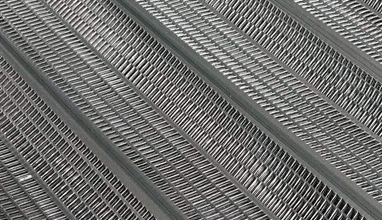
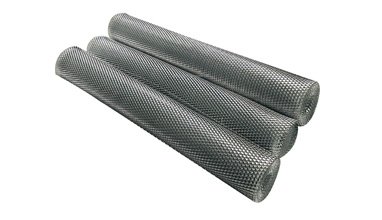
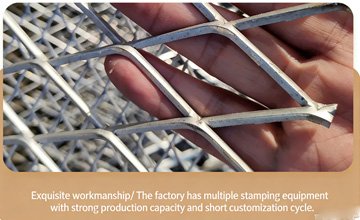
The manufacturing process starts with a solid metal sheet. Specialized equipment makes staggered slits and expands the material into a repeating diamond-shaped or other engineered pattern. The resulting mesh consists of interconnected strands and bonds formed from the original sheet.
Unlike welded wire mesh, the individual intersections do not require separate welds. This construction provides a consistent pattern and allows the metal to be fabricated into framed screens, decorative partitions, fencing infill, and architectural cladding.
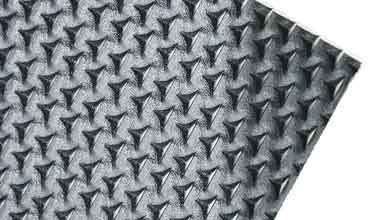
The screen's appearance changes depending on the viewing direction and the background behind it. A raised diamond pattern may appear relatively closed from one angle and noticeably more transparent from another.
This directional effect is particularly important for balcony privacy panels and architectural facades, where the objective may be to reduce views from neighboring buildings without completely enclosing the space.
Expanded metal privacy screens are commonly selected for:
Residential balconies and terraces
Garden and backyard privacy partitions
Outdoor patio enclosures
Architectural facade screening
Commercial outdoor seating areas
Rooftop mechanical equipment enclosures
Interior decorative room dividers
Metal fencing and boundary screening
For broader architectural applications, explore our expanded metal facade decoration products.
How Much Privacy Does Expanded Metal Provide?
The privacy provided by expanded metal is determined by a combination of mesh geometry, viewing position, and lighting.
A smaller opening may reduce visibility, but opening size alone does not establish whether people can see through a screen. Strand angle and orientation can significantly change the effective visual opening.
For example, an expanded metal screen that limits views from the street may still allow visibility from an elevated neighboring building. Similarly, a screen that appears private during daylight may become more transparent when the space behind it is brightly illuminated at night.
The following factors should be considered:
| Design Factor | Effect on Privacy | What Buyers Should Check |
|---|---|---|
| Opening size | Smaller clear openings generally restrict direct sightlines. | Clear aperture dimensions and required viewing distance. |
| Open area | A lower open-area percentage often increases visual screening. | Balance between privacy, ventilation, and daylight. |
| Strand width | Wider strands can block more direct visibility. | Mesh geometry, weight, and appearance. |
| Mesh orientation | Raised strands may block views differently from different directions. | Vertical and horizontal viewing angles. |
| Viewing distance | Details behind a screen may become more or less visible as distance changes. | Distance from neighboring windows and public areas. |
| Lighting conditions | Bright interiors or backlighting can increase visibility through openings. | Daytime and nighttime privacy requirements. |
| Surface color | Contrast and reflectivity affect perceived transparency. | Actual color samples under project lighting. |
For projects requiring strong visual separation, consider a denser mesh, an appropriate raised-strand orientation, or a secondary backing panel.
Important: Expanded metal with open apertures should not be described as a completely opaque privacy barrier. If full visual privacy is essential under all viewing conditions, an open mesh panel alone may not meet that requirement.
Best Materials for Expanded Metal Privacy Screens
Material selection determines the screen's weight, corrosion resistance, fabrication requirements, maintenance, and suitability for different environments.
Aluminum Expanded Metal Privacy Screens
Aluminum is a common option for architectural screens because of its relatively low density and resistance to red rust.
It is suitable for many balcony screens, garden partitions, exterior facade panels, and decorative installations.
Aluminum can also be powder-coated or anodized when the selected alloy and manufacturing process permit it.
Its advantages include relatively low weight, design flexibility, and a wide range of decorative finishes. However, alloy selection, panel thickness, support spacing, and local wind requirements still need to be considered.
Galvanized Steel Privacy Screens
Galvanized steel provides a combination of strength, cost efficiency, and zinc-based corrosion protection.
It is often considered for outdoor fencing, property boundaries, equipment screening, and industrial enclosures.
The galvanizing method is important. Screens manufactured from pre-galvanized sheet may have different cut-edge protection from products galvanized after fabrication.
For outdoor projects, buyers should confirm coating specifications and environmental exposure.
Stainless Steel Privacy Screens
Stainless steel is appropriate for applications requiring corrosion resistance, durability, or a particular metallic appearance.
Grades such as 304 and 316 are frequently considered for architectural and industrial projects.
Grade 316 may be preferred in certain chloride-exposed environments, but no stainless steel grade is completely immune to corrosion. Appropriate grade selection, surface condition, maintenance, and environmental assessment remain necessary.
Powder-Coated Carbon Steel Screens
Powder-coated carbon steel offers an alternative where structural rigidity and decorative color are important.
Surface preparation, coating coverage, cut-edge protection, and maintenance affect performance.
The coating specification should be suitable for the intended exposure conditions.
| Material | Main Advantage | Common Applications | Important Consideration |
|---|---|---|---|
| Aluminum | Lightweight and corrosion-resistant | Balconies, facade screens, patios | Alloy, finish, and panel support |
| Galvanized Steel | Economical and strong | Fencing, garden boundaries, equipment screens | Zinc coating and cut edges |
| Stainless Steel 304 | Corrosion resistance and metallic appearance | Interior and selected exterior installations | Environment and maintenance |
| Stainless Steel 316 | Improved resistance in some chloride environments | Coastal and demanding architectural projects | Proper grade and corrosion assessment |
| Powder-Coated Carbon Steel | Rigid construction and color flexibility | Decorative partitions and exterior screening | Coating quality and damage protection |
For most projects, material choice should begin with the environmental conditions and required panel performance rather than appearance alone.
Choosing the Right Expanded Metal Opening Size
Mesh opening dimensions directly influence privacy, ventilation, visual appearance, and the amount of light that passes through a screen.
Expanded metal is commonly specified using the Short Way of Design (SWD), Long Way of Design (LWD), strand width, and strand thickness.
SWD and LWD describe the repeating diamond pattern. They should not be confused with the clear opening dimensions, often identified as SWO and LWO.
For privacy applications, clear opening dimensions and viewing angle may be more useful than nominal diamond pitch alone.
The following design categories provide a practical comparison. They are qualitative selection guides, not universal performance ratings.
| Mesh Design | Visual Character | Relative Privacy Potential | Typical Use |
|---|---|---|---|
| Fine-opening mesh | Dense pattern with small apertures | Higher visual screening potential | Balcony privacy and close-range screening |
| Medium-opening mesh | Balanced open and closed appearance | Moderate, depending on angle | Patios and architectural partitions |
| Large-opening mesh | More open decorative pattern | Lower direct screening in many situations | Facades, decorative fencing, ventilation |
| Directional raised mesh | Angled three-dimensional strands | Strongly dependent on viewing direction | Architectural privacy and sun screening |
| Flattened expanded mesh | Lower-profile, flatter appearance | Depends on opening geometry and orientation | Interior dividers and decorative panels |
These categories are not fixed millimeter ranges. The same nominal opening size can produce different visibility characteristics depending on strand width and raised profile.
For more detailed dimensional guidance, see our expanded metal screen sizes guide.
Raised vs Flattened Expanded Metal Privacy Screens
Expanded metal is generally available in raised and flattened forms.
Raised Expanded Metal
Raised expanded metal retains the angled strand profile created during expansion.
This three-dimensional structure can provide a directional screening effect. When the strands are oriented appropriately, the panel may restrict views from selected directions while maintaining greater openness from others.
Raised mesh is often considered for facade screens, outdoor partitions, and installations where directional privacy or shading is desirable.
Flattened Expanded Metal
Flattened expanded metal undergoes an additional rolling process that reduces its raised profile.
It provides a smoother, lower-profile appearance and may be preferred for decorative applications, interior panels, and certain framed installations.
However, flattening does not automatically improve visual privacy. The final result depends on the clear aperture, strand dimensions, and viewing conditions.
For projects with specific privacy requirements, compare actual samples of both options before choosing the final design.
Common Applications of Expanded Metal Privacy Screens
Balcony Privacy Screens
Balcony screens can reduce direct views from nearby properties and public spaces without creating a completely solid enclosure.
Aluminum expanded metal is frequently considered where panel weight and decorative appearance matter.
For apartment buildings, screen height, edge details, mounting points, wind exposure, and building regulations should be reviewed before installation.
Decorative balcony screens should not be used as a substitute for a required protective guardrail unless the complete system has been designed and approved for that purpose.
Garden and Backyard Privacy Screens
Expanded metal panels can divide outdoor areas, screen neighboring views, or provide a decorative boundary around patios and garden seating.
Metal mesh can also be combined with planting, landscaping, or architectural frames to create a layered appearance.
For areas requiring stronger privacy, a denser pattern or backing material may be appropriate.
Patio and Outdoor Living Screens
Outdoor privacy panels are used around terraces, pergolas, seating areas, and entertaining spaces.
Their open structure can help preserve ventilation, but performance will vary with panel geometry and surrounding conditions.
Powder-coated aluminum and appropriately protected steel are common material choices.
Architectural Facade Screens
Expanded metal is used as a secondary architectural layer for screening windows, equipment areas, balconies, and exterior building surfaces.
Its pattern and orientation can contribute to shading and visual control.
However, solar performance, wind loading, facade movement, fire requirements, and attachment design need to be evaluated for the specific building.
Commercial and Hospitality Partitions
Restaurants, cafes, hotels, and commercial venues may use expanded metal panels to separate outdoor seating areas or screen service zones.
For these applications, durability, accessible edges, cleanability, and resistance to impact are important.
Interior Room Dividers
Expanded metal screens can define zones in offices, retail interiors, showrooms, and residential spaces while retaining visual connections between areas.
Interior applications may prioritize decorative finishes and pattern consistency over outdoor corrosion protection.
Expanded Metal vs Other Privacy Screen Materials
Expanded metal is one of several materials available for privacy screening.
The best choice depends on the desired appearance, visual separation, ventilation, budget, and maintenance expectations.
| Screen Material | Privacy Characteristics | Airflow | Main Considerations |
|---|---|---|---|
| Expanded Metal | Adjustable, usually partial or directional | Through open mesh | Strong geometric appearance and durable metal construction |
| Perforated Metal | Determined by hole size and spacing | Through perforations | Precise aperture patterns and smooth sheet options |
| Solid Metal Panels | Generally high visual privacy | Limited unless ventilation is added | Greater enclosure and different wind-loading behavior |
| Wooden Slat Screens | Depends on spacing and orientation | Through gaps | Natural appearance and ongoing maintenance needs |
| Composite Privacy Panels | Depends on panel design | Varies | Material quality, installation, and thermal movement |
| Glass Privacy Panels | Clear, tinted, patterned or opaque options | Usually limited | Cleaning, safety glazing, and structural requirements |
Expanded metal is particularly useful when the design needs a combination of ventilation, a distinctive patterned appearance, and controlled visibility.
Where complete privacy is the primary requirement, a solid or backed panel system may be more appropriate.
Custom Design Options for Expanded Metal Privacy Panels
Expanded metal privacy screens can be specified for different architectural layouts and project requirements.
Common customization parameters include:
Material grade: Aluminum, galvanized steel, carbon steel, stainless steel, or another suitable metal.
Opening geometry: SWD, LWD, clear aperture, and strand width.
Material thickness: Selected according to forming feasibility and the finished panel design.
Surface profile: Raised or flattened expanded metal.
Panel dimensions: Width, height, and required cutting tolerances.
Pattern orientation: Direction of the diamonds and the intended viewing angle.
Surface finish: Powder coating, galvanizing, anodizing, or a specified mill finish.
Color: Selected from available coating systems and approved color samples.
Framing: Integration with suitable metal frames or supporting structures.
Edge treatment: Cut, trimmed, framed, or otherwise protected edges as specified.
Not every combination of thickness, opening geometry, material, and sheet size is manufacturable. Tooling, material condition, and equipment capacity affect production feasibility.
For large projects, technical drawings, approved samples, and clearly defined acceptance criteria help avoid differences between the proposed appearance and the finished installation.
How to Install Expanded Metal Privacy Screens
Installation depends on panel dimensions, weight, location, supporting structure, and environmental loading.
The following principles apply to many framed and architectural screening installations.
1. Evaluate the Installation Location
Confirm whether the screen will be installed indoors, on a balcony, between fence posts, or as part of a building facade.
Exterior installations require appropriate consideration of wind loads, exposure, drainage, and support conditions.
2. Choose a Suitable Support Structure
Expanded metal may be fixed within steel or aluminum frames or attached to appropriately designed structural supports.
The mesh alone should not be assumed to have sufficient rigidity for a large unsupported span.
3. Verify Panel Dimensions and Orientation
Check finished panel dimensions, the direction of the diamond pattern, mounting positions, and necessary installation clearances.
A raised mesh installed in the wrong orientation may provide a substantially different privacy effect from the approved design.
4. Select Appropriate Fasteners
Fasteners and fixing methods must suit the frame material, panel loads, corrosion environment, and relevant design requirements.
Dissimilar metals may require suitable isolation to reduce the risk of galvanic corrosion.
5. Protect Exposed Edges
Expanded metal can have sharp cut edges.
Edges should be appropriately finished or enclosed, particularly in pedestrian areas, residential settings, and locations where people may contact the screen.
6. Inspect the Completed Installation
Verify frame alignment, fixing security, clearances, edge protection, and the installed screen's visual effect.
Exterior facade systems, elevated installations, and safety-critical applications should be designed and assessed by appropriately qualified professionals.
Wind Resistance and Structural Safety
An open expanded metal screen allows air to pass through its apertures, but that does not mean wind forces are negligible.
Wind pressure on a screen depends on several variables, including:
Panel dimensions and mounting height
Local wind conditions and exposure
Mesh porosity and strand geometry
Orientation relative to the wind
Support spacing and frame stiffness
Fixing arrangement and surrounding building geometry
The open-area percentage alone is insufficient to establish structural wind performance.
For exterior installations, the frame, supports, anchors, and expanded metal panel should be assessed as a complete assembly.
This is especially important for elevated balcony screens, rooftop enclosures, large facade panels, and screens installed in high-wind locations.
Maintenance and Long-Term Durability
Expanded metal privacy screens can provide long service life when the material, finish, installation, and maintenance are suitable for the environment.
Actual durability varies by exposure conditions and construction details.
Regular Cleaning
Remove accumulated dust, dirt, and airborne contaminants with cleaning methods suitable for the selected material and coating.
Avoid abrasive methods that may damage decorative finishes.
Coating Inspection
Inspect painted or powder-coated surfaces for scratches, chips, corrosion, or coating deterioration.
Prompt treatment of coating damage can help prevent further degradation.
Fastener and Frame Inspection
Check accessible connections, supports, and fixings as part of the building's maintenance plan.
Outdoor screens are exposed to temperature changes and environmental forces that may affect connections over time.
Coastal and Industrial Environments
Salt deposits and industrial contaminants can increase corrosion risk.
Appropriate alloy selection, coating systems, drainage, cleaning frequency, and maintenance practices are important.
A fixed service life cannot be guaranteed from material type alone. Project-specific specifications and maintenance requirements should guide long-term performance expectations.
Quality Checks Before Ordering Privacy Screen Panels
Buyers should request clear production specifications and agree on the inspection criteria relevant to their project.
| Inspection Item | Recommended Check |
|---|---|
| Material | Confirm metal type, grade, and required documentation. |
| Sheet Thickness | Compare the supplied thickness with the agreed specification. |
| Mesh Pattern | Check SWD, LWD, strand width, and clear openings where specified. |
| Panel Dimensions | Verify finished width, height, squareness, and tolerances. |
| Surface Finish | Inspect color, consistency, coating condition, and visible defects. |
| Edge Quality | Check for sharp burrs, damaged strands, and required edge protection. |
| Flatness | Assess bowing, twisting, and fit with the proposed frame. |
| Packaging | Confirm suitable separation and protection against transit damage. |
For architectural projects, approval of a physical sample or mockup is particularly useful.
A sample allows the buyer to check appearance, color, transparency, and viewing-angle effects before committing to a larger production quantity.
How to Request an Expanded Metal Privacy Screen Quotation
When requesting a quotation, provide enough detail for the supplier to identify a suitable mesh and determine manufacturing feasibility.
The most useful information includes:
Application: Balcony, garden, patio, facade, fencing, or interior partition.
Material: Aluminum, galvanized steel, stainless steel, or another material.
Panel dimensions: Required width and height.
Mesh pattern: SWD, LWD, clear opening, and strand width if available.
Thickness: Required sheet or strand thickness.
Finish: Powder-coated, galvanized, anodized, or untreated.
Color: Preferred color or coating reference.
Quantity: Number of panels or total square meters.
Installation requirements: Framing, mounting, and edge treatment.
Destination: Country or delivery location for packaging and freight evaluation.
For projects without finalized drawings, reference photographs or a preliminary sketch can help communicate the intended visual effect.
You can review the expanded metal product catalog or contact ANPING METAL MESH to discuss material options, panel dimensions, and quotation requirements.
Frequently Asked Questions About Expanded Metal Privacy Screens
Can expanded metal privacy screens provide complete privacy?
Open expanded metal screens generally provide partial or directional visual privacy. The result depends on mesh geometry, viewing angle, distance, and lighting. For complete visual privacy under all conditions, a solid backing or another opaque screening solution may be required.
What material is best for outdoor privacy screens?
Aluminum is frequently considered because of its low weight and corrosion resistance. Galvanized steel and stainless steel may also be suitable. The best material depends on environmental exposure, structural requirements, appearance, and budget.
Are expanded metal privacy screens suitable for balconies?
Yes, expanded metal can be used as a decorative balcony privacy panel when properly designed and installed. It should not replace a required balcony guardrail unless the complete system meets the relevant structural and safety requirements.
Do smaller diamond openings always provide better privacy?
Smaller clear openings often improve visual screening, but they do not guarantee complete privacy. Strand geometry, mesh orientation, background lighting, and the observer's position also affect visibility.
Do expanded metal privacy screens allow airflow?
Yes. The openings permit airflow, although the amount depends on mesh geometry and installation conditions. Effective ventilation should be evaluated for the specific project rather than assumed from opening dimensions alone.
Can expanded metal privacy screens reduce sunlight?
Expanded metal can provide shading when used with an appropriate orientation and geometry. The actual effect depends on solar angle, mesh profile, open area, color, and installation position.
Can expanded metal privacy screens be powder-coated?
Many aluminum and steel expanded metal panels can be powder-coated. Proper surface preparation, a suitable coating system, and environmental exposure requirements should be considered.
Are expanded metal privacy screens suitable for coastal areas?
They can be suitable when appropriate materials, coatings, fixings, and maintenance practices are selected. Coastal exposure can accelerate corrosion, so the full assembly should be assessed rather than relying on a general rust-proof claim.
What is the difference between expanded and perforated metal privacy screens?
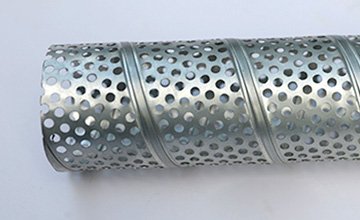
Expanded metal is formed by slitting and stretching a metal sheet into an interconnected pattern. Perforated metal is produced by creating openings in the sheet, often through punching or another cutting process. Both can provide screening, but their appearance, aperture geometry, and mechanical behavior differ.
Can privacy screen panels be manufactured to custom dimensions?
Custom dimensions, opening patterns, finishes, and framed assemblies may be possible depending on manufacturing capability. Provide a technical drawing or detailed specification to confirm feasibility and pricing.
Conclusion
Expanded metal privacy screens offer a flexible way to combine visual screening, ventilation, and architectural design. They can be used for residential balconies, gardens, patios, commercial partitions, and building facades.
The most suitable screen is not necessarily the one with the smallest openings or the thickest material. Effective selection depends on the relationship between mesh geometry, viewing angle, material, surface finish, installation environment, and required performance.
For projects requiring a particular privacy level, evaluating actual samples under representative lighting and viewing conditions can help avoid unexpected transparency after installation.
ANPING METAL MESH offers expanded metal product options for architectural and industrial applications. Buyers can submit drawings, opening specifications, material requirements, panel dimensions, and quantities through our contact page to discuss suitable products and obtain a project-based quotation.
Need help choosing a metal mesh?
Share your material, dimensions, intended use and required quantity. We can review the details for a quotation.