Learn how expanded metal is made, from slitting and stretching to flattening, finishing and inspection. Compare materials, mesh dimensions and quality checks.
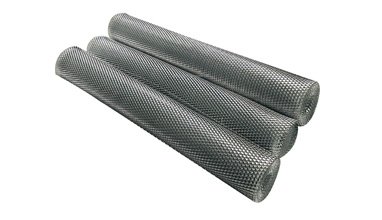
Expanded metal is manufactured by slitting and stretching a solid metal sheet to form a continuous pattern of diamond-shaped openings. A specially designed die makes staggered cuts while the sheet is progressively fed through an expanding machine. The metal between the cuts is displaced to create interconnected strands and bonds, producing an open mesh from a single piece of material without welding the intersections.
The manufacturing process typically includes material selection, sheet feeding, slitting and expansion, optional flattening, trimming, finishing, and inspection. Each stage affects the finished mesh's opening dimensions, surface profile, sheet size, and suitability for applications such as machine guards, architectural screens, ventilation panels, and construction products. This guide explains those stages and the specifications buyers should confirm before ordering expanded metal.
How the Expanded Metal Manufacturing Process Works
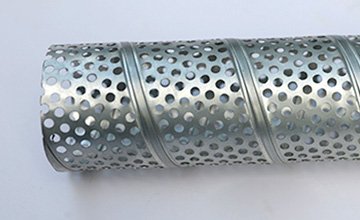
Unlike perforated sheet, which is made by removing individual pieces of metal, expanded metal is formed mainly by moving the material into a new pattern. The slitting and stretching operation creates the openings and the strands in the same production sequence. The result is a continuous mesh structure, although edge trimming, equipment setup, and rejected pieces can still generate manufacturing scrap.
For a typical diamond-pattern product, the sequence is:
Select and prepare the metal sheet. Confirm the material grade, starting thickness, width, surface condition, and the requirements of the final application.
Feed and position the material. An uncoiler or sheet-feeding system guides the metal into the expanding press. Where necessary, leveling helps control curl and feeding irregularities.
Slit and expand the sheet. The die makes a sequence of staggered slits as the feed advances. The material stretches into diamond-shaped openings with connected strands and bonds.
Choose a raised or flattened surface. Raised mesh can remain in its as-expanded form. Flattened mesh undergoes additional rolling to produce a lower-profile, smoother surface.
Trim and cut to size. The mesh is sheared or cut to the required panel dimensions. Edge treatment depends on the product and its intended use.
Apply suitable finishing. Depending on material and specification, the product may be cleaned, coated, galvanized, anodized, or left with a mill finish.
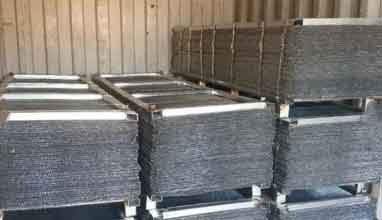
Inspect and pack. Finished mesh is checked against the approved drawing or purchase specification before appropriate packing and shipment.
These are general manufacturing stages rather than a fixed sequence for every material and product. For example, some mesh is made from pre-galvanized steel, while other projects require a coating after the mesh has been expanded and cut.
Materials Used to Manufacture Expanded Metal
Metal selection influences formability, corrosion resistance, weight, appearance, and cost. The correct grade depends on the service environment and whether the mesh will be bent, coated, welded into a frame, or exposed to chemicals or weather.
| Material | Main considerations | Typical applications |
|---|---|---|
| Carbon steel | Economical and readily fabricated; usually needs suitable corrosion protection for outdoor exposure. | Machine guards, general screening, equipment panels, industrial fabrication. |
| Galvanized steel | Zinc coating helps resist corrosion; whether galvanizing occurs before or after expansion matters for cut edges. | Construction mesh, fencing, lath, outdoor enclosures. |
| Stainless steel | Grades such as 304 or 316 may be selected for corrosion resistance; suitability depends on the actual environment. | Process equipment, screening, industrial guards, architectural details. |
| Aluminum | Lower density than steel and suitable for many decorative finishes; alloy and temper affect forming behavior. | Facades, sunshades, ceilings, ventilation and decorative screens. |
| Other formable metals | Copper, brass, nickel, and other metals may be used for specialized projects where production feasibility permits. | Decorative, conductive, thermal or specialized industrial components. |
The forming capability of a particular material depends on the equipment, tooling, alloy, temper, starting thickness, and opening design. Do not assume that all thicknesses and opening sizes can be combined or that every alloy behaves the same way during expansion.
What Happens During Slitting and Stretching?
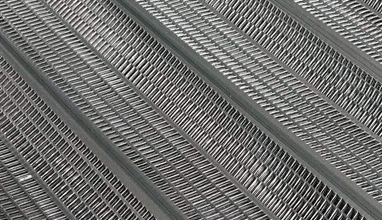
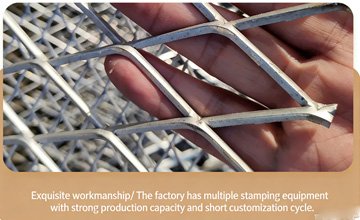
The expanding die cuts a staggered pattern while allowing the metal to deform into an open lattice. The repeated relationship between die geometry and feed movement determines the diamond pattern, bond positions, and strand dimensions. The sheet generally changes its overall width or length during expansion, so the dimensions of the starting blank are not necessarily the dimensions of the finished panel.
Strand width and the length and orientation of the diamonds affect openness, visibility, airflow, rigidity, and the way a panel responds to loading. Those properties cannot be judged from sheet thickness alone. For custom mesh, a drawing that identifies the pattern direction and critical dimensions is more reliable than a photograph with a single nominal mesh-size description.
Expanded metal is not the same as woven wire mesh or welded wire mesh. It has integral bonds instead of crossed or welded wires. However, that construction does not automatically make every expanded metal design stronger than every alternative; strength and deflection depend on the geometry, metal grade, support conditions, and applicable design criteria.
Raised vs Flattened Expanded Metal
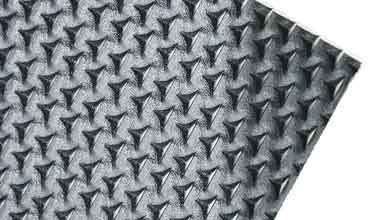
As-expanded or raised mesh retains the three-dimensional profile produced by the expanding press. Flattened expanded metal is produced by passing that mesh through cold-rolling equipment, which reduces the raised profile and changes some dimensions. Both are useful, but they are not interchangeable in every application.
| Feature | Raised expanded metal | Flattened expanded metal |
|---|---|---|
| Surface | Textured, angled strands with a raised profile. | Smoother and lower-profile surface after rolling. |
| Production | Supplied after the expansion process and any required cutting or finishing. | Requires an additional flattening or rolling stage. |
| Typical uses | Guards, barriers, certain industrial surfaces and open screening. | Decorative panels, screens, cabinet inserts and fabrication requiring a flatter profile. |
| Specification concern | Confirm overall thickness, strand orientation and mounting arrangement. | Confirm final thickness, opening dimensions and flatness after rolling. |
For an example of a finished flat product, see our flattened aluminum expanded metal sheet. The appropriate surface should be chosen on the basis of the final installation, rather than appearance alone.
Essential Expanded Metal Dimensions: SWD, LWD, SWO and LWO
Buyers often use the phrase "diamond opening size" without stating what was measured. In expanded metal terminology, the overall diamond pitch and the clear opening are different measurements. Confusing them can lead to the wrong mesh being ordered.
| Term | Meaning | Why it matters |
|---|---|---|
| SWD | Short Way of Design: nominal diamond pitch in the short direction, generally measured between corresponding bond centers. | Defines pattern geometry and orientation. |
| LWD | Long Way of Design: nominal diamond pitch in the long direction. | Affects mesh appearance and panel layout. |
| SWO | Short Way of Opening: the clear short dimension of the aperture. | Important for screening, access protection and passage of particles or objects. |
| LWO | Long Way of Opening: the clear long dimension of the aperture. | Important for clearances, visibility and functional openings. |
| Strand width | Width of the metal strand between adjacent openings. | Influences open area, appearance and mechanical behavior. |
| Strand thickness | Thickness of the metal forming the strand. | Must be distinguished from the overall raised profile or thickness after flattening. |
| Sheet dimensions | Finished width and length, with an identified pattern direction. | Necessary for fabrication, framing, installation and yield planning. |
| Open area | Percentage of the projected panel area occupied by openings. | Relevant to airflow, light transmission and screening, subject to actual geometry. |
When requesting a quotation, state whether the specified dimensions refer to the overall diamond design or the clear opening. A technical drawing or approved sample is especially valuable for fine-opening and custom architectural mesh. For more dimensions and sheet-format information, see our expanded metal mesh sheet sizes guide.
Surface Finishing and Corrosion Protection
Surface treatments should be selected after identifying the base metal and environmental exposure. A finish that works for an indoor decorative screen may not be adequate for a coastal or chemically aggressive installation.
Untreated or mill finish: Appropriate where the base metal and working environment permit it, or where later fabrication and finishing will take place.
Galvanizing: Zinc-based corrosion protection for steel. Buyers should clarify pre-galvanized material versus galvanizing after fabrication and any requirements for cut-edge protection.
Powder coating or painting: Adds a specified color and protective coating; coating preparation, thickness, and adhesion requirements should be agreed.
Anodizing: Commonly specified for suitable aluminum products, subject to alloy, processing and desired appearance.
Other metal-specific treatments: Cleaning, passivation or specialist finishes may be relevant for particular alloys and end uses.
For exterior architectural panels, evaluate the complete assembly, including fasteners, frames, drainage, dissimilar-metal contact, and maintenance—not just the mesh coating.
Quality Control: What Should Be Checked?
Effective quality control starts with a clear acceptance specification. A supplier should know which dimensions are critical, how they will be measured, and what variation is acceptable for the project. A generic statement such as "high precision" is not a substitute for agreed tolerances.
Material identification: Confirm the specified grade, source documentation where required, and starting sheet thickness.
Pattern consistency: Measure SWD, LWD, and, where functionally important, clear SWO and LWO at representative locations.
Strand condition: Inspect for tears, cracks, incomplete openings, damaged bonds, and objectionable burrs.
Finished size and orientation: Check overall dimensions, the mesh direction, squareness, and edge condition.
Flatness and form: Assess camber, bowing, twist, and the final profile where these are important to installation.
Surface finish: Check appearance, coverage, corrosion protection, and any specified coating tests.
Packaging: Protect finished surfaces and edges appropriately for handling and transportation.
Sampling plans and acceptance limits should depend on the order, application, and customer agreement. A load-bearing platform or protective guard may also require engineering evaluation and testing that goes beyond a routine dimensional or visual inspection.
Common Production Defects and Their Causes
| Issue | Possible contributors | Practical response |
|---|---|---|
| Uneven diamond pattern | Feed variation, tooling condition, incorrect setup or inconsistent starting material. | Check feed settings, die condition and dimensions against an approved sample. |
| Torn or cracked strands | Unsuitable material condition, excessive deformation, damaged tooling or sharp local stress concentrations. | Review grade, temper, thickness, die geometry and forming conditions. |
| Excessive camber or twisting | Forming stresses, orientation and handling or cutting conditions. | Agree allowable geometry and review straightening and handling steps. |
| Sharp or inconsistent edges | Trimming process, tooling wear or incomplete edge finishing. | Specify edge quality and inspect representative finished panels. |
| Coating defects | Surface preparation, coating selection or application conditions. | Specify finish requirements and use the appropriate inspection method. |
Not every visible variation indicates a defective sheet. Expanded metal has direction-dependent geometry, and the acceptance criteria should be appropriate to its intended use.
Relevant Standards and Documentation
There is no single international standard that applies automatically to every type of expanded metal, material, coating, and end use. The applicable requirements should be specified in the purchase order or project documentation.
ASTM F1267: A specification covering steel expanded metal, where applicable to the product being purchased.
ASTM C847: Relevant to metal lath used for stucco or plaster applications; it should not be applied indiscriminately to architectural or industrial mesh.
Material and coating specifications: The appropriate steel, stainless steel, aluminum, galvanizing or coating standards depend on the selected product and market.
Quality-system certificates: An ISO 9001 certification, when requested, should be verified for the actual certified company, scope and validity rather than inferred from an article.
For demanding projects, request the relevant material certificate, drawing approval, inspection records or third-party test report before confirming production. Refer to the correct edition of each standard in the contract.
How Manufacturing Choices Affect Applications
Architectural facades and sunshades: Material, diamond orientation, open area, coating quality, flatness and mounting details shape the visual result. Aluminum is often considered when reducing panel weight matters.
Industrial machine guards: Clear opening dimensions, strand condition, frame attachment and the relevant safety requirements are essential. A mesh pattern should not be declared safe for machinery without application-specific evaluation.
Ventilation and screening: The clear opening, open-area ratio and resistance to blockage are usually more useful than nominal diamond pitch alone.
Construction lath: Use the correct lath type and project requirements rather than substituting any available expanded metal sheet. Explore an example in our galvanized expanded metal lath product page.
Walkways and platforms: Loading, span, supports, slip resistance and applicable safety rules must be checked by a qualified designer. Not all expanded metal is suitable for pedestrian loading.
What to Include in an Expanded Metal RFQ
Clear specifications help suppliers identify a feasible tooling and production route, compare quotations consistently, and avoid manufacturing the wrong pattern. Include the following details where available:
Material: Metal type, alloy or grade, and any required material documentation.
Starting thickness: Sheet gauge or thickness in millimeters.
Mesh geometry: SWD, LWD, strand width, and clear SWO/LWO where critical.
Finished form: Raised or flattened, with the required pattern orientation.
Panel size: Finished width and length, quantity, and acceptable tolerances.
Surface finish: Galvanizing, powder coating, anodizing or other treatment, including color where relevant.
Application: Facade, screening, machinery, plaster lath or another use, together with environmental exposure.
Quality requirements: Relevant standards, inspection criteria, sample approval and documentation.
Commercial details: Order quantity, destination, packing requirements and requested delivery terms.
If you do not yet know the full mesh specification, provide the intended application, photographs, a sketch, or a sample. You can also browse our expanded metal product catalog to compare general options before preparing an RFQ.
Frequently Asked Questions About Expanded Metal Production
How is expanded metal made?
Expanded metal is created by feeding a metal sheet through a machine that slits and stretches it in a repeated pattern. The resulting openings and interconnected strands are formed from the original sheet rather than assembled from separate wires.
Does expanded metal manufacturing produce zero waste?
The core expansion operation normally avoids punching out a separate piece for each opening. However, edge trimming, setup, offcuts and rejected material can still generate scrap, so "zero waste" is not an accurate general claim for an entire production line.
What is the difference between raised and flattened expanded metal?
Raised mesh retains the angled strand profile formed during expansion. Flattened mesh is cold-rolled afterward to reduce that profile and create a smoother surface. Rolling can alter final thickness and opening dimensions.
What is the difference between SWD and SWO?
SWD refers to the short-way dimension of the repeating diamond design, typically measured between corresponding bond centers. SWO is the clear opening in that direction. The two values should not be used interchangeably.
Can expanded metal be manufactured in custom sizes?
Many suppliers can vary material, tooling pattern, sheet size, finishing and cutting, but feasibility depends on the combination of material properties, machine capacity and geometry. Confirm custom requirements with a drawing or approved sample.
Is expanded metal suitable for load-bearing applications?
Some products are designed for grating or platform use, but suitability must be established from the exact mesh section, support span, loading conditions, attachment details and relevant engineering standards. Generic expanded mesh should not be assumed to be load-rated.
Conclusion: Specify the Process, Not Just the Pattern
Expanded metal manufacturing is a controlled sheet-forming process in which material selection, die geometry, feeding, expansion, optional flattening, finishing and inspection all affect the finished product. Understanding how these stages work makes it easier to compare quotations and select mesh that performs as intended.
ANPING METAL MESH supplies expanded metal products for a range of industrial, construction and architectural requirements. To discuss a custom specification, share your material, opening dimensions, sheet size, surface finish, quantity and application through our expanded metal quotation page.
Need help choosing a metal mesh?
Share your material, dimensions, intended use and required quantity. We can review the details for a quotation.