Explore expanded metal in San Antonio, TX. Compare steel and aluminum sheets, sizes, local suppliers, facade applications and custom sourcing options.
Expanded metal in San Antonio, Texas, is used for architectural sunshades, industrial machinery guards, protective fencing, custom fabrication, construction lath, trailer components, and decorative metal panels. Buyers can source standard expanded metal sheets through local metal suppliers or consider specialized manufacturing and bulk purchasing options from international suppliers.
San Antonio's hot summers, strong sunlight, seasonal humidity, and occasional heavy rainfall are important considerations when selecting expanded metal materials and finishes. Aluminum, galvanized steel, carbon steel, and stainless steel offer different combinations of mechanical properties, weight, corrosion resistance, appearance, and cost.
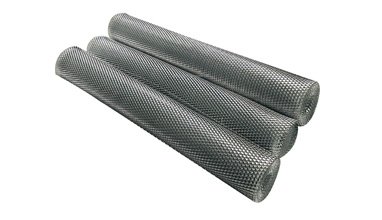
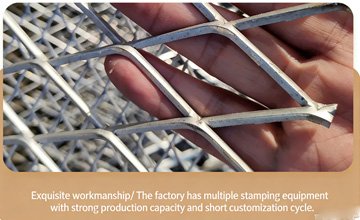
Expanded metal is manufactured by slitting and stretching a solid metal sheet to create interconnected openings, typically in a diamond-shaped pattern. Unlike conventional welded wire mesh, its strands and connecting bonds are formed from the original sheet without separately welded wire intersections.
Expanded metal is available in raised and flattened forms, with different sheet dimensions, strand widths, opening sizes, and surface finishes. The appropriate specification depends on the intended application rather than the product name alone.
This guide explains how to select expanded metal for projects in San Antonio, including available materials, standard sizes, local sourcing, architectural applications, industrial uses, custom fabrication, building code considerations, and purchasing expanded metal from China.
For additional product information, explore the ANPING METAL MESH Product Center.
What Is Expanded Metal and Why Is It Used in San Antonio?
Expanded metal is an open metal sheet produced through a controlled slitting and stretching process.
The manufacturing process creates continuous strands and interconnected openings without assembling separate metal wires.
Depending on its specifications, expanded metal can be used as an unfinished sheet, a cut-to-size component, or part of a framed and fabricated assembly.
Common applications include:
Industrial machinery protection.
Residential and commercial fencing.
Window and door guard components.
Architectural facade screens.
Exterior sunshading systems.
Construction and stucco lath.
Utility trailer components.
Equipment ventilation panels.
Decorative partitions.
Selected industrial grating systems.
Expanded metal is not a single standardized product suitable for every application.
A lightweight decorative aluminum panel, a machine guard, and an industrial walkway grating may require substantially different thicknesses, strand dimensions, materials, and performance verification.
Where to Buy Expanded Metal in San Antonio
San Antonio has several metal suppliers and businesses that publish expanded metal products among their offerings.
For small or urgent projects, local purchasing may be more convenient than direct international importing.
For specialized dimensions or larger orders, buyers may also compare custom manufacturing options.
Alamo Iron Works
Alamo Iron Works is a metal supplier operating in San Antonio, Texas.
Its published steel product range includes expanded metal, sheet steel, floor plate, bar grating, and other metal products.
The company also describes steel delivery services serving San Antonio and surrounding areas.
Location: 943 Frost Bank Center Drive, San Antonio, TX 78219.
Suitable enquiries may include:
General expanded metal sheets.
Steel fabrication materials.
Industrial metal products.
Related structural steel supplies.
Local material procurement.
Supplier information: Alamo Iron Works – Steel Products.
Buyers should contact the supplier directly for current inventory, technical specifications, cutting availability, and quotations.
New Metals Inc.
New Metals Inc. is a manufacturer of expanded metal and related fabricated metal products with a published headquarters address in San Antonio.
Its product range includes standard expanded metal, flattened expanded metal, expanded metal grating, and selected fabricated assemblies.
Headquarters: 1777 NE Loop 410, Suite 515, San Antonio, TX 78217.
The company publishes applications involving:
Industrial machinery guards.
Architectural and construction components.
Equipment protection.
Automotive and transportation products.
Decorative screens.
Industrial filters.
Expanded metal grating.
Manufacturer information: New Metals – Expanded Metal Products.
Buyers should confirm the available production location, material specifications, minimum order requirements, and shipping arrangements.
Westbrook Metals
Westbrook Metals is a metal distributor serving the San Antonio area.
It provides different metals and material forms, including steel, stainless steel, aluminum, and sheet and plate products.
Its published services include selected cutting and processing operations.
Location: 907 Eddie Road, San Antonio, TX 78219.
Supplier information: Westbrook Metals.
For expanded metal specifically, buyers should confirm the available mesh types, sheet dimensions, and current stock before purchasing.
Local Purchasing vs. International Sourcing
Local suppliers can be particularly useful when a project requires:
Small quantities.
Immediate material inspection.
Local cutting.
Domestic delivery.
Replacement material.
Standard sheet dimensions.
International sourcing may be worth considering when buyers require:
Larger production quantities.
Non-standard diamond patterns.
Custom material specifications.
Specialized finishes.
Project-specific fabrication.
Export orders for wholesale distribution.
The most economical option depends on the product specifications and total delivered cost.
Main Types of Expanded Metal Available for San Antonio Projects
Expanded metal is commonly divided into raised and flattened products.
These forms differ in surface profile and manufacturing process.
Raised Expanded Metal
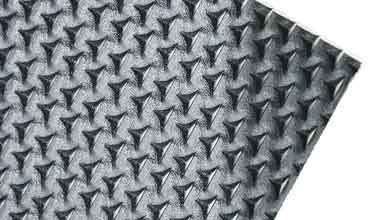
Raised expanded metal retains the three-dimensional structure produced during the expanding process.
The metal strands form angled surfaces around the interconnected diamond openings.
Typical applications include industrial machinery guards, equipment covers, partitions, and selected engineered grating systems.
Main characteristics:
Three-dimensional surface profile.
Continuous metal strands.
Different material grades.
Various opening dimensions.
Suitable for selected industrial fabrication.
Raised expanded metal should not automatically be treated as certified slip-resistant flooring or structural grating.
For walkways and platforms, the complete specification must meet the applicable loading and support requirements.
Flattened Expanded Metal
Flattened expanded metal is manufactured by rolling raised expanded metal to create a flatter surface.
It is often considered for decorative and fabricated applications where a relatively uniform appearance is desirable.
Typical applications include architectural screens, wall panels, interior partitions, furniture components, and equipment covers.
Flattening can change the finished mesh geometry and dimensions.
Buyers should therefore distinguish between raised and flattened products when requesting quotations.
Raised vs. Flattened Expanded Metal Comparison
| Feature | Raised Expanded Metal | Flattened Expanded Metal |
|---|---|---|
| Manufacturing | Slitting and stretching | Expansion followed by rolling |
| Surface | Three-dimensional | Relatively flat |
| Appearance | Textured diamond pattern | Flatter, uniform appearance |
| Typical Uses | Guards, industrial fabrication | Decorative panels, partitions |
| Finished Geometry | Original expanded profile | May change during flattening |
| Additional Processing | Standard expanding | Rolling operation |
The best option depends on the required appearance, fabrication method, mechanical properties, and installation conditions.
Materials for Expanded Metal in San Antonio
San Antonio projects may require different materials depending on environmental exposure and application.
The following table compares common material choices.
| Material | Main Characteristics | Typical Applications |
|---|---|---|
| Carbon Steel | Practical fabrication and mechanical properties | Industrial guards, gates |
| Hot-Dip Galvanized Steel | Zinc coating provides corrosion protection | Fencing, outdoor screens |
| Aluminum Alloy | Relatively lightweight, decorative finishing options | Sunshades, facades, partitions |
| Stainless Steel 304 | General corrosion resistance | Equipment screens, industrial uses |
| Stainless Steel 316 | Improved resistance in selected chloride environments | Specialized industrial and salt-exposed installations |
| Coated Steel | Protective and decorative coating options | Exterior decorative panels |
The appropriate metal should be selected according to the project requirements rather than assuming one material is suitable for every Texas application.
Carbon Steel Expanded Metal
Carbon steel expanded metal is commonly used in industrial metal fabrication.
It can be used for:
Equipment guards.
Warehouse partitions.
Protective barriers.
Utility trailer components.
Fabricated gate panels.
Industrial enclosures.
Uncoated carbon steel can corrode in outdoor environments.
For exterior applications, suitable protective finishing should be considered.
Hot-Dip Galvanized Expanded Metal
Hot-dip galvanized expanded metal has a zinc coating intended to reduce corrosion of the underlying steel.
It may be considered for outdoor protective screens, fencing, agricultural components, and industrial installations.
Important considerations include coating specifications, cut edges, welded connections, and the intended service environment.
Hot-dip galvanizing and electro-galvanizing are different manufacturing processes and should not be treated as interchangeable.
Aluminum Expanded Metal
Aluminum expanded metal is frequently considered for architectural and decorative applications.
Its relatively low density can help reduce the weight of a comparable metal panel.
Typical applications include:
Architectural facade screens.
Exterior sunshades.
Commercial building panels.
Decorative partitions.
Ceiling systems.
Ventilation grilles.
Different aluminum alloys provide different forming and mechanical characteristics.
Depending on the alloy and application, suitable finishes may include powder coating and anodizing.
Aluminum is not immune to all corrosion, and the material and finish should be selected according to the exposure conditions.
Stainless Steel 304 Expanded Metal
Stainless steel 304 expanded metal provides general corrosion resistance.
It may be suitable for selected industrial equipment, decorative screens, protective covers, and processing-related applications.
The required grade and finish should be confirmed according to the project environment.
Stainless Steel 316 Expanded Metal
Stainless steel 316 generally offers improved resistance to chloride-related corrosion compared with stainless steel 304.
It may be appropriate for some demanding industrial environments or areas exposed to salt-containing conditions.
However, SS316 is not completely immune to corrosion.
The correct material selection depends on chemical exposure, fabrication details, maintenance, and the intended application.
How San Antonio's Climate Affects Expanded Metal Selection
San Antonio experiences hot summers, strong sunlight, periods of humidity, heavy rain events, and seasonal temperature changes.
These conditions influence material selection, protective finishes, and installation details.
Heat and Thermal Expansion
Metal components expand and contract as temperatures change.
For large architectural panels, the supporting structure and fastening system must allow for appropriate thermal movement.
Different metal alloys have different thermal expansion characteristics.
A panel that fits correctly at one temperature may require additional movement allowances when exposed to substantial temperature changes.
Sunlight and Surface Coatings
Strong sunlight can affect the appearance and durability of certain protective or decorative coatings.
For outdoor architectural projects, buyers should select a coating system appropriate for the expected ultraviolet exposure.
The performance of a coating depends on its formulation, preparation, application, and maintenance.
Expanded metal itself should not be described as UV-proof in every configuration.
Moisture and Corrosion
Humidity, rainfall, and moisture accumulation can contribute to corrosion of unprotected steel.
Galvanized steel, suitable aluminum alloys, and selected stainless steel grades may provide different levels of corrosion resistance.
The correct material depends on the actual exposure conditions.
Outdoor Installation and Drainage
Exterior expanded metal panels should be installed with suitable attention to drainage and moisture accumulation.
Framing, brackets, and fasteners should be compatible with the panel material and intended environment.
Wind Loads
Large exterior screens and facade panels are exposed to wind pressure and other environmental loads.
The appropriate mesh thickness, supporting structure, and fastening details must be evaluated through the complete project design.
No expanded metal sheet should be described as universally wind-resistant without supporting engineering evidence.
Expanded Metal for Architectural Sunshades in San Antonio
Architectural sunshades are an important potential application for expanded metal in hot climates.
An expanded metal screen can create partial shading while permitting some airflow and light transmission.
Aluminum is commonly considered for decorative sunshade systems because of its relatively low weight and finishing options.
Potential applications include:
Office building sunshades.
Commercial facade screens.
Parking structure screens.
Exterior architectural panels.
Hotel facade features.
Decorative outdoor partitions.
How Expanded Metal Sunshades Work
The strands and openings of expanded metal influence the amount and direction of sunlight passing through the panel.
Shade performance depends on:
SWD and LWD dimensions.
Strand width.
Open area percentage.
Mesh orientation.
Panel angle.
Distance from glazing.
Building orientation.
Local solar conditions.
Different designs can create substantially different shading patterns.
Can Expanded Metal Reduce Cooling Costs?
Expanded metal sunshades may help reduce solar exposure in appropriately designed building systems.
However, energy savings cannot be calculated from the mesh material alone.
A claim that a particular panel blocks a fixed percentage of sunlight or reduces cooling costs by a guaranteed amount requires relevant testing or project-specific analysis.
For architectural projects, shading performance should be evaluated as part of the complete building design.
Learn more in our Expanded Metal Mesh Facade Guide.
Standard Expanded Metal Sheet Sizes
Expanded metal sheets are available in different metric and imperial formats.
The correct size depends on material, thickness, opening pattern, supplier stock, and fabrication requirements.
| Nominal Sheet Size | Approximate Metric Size | Common Applications |
|---|---|---|
| 2 × 4 ft | 610 × 1220 mm | Small fabricated panels |
| 3 × 6 ft | 914 × 1829 mm | Protective screens |
| 4 × 8 ft | 1220 × 2440 mm | General expanded metal sheets |
| 4 × 10 ft | 1220 × 3050 mm | Large fabrication projects |
| 5 × 10 ft | 1524 × 3048 mm | Large-format panels |
| 1000 × 2000 mm | 1000 × 2000 mm | Metric industrial fabrication |
| 1250 × 2500 mm | 1250 × 2500 mm | Architectural applications |
| Custom Dimensions | According to drawing | Specialized projects |
These are commonly used dimensional references, not a guarantee that every size is available from every supplier.
A true 4 × 8 ft sheet measures 1219.2 × 2438.4 mm.
The 1220 × 2440 mm format is a rounded commercial equivalent.
Where precise dimensions are essential, buyers should confirm the actual finished width, length, and tolerances.
Key Technical Specifications of Expanded Metal
A complete expanded metal specification includes both the outside sheet dimensions and the geometry of the mesh.
SWD — Short Way of Diamond
SWD describes the short-way dimension of the repeating diamond pattern.
It should not automatically be interpreted as the clear opening width.
LWD — Long Way of Diamond
LWD describes the long-way dimension of the repeating diamond pattern.
Together, SWD and LWD identify the primary mesh geometry.
SWO and LWO — Clear Opening Dimensions
SWO means Short Way of Opening.
LWO means Long Way of Opening.
These dimensions are important when the application requires a particular clear opening or screening function.
Strand Width
Strand width refers to the width of the interconnected metal strips.
It influences the metal content, weight, appearance, open area, and mechanical characteristics of the sheet.
Original Sheet Thickness
Original sheet thickness is the thickness of the metal before the expanding process.
The overall thickness of raised expanded metal may differ from the original sheet thickness.
Open Area Percentage
Open area is the proportion of the sheet surface occupied by openings.
It influences potential airflow, light transmission, and visibility.
Actual performance must be evaluated according to the complete application.
Mesh Orientation
Expanded metal has directional geometry.
Its orientation affects visual appearance and may influence shading and fabrication requirements.
For more information, see our Expanded Metal Dimensions Chart.
Expanded Metal Diamond Pattern Reference
The following table provides illustrative diamond pattern dimensions.
| Pattern Category | Example SWD × LWD | Possible Applications |
|---|---|---|
| Fine Diamond | 3 × 6 mm | Small screening components |
| Small Diamond | 5 × 10 mm | Decorative screens |
| Medium Diamond | 10 × 20 mm | Protective panels |
| Medium Diamond | 15 × 30 mm | Partitions and fabrication |
| Large Diamond | 20 × 40 mm | Industrial guards |
| Large Diamond | 40 × 80 mm | Specialized industrial panels |
These figures are examples of pattern geometry.
They are not confirmed stock specifications, structural ratings, or clear opening dimensions.
For functional or safety-sensitive applications, buyers should provide complete technical requirements rather than relying on pattern size alone.
Main Applications of Expanded Metal in San Antonio
Expanded metal is used in various commercial, industrial, architectural, and residential applications.
Residential and Commercial Protective Screens
Expanded metal can be incorporated into protective window guards, door screens, and other barrier systems.
The complete assembly should be evaluated for:
Material properties.
Mesh opening dimensions.
Frame design.
Fastener strength.
Installation conditions.
Required security performance.
Expanded metal should not automatically be described as burglar-proof or impact-proof.
Where a specific security rating is required, appropriate system testing or documentation is necessary.
Fencing and Property Barriers
Expanded metal can be fabricated into fencing panels, gates, and protective boundaries.
The required material thickness and opening pattern depend on the intended function.
For outdoor installations, corrosion protection and suitable fastening details should be considered.
Patio and Outdoor Living Screens
Expanded metal may be used as a decorative or protective component in patio partitions, outdoor kitchen screens, and garden features.
The material should be suitable for the surrounding environment.
Cut edges, surface temperature under sunlight, and safe access should be considered in residential applications.
Construction and Stucco
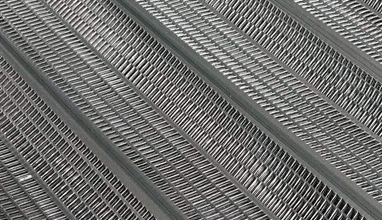
Specialized expanded metal lath can be used in suitable stucco and plaster systems.
It provides an open metal structure that supports the application of plaster materials.
However, construction lath is a specialized product and is not the same as ordinary expanded metal sheets used for fencing or industrial protection.
Expanded metal lath should not automatically replace specified structural concrete reinforcement.
For technical information, read our Expanded Metal Lath for Stucco Guide.
Industrial Machinery Guards
Expanded metal can be used as part of machinery protection systems.
Its open construction may provide visibility and airflow while serving as a physical barrier.
For machine guarding, the complete system must be designed to prevent unsafe access to moving equipment.
Opening dimensions, safety distances, material strength, frames, and fasteners are important.
Trailer and Transportation Components
Expanded metal may be used in suitable utility trailer sides, cargo enclosures, ramps, and protective vehicle components.
However, load-bearing components must be evaluated according to the required structural and transportation specifications.
Ordinary expanded metal should not automatically be used for trailer flooring or ramps without engineering verification.
Industrial Walkways and Grating
Certain heavy-duty expanded metal products can be used in appropriately engineered walkway or grating systems.
The required load capacity depends on product specifications, support spacing, and installation conditions.
A general expanded metal sheet is not necessarily suitable for pedestrian or equipment loads.
Ventilation and Equipment Protection
Expanded metal is used for ventilation covers, equipment screens, and protective grilles.
The opening geometry influences airflow and object clearance.
When airflow performance or protection from hazardous equipment is critical, the complete assembly must be evaluated.
Expanded Metal vs. Perforated Metal vs. Welded Wire Mesh
These three products have different manufacturing methods and characteristics.
| Feature | Expanded Metal | Perforated Metal | Welded Wire Mesh |
|---|---|---|---|
| Manufacturing | Slitting and stretching sheet | Forming holes in a sheet | Welding intersecting wires |
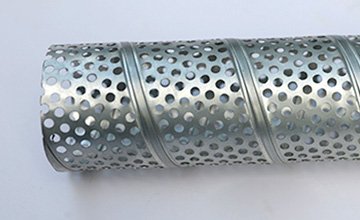
| Typical Opening | Diamond | Round, square, decorative | Square or rectangular |
| Structure | Interconnected strands | Remaining solid sheet | Joined metal wires |
| Common Applications | Screens, guards, facades | Panels, ventilation, decoration | Fencing, cages, reinforcement |
| Surface | Raised or flattened | Usually sheet-based | Wire-based |
| Key Specification | SWD, LWD, strand width | Hole size and pitch | Wire diameter and spacing |
No product is automatically stronger, cheaper, or more durable in every configuration.
The correct selection depends on mechanical requirements, material, opening dimensions, fabrication, and cost.
Custom Expanded Metal for San Antonio Projects
Custom expanded metal may be useful when standard sheet sizes or patterns do not match the intended application.
Potential customization requirements include:
Selected material grades.
Custom finished sheet dimensions.
SWD and LWD dimensions.
Strand width.
Original sheet thickness.
Raised or flattened profile.
Custom cutting and edge treatment.
Powder coating or other suitable finishes.
Pattern orientation.
Frame and installation details.
Not every combination can be manufactured using standard expanding equipment.
For specialized projects, buyers should provide technical drawings so manufacturing feasibility can be reviewed.
Custom Architectural Panels
Architectural projects may require carefully controlled panel dimensions, pattern orientation, color, and edge treatment.
The complete system should also address supporting frames, attachment methods, environmental exposure, and access for maintenance.
Custom Industrial Components
Industrial buyers may require expanded metal cut to match equipment enclosures, machinery guards, or protective screens.
The finished dimensions and mechanical requirements should be confirmed before production.
Surface Finish Options
Common finishes include:
Mill finish.
Hot-dip galvanizing.
Powder coating.
Anodizing for compatible aluminum alloys.
Selected stainless steel finishes.
Suitable industrial paint systems.
The chosen finish should match the base metal and expected operating environment.
Building Codes and Project Requirements in San Antonio
Construction products installed in San Antonio may need to comply with applicable building regulations and local amendments.
The City of San Antonio publishes its adopted building-related codes through the Development Services Department.
Applicable requirements depend on the project type and use.
For expanded metal facade and architectural installations, relevant considerations may include:
Wind-load resistance.
Structural support.
Panel anchorage.
Fire-related requirements.
Material compatibility.
Corrosion protection.
Accessibility and guard requirements.
Maintenance access.
Engineering documentation.
An expanded metal sheet does not automatically satisfy every building code requirement.
The complete installed system must be evaluated where structural or life-safety performance is involved.
For official information, consult the City of San Antonio – Codes and Ordinances.
Machinery Guarding and Industrial Safety
Industrial expanded metal guards may be subject to workplace safety requirements.
For machinery guarding applications, employers and equipment designers should consider the applicable OSHA requirements, including requirements concerning access to hazardous moving parts.
The mesh geometry, frame construction, fixing methods, and installed safety distances are important.
Using thick metal alone does not establish that a guard is compliant.
For official guidance, refer to OSHA Machine Guarding Requirements.
Where to Source Expanded Metal: Local vs. China
San Antonio buyers may compare local suppliers with international manufacturers depending on purchasing requirements.
Buying from Local Suppliers
Local purchasing may be suitable for:
Small quantities.
Repairs and maintenance.
Standard sheet formats.
Short domestic delivery requirements.
Local cutting and processing.
Immediate inspection before purchase.
The availability of a particular mesh pattern should be confirmed with the supplier.
Importing from China
International sourcing may be considered for:
Larger wholesale quantities.
Custom sheet dimensions.
Specialized patterns.
Specific material grades.
Custom surface finishes.
Project-based fabrication requirements.
Importing involves additional considerations such as freight, customs classification, duties, trade measures, insurance, and inland transportation.
For small orders of standard material, buying locally may be more practical.
U.S. Import Duties and Trade Measures
Expanded metal imported into the United States must be classified using the applicable Harmonized Tariff Schedule.
The correct classification depends on material, form, manufacturing characteristics, and other relevant product details.
Additional tariffs or trade measures may apply to certain steel and aluminum goods and their derivatives.
The applicable rates and rules can change and should be confirmed before shipping.
Importers should work with a qualified U.S. customs broker to verify the correct classification and landed-cost calculation.
Official references:
Buyers should not assume that expanded metal imported from China will be duty-free.
Shipping Expanded Metal from China to San Antonio
San Antonio is an inland city, so international shipments may involve ocean freight to a suitable U.S. gateway followed by road or rail transportation.
The appropriate route depends on the supplier's location, cargo characteristics, freight arrangements, and destination.
Sea Freight for Bulk Orders
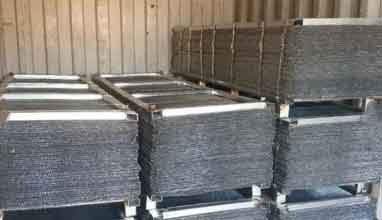
Sea freight is commonly considered for larger expanded metal shipments.
The number of sheets that can be loaded into a container depends on:
Sheet length and width.
Unit weight.
Mesh pattern.
Thickness.
Packaging dimensions.
Container payload.
Loading method.
There is no fixed sheet quantity that applies to every expanded metal container shipment.
Inland Transportation
After the shipment reaches the relevant U.S. gateway, inland transport may be arranged to San Antonio.
The total cost depends on route, shipment weight, dimensions, carrier, and delivery requirements.
Air Freight for Smaller Shipments
Air freight may be considered for selected smaller or urgent shipments.
However, large metal sheets may be subject to significant dimensional and weight restrictions.
Delivery Time
Production, international transportation, customs clearance, and inland delivery should be estimated separately.
Buyers should request a current shipment-specific logistics quotation.
A fixed delivery guarantee should not be assumed without a confirmed shipping arrangement.
EXW, FOB, CIF and Delivered Quotations
International purchasing quotations may use different Incoterms.
EXW — Ex Works
The seller makes goods available at the agreed location, with subsequent responsibilities allocated according to the agreed terms.
FOB — Free on Board
FOB is used for suitable sea shipments and identifies the named loading port.
Example: FOB Tianjin, China — Incoterms 2020.
CIF — Cost, Insurance and Freight
CIF includes agreed freight and insurance to a named destination seaport.
However, it does not automatically include U.S. import clearance, duties, or final delivery to San Antonio.
DAP — Delivered at Place
DAP may be used when the seller agrees to deliver goods to a specified destination.
Import clearance, duties, and taxes are generally the buyer's responsibility under DAP, unless another arrangement is agreed.
Buyers should ensure the delivery term and named place are clearly identified in the quotation.
What Affects Expanded Metal Prices in San Antonio?
Expanded metal prices vary according to material, specifications, fabrication requirements, and delivery conditions.
1. Material Grade
Carbon steel, galvanized steel, aluminum, and stainless steel have different raw material and manufacturing costs.
2. Original Sheet Thickness
Thickness affects material consumption, weight, and processing requirements.
3. Opening Geometry
SWD, LWD, strand width, and the finished diamond pattern influence product weight and production requirements.
4. Surface Finish
Galvanizing, powder coating, anodizing, and other treatments affect processing cost.
5. Sheet Size
Different sheet dimensions involve different material and cutting requirements.
6. Custom Fabrication
Cutting, framing, bending, and project-specific processing may increase the final price.
7. Order Quantity
Larger purchasing quantities may improve production and freight efficiency, depending on the supplier agreement.
8. Domestic vs. Imported Supply
Local sheet prices and imported factory quotations include different transportation, tax, and handling costs.
9. Required Documentation
Material certificates, dimensional inspection, or specific performance testing may affect production and purchasing arrangements.
The most reliable price comparison uses equivalent product specifications and the same delivered-cost basis.
How to Calculate Expanded Metal Sheet Area
Sheet area is useful for estimating quantities and comparing prices.
The basic formula is:
Sheet Area = Width × Length
For a commercial sheet measuring 1220 × 2440 mm:
1.22 m × 2.44 m = 2.9768 m².
If a project requires 100 m² of gross expanded metal sheet area:
100 ÷ 2.9768 = approximately 33.59 sheets.
Before accounting for cutting waste, the buyer would need to round up to 34 sheets.
Actual purchasing quantities may be higher because of cutting, edge trimming, framing, and pattern orientation.
For accurate weight and freight calculations, buyers should obtain verified unit weight information from the supplier.
How to Choose the Right Expanded Metal in San Antonio
A practical selection process begins with the intended application.
Step 1: Define the Function
Determine whether the expanded metal will be used for architectural shading, machinery guarding, fencing, decoration, or another application.
Step 2: Select the Material
Choose the metal grade according to mechanical requirements, corrosion exposure, fabrication, and cost.
Step 3: Confirm the Mesh Geometry
Specify SWD, LWD, strand width, and clear opening dimensions where relevant.
Step 4: Choose the Thickness
Select the original sheet thickness appropriate to the required performance and fabrication process.
Step 5: Select Raised or Flattened
Choose the required surface profile.
Step 6: Confirm Sheet Dimensions
Provide length, width, and any required dimensional tolerances.
Step 7: Select the Surface Finish
Confirm whether the application requires galvanizing, powder coating, anodizing, or another finish.
Step 8: Identify Required Performance
For facades, machinery guards, and load-bearing applications, confirm the relevant engineering and safety requirements.
Step 9: Compare Purchasing Options
For small quantities, review local availability. For larger or specialized orders, consider international quotations.
Step 10: Calculate the Total Delivered Cost
Include relevant fabrication, freight, import charges, and inland transportation.
Expanded Metal RFQ Checklist for San Antonio Buyers
A complete request for quotation helps suppliers understand the purchasing requirements.
| Required Information | Example |
|---|---|
| Product Type | Raised / Flattened / Decorative / Heavy Duty |
| Material | Carbon Steel / Galvanized Steel / Aluminum / Stainless Steel |
| Material Grade | Required alloy or steel grade |
| Original Sheet Thickness | Thickness in mm or inches |
| SWD | Short Way of Diamond |
| LWD | Long Way of Diamond |
| Strand Width | Required dimension |
| Clear Opening | SWO / LWO where necessary |
| Sheet Dimensions | Width × Length |
| Mesh Orientation | According to drawings |
| Surface Finish | Mill / Galvanized / Powder Coated |
| Application | Facade / Guard / Fencing / Industrial |
| Quantity | Number of sheets or total area |
| Destination | San Antonio, Texas, United States |
| Required Documents | Material or performance documents |
| Delivery Terms | EXW / FOB / CIF / DAP |
| Technical Drawings | PDF / CAD / Reference Images |
Custom projects should include any required edge treatment, fastening requirements, frames, and tolerances.
Frequently Asked Questions About Expanded Metal in San Antonio
1. Where can I buy expanded metal in San Antonio?
San Antonio metal suppliers such as Alamo Iron Works and New Metals Inc. publish expanded metal products in their catalogs. Buyers should contact them directly for current stock, specifications, and prices.
2. Is expanded metal suitable for San Antonio's hot climate?
Expanded metal may be suitable for outdoor use when the material, finish, supporting structure, and installation are properly specified. Coating performance and thermal expansion should be considered.
3. Which expanded metal material is suitable for architectural sunshades?
Aluminum expanded metal is frequently considered because of its relatively low weight and decorative finishing options. The final selection depends on engineering and architectural requirements.
4. Can expanded metal reduce solar heat gain?
Expanded metal can provide partial shading in suitable installations. Actual solar performance and energy savings depend on the complete building design and require project-specific assessment.
5. What is the difference between raised and flattened expanded metal?
Raised expanded metal retains the three-dimensional surface produced during expansion. Flattened expanded metal undergoes rolling to create a flatter profile.
6. What is a common expanded metal sheet size in the United States?
A common commercial format is approximately 4 × 8 ft. Other sheet dimensions and custom-cut products may also be available.
7. Is galvanized expanded metal suitable for outdoor fencing?
Appropriately specified galvanized expanded metal may be used in outdoor fencing. The coating and complete installation should match the exposure conditions.
8. Can expanded metal be used for security doors and windows?
Expanded metal may be incorporated into protective door and window assemblies. Security performance depends on the complete system and any relevant testing.
9. Can expanded metal keep mosquitoes out?
Ordinary expanded metal patterns generally have openings too large for effective mosquito exclusion. A suitable fine insect screen or combined protective assembly should be used.
10. Can expanded metal be used for stucco construction?
Specialized expanded metal lath can be used in appropriate stucco and plaster systems. It should not automatically replace structural concrete reinforcement.
11. Is expanded metal suitable for industrial machinery guards?
Expanded metal may be used in appropriately designed machine guards. Opening dimensions, safety distances, material strength, and fastening requirements must be evaluated.
12. Can expanded metal be used for utility trailer flooring?
Certain engineered expanded metal products may be suitable for specified trailer applications. Load-bearing suitability must be verified.
13. Can expanded metal be powder coated for outdoor use?
Suitable expanded metal products can receive powder coating. The coating system should be specified according to the metal and expected exposure conditions.
14. Can expanded metal panels be customized?
Custom dimensions, patterns, strand widths, finishes, and fabrication may be possible depending on manufacturing feasibility.
15. Does expanded metal automatically meet San Antonio building codes?
No. Compliance depends on the product, installed assembly, application, and applicable local regulations.
16. Is importing expanded metal from China cheaper than buying locally?
Not necessarily. Larger or specialized orders may justify international purchasing, but freight, customs duties, trade measures, and inland delivery must be included.
17. Can expanded metal be shipped directly to San Antonio?
International orders can be arranged with transportation to the region, subject to carrier availability, customs procedures, and the agreed delivery terms.
18. What affects expanded metal prices in Texas?
Material grade, thickness, opening dimensions, strand width, sheet size, finish, quantity, fabrication, and transportation all affect pricing.
19. How can I compare two expanded metal quotations?
Compare equivalent material grades, original thicknesses, SWD, LWD, strand widths, finished sheet dimensions, coatings, and delivery terms.
20. What information should I send for a custom quotation?
Provide material, thickness, opening dimensions, strand width, finished sheet size, finish, quantity, application, destination, and any technical drawings.
Choosing Expanded Metal for San Antonio Projects
Expanded metal can be used in a wide range of San Antonio applications, including architectural sunshades, industrial machinery guards, protective fencing, metal fabrication, decorative partitions, and specialized construction products.
The appropriate material depends on the intended use, required mechanical performance, environmental exposure, surface finish, and installation design.
For architectural applications, aluminum expanded metal may provide a relatively lightweight and visually distinctive screening solution. For industrial and protective applications, carbon steel, galvanized steel, and stainless steel offer different performance and cost considerations.
Buyers should confirm complete technical specifications rather than relying on general claims about durability, security, or weather resistance.
For smaller standard orders, local metal suppliers may offer convenient purchasing options.
For larger quantities or specialized products, international sourcing may be worth considering after calculating all transportation, import, and fabrication expenses.
ANPING METAL MESH provides expanded metal product information and supports specification-based enquiries for international buyers.
Request an Expanded Metal Quotation for San Antonio
Looking for expanded metal sheets for architectural sunshades, fencing, industrial protection, metal fabrication, or wholesale distribution in San Antonio?
Send us your required material, original sheet thickness, SWD, LWD, strand width, finished dimensions, surface finish, estimated quantity, and delivery destination.
For custom panels, technical drawings and reference photographs can help clarify your requirements.
Please also indicate whether you have a freight forwarder or customs broker in the United States and which delivery arrangements you prefer.
Carbon Steel Expanded Metal | Galvanized Mesh | Aluminum Facade Panels | Stainless Steel Sheets | Raised and Flattened Expanded Metal | Custom Specifications | B2B Procurement
Explore our Expanded Metal Products or Contact ANPING METAL MESH to discuss your project and request a quotation.
Need help choosing a metal mesh?
Share your material, dimensions, intended use and required quantity. We can review the details for a quotation.