Compare hot-dip and electro-galvanized wire mesh, welded and woven types, zinc coating, wire sizes and applications. Find specifications for bulk orders.
What Is Galvanized Wire Mesh?
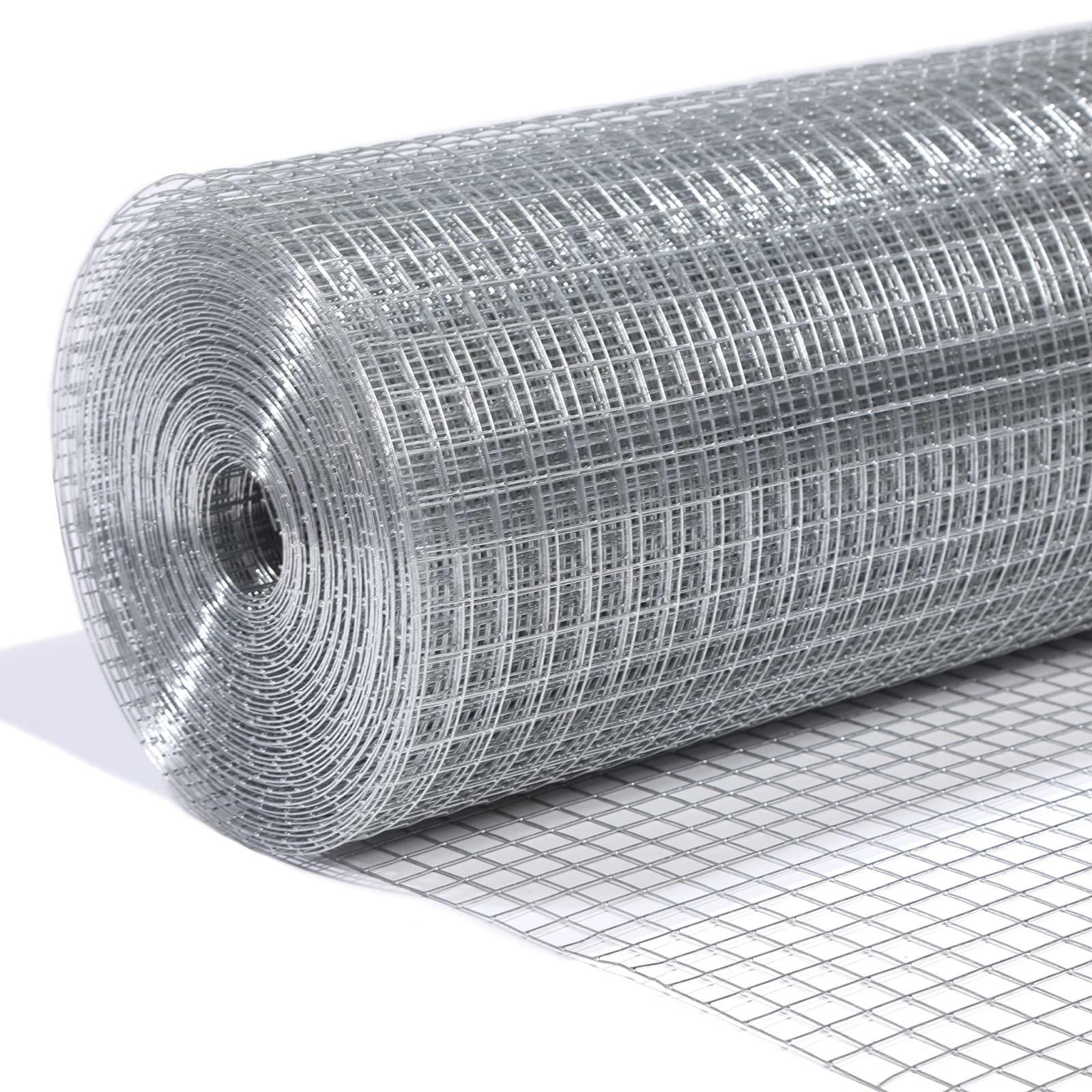
Galvanized wire mesh is a metal mesh product manufactured from steel wire protected by a zinc coating. The mesh is generally produced by welding, weaving, or twisting metal wires into specific opening patterns, making it suitable for construction, agriculture, industrial protection, screening, and fencing applications.
The zinc coating helps protect the underlying steel against atmospheric corrosion. It acts as a physical barrier against moisture and also provides sacrificial protection, meaning zinc corrodes preferentially before the steel in suitable conditions.
Compared with uncoated carbon steel mesh, galvanized wire mesh generally offers improved corrosion resistance and can reduce maintenance requirements in appropriately selected environments.
However, galvanized wire mesh is not completely rust-proof. Its actual service life depends on the zinc coating, manufacturing method, environmental exposure, installation conditions, and maintenance.
Galvanized wire mesh is commonly supplied in rolls, flat sheets, or fabricated panels. Different wire diameters, mesh openings, and packaging formats are available depending on the product type.
At ANPING METAL MESH, we focus on metal mesh products for construction, industrial, agricultural, and protective applications. Buyers can submit drawings, photographs, or technical specifications for product evaluation and quotation discussions.
How Does Galvanizing Protect Wire Mesh?
Galvanizing is a corrosion protection process that applies zinc to the surface of steel.
The protective performance of galvanized wire mesh comes from two main mechanisms.
1. Barrier Protection
The zinc coating creates a protective layer between the steel substrate and the surrounding environment.
This reduces direct exposure to moisture and oxygen, which contribute to steel corrosion.
The effectiveness of this protection depends on the continuity, thickness, and condition of the zinc coating.
2. Sacrificial Protection
Zinc is more electrochemically active than steel.
When the protective coating is locally damaged, surrounding zinc may corrode preferentially and provide limited protection to the exposed steel.
This characteristic is one of the main reasons galvanized steel is widely used for outdoor construction and fencing products.
Nevertheless, excessive coating damage, prolonged exposure to aggressive environments, or insufficient zinc coating can lead to corrosion.
Hot-Dip Galvanized vs. Electro-Galvanized Wire Mesh
Galvanized wire mesh is available with different zinc coating processes.
Two commonly discussed options are hot-dip galvanizing and electro-galvanizing.
Understanding their differences helps buyers select suitable products and compare supplier quotations.
1. Hot-Dip Galvanized Wire Mesh
Hot-dip galvanizing involves applying zinc through immersion in molten zinc.
Depending on the product, the process may be carried out on individual wires before mesh fabrication or on suitable finished mesh assemblies after fabrication.
Hot-dip galvanized products can offer substantial corrosion protection, but coating characteristics depend on the manufacturing process and specification.
Main Characteristics:
Zinc coating applied through molten zinc.
Suitable for many outdoor applications.
Different coating grades available.
Can be used for welded and selected woven mesh products.
Corrosion performance depends on coating quality and environment.
Typical Applications:
Outdoor fencing.
Agricultural enclosures.
Industrial partitions.
Construction mesh.
Protective barriers.
General outdoor metal mesh products.
Buyers should confirm the actual coating requirements rather than assuming that all hot-dip galvanized products have the same zinc coating weight.
2. Electro-Galvanized Wire Mesh
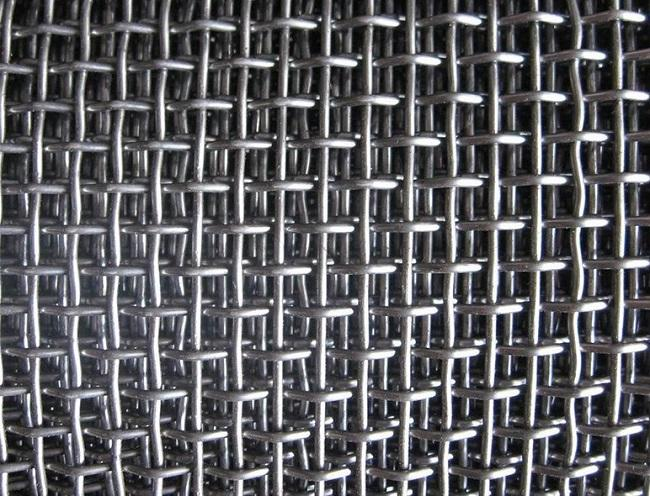
Electro-galvanizing applies zinc to steel using an electrochemical deposition process.
This treatment can produce a relatively smooth and uniform surface finish.
Electro-galvanized mesh is commonly considered for indoor applications and selected projects with moderate corrosion exposure.
Main Characteristics:
Zinc coating applied through electroplating.
Relatively smooth surface appearance.
Different coating thickness specifications.
Suitable for selected indoor and light-duty applications.
Corrosion resistance depends on coating thickness and exposure.
Typical Applications:
Indoor partitions.
Decorative mesh.
General screening.
Equipment protection.
Selected temporary enclosures.
Light-duty fabrication.
Electro-galvanized mesh should not automatically be considered suitable for every outdoor environment.
3. Hot-Dip vs. Electro-Galvanized Wire Mesh Comparison
| Feature | Hot-Dip Galvanized Mesh | Electro-Galvanized Mesh |
|---|---|---|
| Coating Method | Immersion in molten zinc | Electrochemical zinc deposition |
| Surface Appearance | Depends on process and coating | Often relatively smooth |
| Zinc Coating | Multiple grades and thicknesses | Generally thinner coating options |
| Corrosion Resistance | Suitable for many outdoor uses | Depends on coating and exposure |
| Typical Applications | Fencing, agriculture, construction | Indoor screening, decoration |
| Main Buyer Concern | Coating specification and coverage | Coating thickness and durability |
The correct selection should be based on project requirements, environmental conditions, and verified coating specifications.
Galvanized Before Welding vs. Galvanized After Welding
Another important factor in purchasing welded wire mesh is the order of the galvanizing and welding processes.
These manufacturing methods can affect coating coverage around welded intersections.
Galvanized Before Welding
In this method, steel wires receive a zinc coating before they are welded into mesh.
The galvanized wires are then joined at their intersections.
The welding process may affect the protective coating around the welded areas.
For outdoor applications, buyers should confirm the finished product's corrosion protection requirements.
Galvanized After Welding
In this method, steel wires are welded into mesh before the finished assembly receives a zinc coating.
When a suitable hot-dip galvanizing process is used after fabrication, the zinc coating can cover welded intersections and other exposed surfaces.
However, the finished coating quality still depends on proper surface preparation, fabrication, galvanizing conditions, and inspection.
Which Process Is Better?
Neither manufacturing sequence should be selected without considering the actual product and application.
Buyers should evaluate:
Required coating standard.
Zinc coating mass or thickness.
Weld quality.
Surface finish.
Environmental exposure.
Panel dimensions.
Manufacturing feasibility.
For welded mesh used in demanding outdoor environments, the coating condition around welded intersections is an important quality consideration.
Main Types of Galvanized Wire Mesh
Galvanized wire mesh can be categorized according to its manufacturing structure.
Common products include galvanized welded wire mesh, galvanized woven wire mesh, and galvanized hexagonal wire netting.
Each product type has different mechanical characteristics and suitable applications.
1. Galvanized Welded Wire Mesh
Galvanized welded wire mesh is manufactured by arranging horizontal and vertical metal wires and joining them through resistance welding.
The finished structure generally has square or rectangular openings.
It can be supplied in rolls, flat sheets, or fabricated panels.
Main Advantages:
Uniform opening dimensions.
Welded wire intersections.
Good dimensional stability in suitable specifications.
Different wire diameters available.
Suitable for framing and fabrication.
Multiple galvanized coating options.
Typical Applications:
Agricultural fencing.
Industrial partitions.
Warehouse enclosures.
Construction mesh.
Machinery protection.
Garden fencing.
The appropriate mesh opening and wire diameter depend on the intended application.
For structural concrete reinforcement, buyers must specify products that meet the applicable engineering standards rather than using ordinary general-purpose welded mesh.
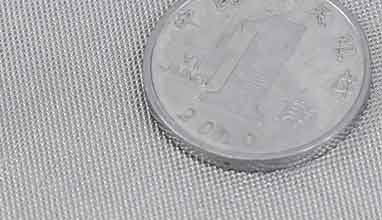
2. Galvanized Woven Wire Mesh
Galvanized woven wire mesh is manufactured by interlacing metal wires in a regular pattern.
The individual wires are not welded at their intersections.
Depending on the weaving method, the finished mesh can provide different opening sizes, flexibility, and screening characteristics.
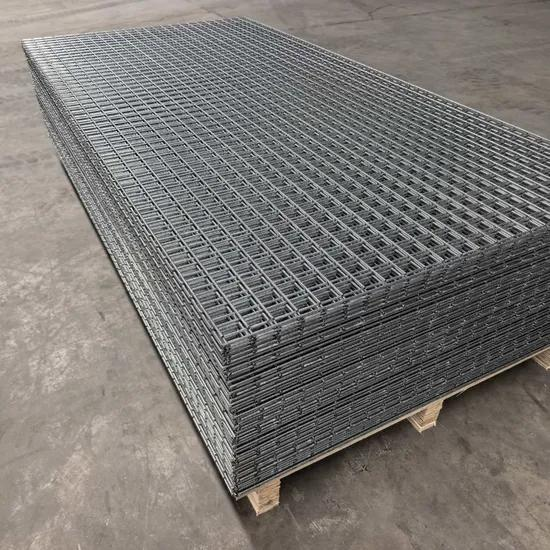
Common Weaving Patterns:
Plain weave.
Twill weave.
Crimped weave.
Other specialized woven structures.
Typical Applications:
Industrial screening.
Protective screens.
Ventilation equipment.
Agricultural screening.
General separation applications.
Selected decorative panels.
For precision filtration, buyers should confirm the required mesh count, clear opening dimensions, and chemical compatibility.
Galvanized steel is not suitable for every filtration environment, particularly where the zinc coating may react with process fluids or contaminate the material being filtered.
3. Galvanized Hexagonal Wire Mesh
Galvanized hexagonal wire mesh, commonly called chicken wire or hexagonal wire netting, is manufactured by twisting metal wires together to form hexagonal openings.
It is commonly supplied in flexible rolls.
Main Characteristics:
Hexagonal openings.
Twisted wire construction.
Lightweight and flexible.
Different wire diameters.
Different mesh opening sizes.
Galvanized coating options.
Typical Applications:
Poultry enclosures.
Garden protection.
Agricultural fencing.
Light-duty animal barriers.
Selected construction support applications.
Hexagonal wire mesh should not be treated as interchangeable with rigid welded wire panels or structural reinforcement products.
4. Galvanized Chain Link Mesh
Chain link mesh is manufactured by interlocking shaped wires to form a flexible diamond opening pattern.
It is commonly used in perimeter fencing systems.
Galvanized chain link mesh is usually combined with supporting posts, rails, tension wires, and installation accessories.
Typical Applications:
Sports field fencing.
Industrial boundaries.
Farm fencing.
Property separation.
Recreational areas.
The required wire diameter, mesh opening, fence height, and supporting structure should be confirmed according to the project.
Comparison of Common Galvanized Wire Mesh Types
| Product Type | Mesh Structure | Common Supply Form | Typical Applications |
|---|---|---|---|
| Welded Wire Mesh | Welded square or rectangular openings | Rolls / Sheets / Panels | Fencing, partitions |
| Woven Wire Mesh | Interwoven wires | Rolls / Cut Sheets | Screening, filtration |
| Hexagonal Wire Mesh | Twisted hexagonal openings | Rolls | Poultry, gardening |
| Chain Link Mesh | Interlocking diamond openings | Rolls | Perimeter fencing |
Different products should not be evaluated solely on price per square meter.
The wire diameter, zinc coating, opening dimensions, manufacturing method, and intended application must also be considered.
Key Technical Specifications of Galvanized Wire Mesh
Accurate product specifications are essential when purchasing galvanized wire mesh for international projects.
The most important parameters include wire diameter, mesh opening, zinc coating, roll dimensions, sheet sizes, and edge finishing.
1. Wire Diameter
Wire diameter refers to the thickness of the steel wire used to manufacture the mesh.
Different wire diameters influence product weight, rigidity, handling characteristics, and mechanical performance.
Examples of commonly requested wire diameters include:
0.5 mm.
0.8 mm.
1.0 mm.
1.5 mm.
2.0 mm.
3.0 mm.
4.0 mm.
5.0 mm.
These are reference examples rather than guaranteed stock specifications.
The appropriate wire diameter depends on the type of mesh and project requirements.
Buyers should also confirm whether the dimension is measured before or after coating.
2. Mesh Opening Size
Mesh opening size refers to the open space between adjacent wires.
Common opening shapes include:
Square.
Rectangular.
Hexagonal.
Diamond.
For welded wire mesh, buyers may specify openings such as 12.7 × 12.7 mm, 25 × 25 mm, or 50 × 50 mm.
Actual product availability depends on the manufacturing process.
Mesh opening dimensions should be clearly identified as clear openings or center-to-center spacing.
3. Zinc Coating Weight and Thickness
Zinc coating is one of the most important factors affecting the corrosion protection of galvanized wire mesh.
Coating specifications may be expressed using:
Coating mass, commonly in g/m².
Coating thickness, commonly in μm.
A coating class specified by an applicable standard.
These measurements should be interpreted according to the relevant coating process and test method.
Buyers should not assume that the same coating requirement applies to every mesh product.
For projects requiring formal inspection, the agreed coating standard and testing method should be included in the purchase specification.
4. Roll Width and Length
Galvanized wire mesh is commonly supplied in rolls for flexible applications.
Possible roll dimensions depend on the wire diameter, opening size, production equipment, and packaging method.
Commonly requested lengths may include 10 m, 25 m, 30 m, 50 m, and 100 m, depending on the product type.
The available width should be confirmed separately.
5. Galvanized Wire Mesh Sheet Sizes
Rigid welded mesh can also be supplied in flat sheets or fabricated panels.
Examples of requested dimensions include:
1000 × 2000 mm.
1200 × 2400 mm.
1220 × 2440 mm.
Other dimensions according to project drawings.
These are dimensional examples, not universal industry standards.
6. Edge Finishing
Mesh products may require additional edge processing.
Common options include:
Trimmed wire edges.
Cut edges.
Framed panels.
Folded edges where compatible.
Custom fabrication.
The required edge treatment should be specified before production.
Main Applications of Galvanized Wire Mesh
Galvanized wire mesh is used across several industries because it combines an open structure with zinc-coated steel construction.
1. Construction and Building Projects
Construction is an important application area for galvanized wire mesh.
Depending on the product specification, welded mesh may be used in selected reinforcement, separation, and protective applications.
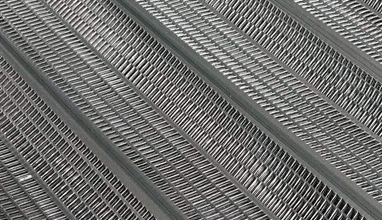
Specialized mesh may also be used in plastering or masonry work.
However, galvanized expanded metal lath is a different product from conventional welded wire mesh.
Expanded metal lath is manufactured by slitting and stretching metal sheets rather than joining individual steel wires.
For stucco and plaster reinforcement applications, read our Galvanized Expanded Metal Lath guide.
Construction buyers should follow approved drawings and applicable building standards when selecting reinforcement products.
2. Agricultural and Livestock Applications
Galvanized mesh is commonly used in agricultural environments.
Typical applications include:
Farm boundary fencing.
Poultry enclosures.
Orchard protection.
Garden barriers.
Agricultural equipment guards.
Livestock-area partitions.
Different animal species require different mesh opening sizes, wire diameters, and fence designs.
For agricultural fencing, buyers should evaluate animal safety, environmental exposure, and the required enclosure strength.
3. Industrial Fencing and Safety Barriers
Galvanized welded mesh panels are used in industrial environments to create partitions, equipment enclosures, and boundary fencing.
They can be fabricated into framed systems using suitable steel profiles and fixing components.
Typical Applications:
Factory partitions.
Warehouse separation.
Industrial machinery guards.
Storage enclosures.
Equipment protection screens.
For machinery safety, the complete guarding system should be evaluated against the applicable safety requirements.
4. Screening and Filtration
Galvanized woven mesh can be used in selected industrial screening applications.
However, its suitability depends on the operating environment.
For processes involving chemicals, food contact, drinking water, or corrosive liquids, the zinc coating may not be appropriate.
Material compatibility and contamination risks should be evaluated before use.
Stainless steel woven wire mesh may be more suitable for certain demanding filtration applications.
5. Residential and Garden Projects
Galvanized wire mesh is also used in residential and landscape applications.
Common uses include garden fencing, plant protection, decorative screens, and selected outdoor partitions.
Buyers should select suitable opening sizes and wire diameters according to the desired visibility, protection, and appearance.
6. Commercial and Storage Facilities
Commercial warehouses and storage facilities may use galvanized mesh panels for protective enclosures and space division.
Suitable panel systems can provide physical separation while maintaining airflow and visibility.
The completed structure should be designed according to the expected loads and installation conditions.
How to Choose the Right Galvanized Wire Mesh
Selecting the correct galvanized wire mesh requires evaluating the application, coating, wire diameter, opening size, and purchasing requirements.
Step 1: Identify the Application
First, determine whether the mesh will be used for:
Agricultural fencing.
Industrial protection.
Construction.
Screening.
Decorative applications.
Warehouse partitions.
Different applications require different product structures.
Step 2: Select the Mesh Type
Choose welded, woven, hexagonal, or chain link mesh based on the required construction.
Welded mesh is commonly considered for rigid panels, while hexagonal mesh is widely used for lightweight agricultural enclosures.
Step 3: Choose the Galvanizing Process
Determine whether hot-dip or electro-galvanized mesh is suitable for the expected environment.
The required zinc coating should be confirmed using an agreed technical specification.
Step 4: Confirm Wire Diameter and Mesh Opening
Provide accurate measurements.
For welded mesh, specify the horizontal and vertical opening dimensions.
For woven mesh, provide mesh count or clear opening dimensions as appropriate.
Step 5: Check Coating and Manufacturing Quality
Important quality checks may include:
Wire diameter measurement.
Mesh opening consistency.
Weld integrity.
Zinc coating condition.
Surface defects.
Roll or panel dimensions.
Where inspection is required, agree on the inspection method before production.
Step 6: Compare the Complete Quotation
Buyers should compare suppliers using consistent specifications.
A complete quotation should consider material grade, mesh type, zinc coating, dimensions, quantity, packaging, shipping, and delivery terms.
A lower unit price may not represent better value if the coating specification, wire diameter, or supplied quantity differs.
Common Quality Problems in Galvanized Wire Mesh
Understanding common quality issues can help buyers reduce purchasing risks.
1. Inconsistent Wire Diameter
Differences in wire diameter can affect weight, rigidity, and product performance.
Buyers should specify acceptable tolerances in the purchasing documents.
2. Uneven Zinc Coating
Inconsistent coating can affect appearance and corrosion protection.
Inspection requirements should be matched to the agreed galvanizing method.
3. Weak Welded Intersections
Welded mesh depends on the integrity of its wire intersections.
Poor welding quality can create weak points during fabrication, transportation, or installation.
4. Incorrect Mesh Opening
Opening dimensions should match the agreed specification and applicable tolerance.
Inconsistent openings may affect fitting, screening, or installation.
5. Packaging Damage
Improper packaging may lead to bent panels, deformed rolls, or damaged coatings.
Suitable packaging should be selected according to the product dimensions and transportation requirements.
Galvanized Wire Mesh Packaging and International Shipping
International transportation is an important consideration for galvanized wire mesh orders.
The appropriate shipping method depends on the product type, roll or panel dimensions, cargo weight, destination, and delivery terms.
Roll Packaging
Flexible galvanized mesh may be packaged in tightly wound rolls.
Depending on the product and agreed requirements, packaging may include protective wrapping, labels, or palletized arrangements.
Sheet and Panel Packaging
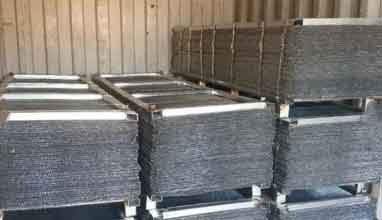
Rigid welded mesh panels may be packaged in stacked bundles or protective frames.
The packaging should reduce movement and deformation during transportation.
Shipping Considerations
Before confirming an order, buyers should check:
Total net weight.
Total gross weight.
Number of rolls or panels.
Package dimensions.
Total shipment volume.
Destination port.
Delivery terms.
Required import documentation.
Sea freight is commonly considered for large bulk shipments.
Actual transportation cost and delivery time depend on freight conditions and the destination.
Fixed shipping durations and container loading quantities should not be assumed without a specific packing plan and freight quotation.
What Affects Galvanized Wire Mesh Prices?
Galvanized wire mesh prices vary according to material costs, manufacturing specifications, coating requirements, product dimensions, and order quantity.
1. Raw Steel Cost
Steel wire is a major component of galvanized mesh products.
Changes in raw material prices can influence quotations.
2. Wire Diameter
Different wire diameters affect the amount of steel required and the manufacturing process.
3. Mesh Opening Size
The mesh opening determines the number and arrangement of wires within a given area.
This affects material consumption and processing requirements.
4. Zinc Coating Specifications
Different galvanizing methods and coating requirements can influence production costs.
5. Sheet or Roll Dimensions
Non-standard dimensions may require additional production or cutting processes.
6. Order Quantity
Bulk purchasing may improve production or logistics efficiency depending on the specification.
7. International Transportation
Freight costs depend on shipment weight, volume, destination, and delivery terms.
Buyers should request quotations based on complete technical requirements.
What Information Is Needed for a Galvanized Wire Mesh Quotation?
International buyers should provide accurate product specifications when requesting a quotation.
The following information helps suppliers understand the purchasing requirements.
| Information | Example or Description |
|---|---|
| Mesh Type | Welded / Woven / Hexagonal / Chain Link |
| Base Material | Carbon Steel |
| Galvanizing Type | Hot-Dip / Electro-Galvanized |
| Galvanizing Sequence | Before or After Welding |
| Wire Diameter | Required diameter in mm |
| Mesh Opening | Opening dimensions or mesh count |
| Zinc Coating | Required class, mass or thickness |
| Supply Form | Roll / Sheet / Panel |
| Product Dimensions | Width × Length |
| Order Quantity | Rolls / Sheets / Square Meters |
| Application | Construction / Agriculture / Industrial |
| Destination | Country and delivery port |
| Technical Drawing | PDF or dimensioned drawing |
Buyers should also confirm the required packaging, inspection documents, and commercial terms before placing a bulk order.
Frequently Asked Questions About Galvanized Wire Mesh
1. What is galvanized wire mesh?
Galvanized wire mesh is steel wire mesh protected by a zinc coating.
It can be manufactured using different structures, including welded, woven, twisted hexagonal, and chain link mesh.
2. What is the difference between hot-dip galvanized and electro-galvanized wire mesh?
Hot-dip galvanizing applies zinc through molten zinc, while electro-galvanizing uses an electrochemical deposition process.
Their coating characteristics and typical applications differ.
The appropriate method depends on the required coating specification and environment.
3. Is galvanized wire mesh completely rust-proof?
No. Galvanizing improves corrosion resistance but does not make steel permanently immune to corrosion.
The actual service life depends on coating quality, exposure, installation, and maintenance.
4. What is the difference between galvanized before welding and galvanized after welding?
Galvanized-before-welding products are manufactured using pre-coated wires.
Galvanized-after-welding products receive the coating after the mesh has been welded.
The two processes may produce different coating conditions at welded intersections.
5. Can galvanized wire mesh be used outdoors?
Yes. Suitable galvanized mesh products are widely used outdoors.
Buyers should select an appropriate coating specification based on humidity, rainfall, pollution, and other environmental factors.
6. What wire diameters are available for galvanized wire mesh?
Different diameters are available depending on the mesh type and manufacturing method.
Buyers should specify their required wire diameter in millimeters or another clearly defined measurement system.
7. What is the difference between galvanized welded and woven wire mesh?
Welded mesh uses wire intersections joined by welding.
Woven mesh is produced by interlacing wires without welding their intersections.
They have different structural characteristics and applications.
8. Can galvanized wire mesh be used for concrete reinforcement?
Some welded wire reinforcement products are designed for concrete applications.
However, general-purpose galvanized mesh should not automatically be used as structural reinforcement.
Buyers must confirm the required reinforcement specification and applicable engineering standards.
9. What is the best galvanized wire mesh for agricultural fencing?
The suitable mesh depends on the type of animal, fence height, opening dimensions, wire diameter, and environmental conditions.
Welded, hexagonal, and chain link products may be appropriate for different agricultural applications.
10. What information is needed for a bulk galvanized wire mesh order?
Buyers should provide mesh type, wire diameter, opening dimensions, galvanizing process, zinc coating requirements, roll or sheet dimensions, quantity, and destination.
Technical drawings or reference samples are helpful for customized orders.
Conclusion: Selecting Galvanized Wire Mesh for Your Project
Galvanized wire mesh is widely used in construction, agriculture, industrial fencing, screening, and protective applications.
Its performance depends on the mesh structure, steel wire dimensions, zinc coating specifications, manufacturing method, and operating environment.
Welded wire mesh offers a regular grid structure suitable for many panels and enclosures. Woven wire mesh provides different screening options, while hexagonal and chain link mesh are commonly used in agricultural and perimeter fencing applications.
Hot-dip and electro-galvanized products offer different coating characteristics, and the sequence of welding and galvanizing can influence finished product protection.
For international procurement, buyers should evaluate wire diameter, mesh opening, zinc coating, supply dimensions, quantity, packaging, and delivery requirements before confirming an order.
ANPING METAL MESH provides metal mesh product information and supports project-based specification discussions for construction, industrial, and agricultural applications.
Whether you are an importer, wholesaler, distributor, contractor, or project purchaser, submitting complete technical requirements helps identify a suitable product and obtain an accurate quotation.
Request a Galvanized Wire Mesh Quotation
Looking for galvanized wire mesh for your next project?
Send us your required mesh type, wire diameter, opening size, galvanizing method, zinc coating specification, order quantity, and destination.
Our team can review your requirements and discuss suitable product options.
Galvanized Welded Mesh | Woven Wire Mesh | Hexagonal Mesh | Custom Specifications | Bulk Supply
Contact ANPING METAL MESH Today to Discuss Your Requirements.
Need help choosing a metal mesh?
Share your material, dimensions, intended use and required quantity. We can review the details for a quotation.