Explore wire mesh types, materials, sizes, prices and applications. Compare welded, woven and expanded metal mesh for industrial and construction projects.
What Is Wire Mesh?
Wire mesh is an open metal material made from individual wires that are woven, welded, or otherwise joined to form a repeating network of openings. Depending on the manufacturing method, wire mesh can be flexible fabric supplied in rolls or rigid panels supplied in sheets. It is used for screening, filtration, fencing, machine guarding, construction, and architectural applications.
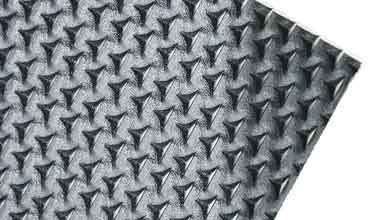
Buyers searching for wire mesh may also encounter expanded metal and perforated metal. These are related open-metal products, but they are not manufactured from separate intersecting wires. Expanded metal is slit and stretched from a metal sheet, while perforated metal is made by punching or otherwise forming openings in a sheet. Understanding the difference is essential when comparing technical specifications and supplier quotations.
For a closer explanation of the manufacturing differences, read our Expanded Metal vs. Wire Mesh comparison.
Main Types of Wire Mesh and Related Metal Mesh Products
1. Welded Wire Mesh
Welded wire mesh is produced by arranging longitudinal and transverse metal wires at specified intervals and joining their intersections, usually by resistance welding. The resulting openings are commonly square or rectangular. Depending on wire diameter and panel dimensions, welded mesh may be supplied in rolls, flat sheets, or fabricated fence panels.
Typical uses: industrial partitions, general-purpose fencing, equipment enclosures, agricultural panels, and construction reinforcement products that meet the relevant engineering requirements.
When requesting a quotation, specify the wire diameter, clear opening or center-to-center spacing, material grade, panel size, and any coating requirements. Do not assume that ordinary welded mesh is suitable for structural concrete reinforcement without checking the specified reinforcement grade and standard.
2. Woven Wire Mesh
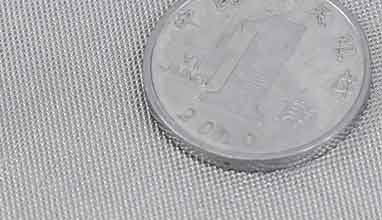
Woven wire mesh is formed by interlacing wires in a repeating pattern. Common constructions include plain weave, twill weave, and Dutch weave. Different patterns produce different combinations of opening size, flexibility, flow characteristics, and mechanical behavior.
Typical uses: industrial sieving, particle screening, filter elements, ventilation screens, and selected decorative panels. Fine woven mesh is often supplied in rolls, but it can also be cut into sheets or fabricated into framed components.
For screening and filtration, buyers should provide mesh count where applicable, wire diameter, clear opening size, material grade, and operating conditions. Mesh count alone does not fully define filtration performance.
3. Chain Link and Twisted Wire Mesh
Chain link mesh is made from interlocking, shaped wires and has a flexible diamond-patterned structure. Twisted hexagonal wire netting forms a lightweight hexagonal pattern often used in agricultural and garden applications. These are distinct from the welded and fine-woven mesh types described above.
Typical uses: property boundaries, sports facilities, farm enclosures, poultry applications, and other projects where flexibility or roll supply is useful. Panel stability depends on the complete supporting system, including posts, rails, wire tension, and fasteners.
4. Expanded Metal Mesh — a Related Sheet Product
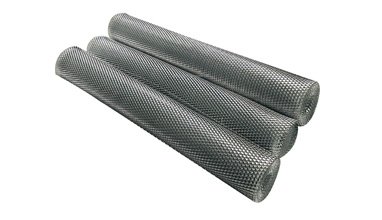
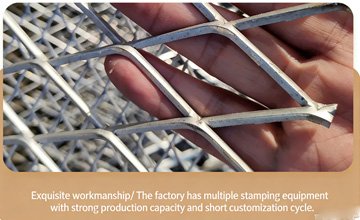
Expanded metal is produced by slitting and stretching a continuous metal sheet to form connected openings, usually diamonds. It has no intersections made by welding separate wires. The product can be supplied as raised or flattened mesh, with different opening geometries and metal thicknesses.
Typical uses: protective guards, architectural screens, exterior facade panels, ventilation grilles, and appropriately engineered walkways or platforms.
For specifications, use SWD (short way of diamond), LWD (long way of diamond), strand width, original sheet thickness, and overall sheet dimensions. See Types of Expanded Metal for a more detailed breakdown.
5. Perforated Metal — Another Alternative
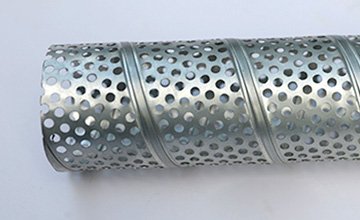
Perforated metal is made by producing holes in a solid sheet, commonly in round, square, or decorative layouts. It is technically different from wire mesh but can satisfy similar screening, ventilation, protective, or architectural needs.
Typical uses: ventilation covers, decorative panels, equipment enclosures, and acoustic systems when the complete assembly is properly designed. Specify hole size, pitch, open area, sheet thickness, and material rather than wire diameter or mesh count.
Wire Mesh vs. Expanded Metal vs. Perforated Metal
| Product | How It Is Made | Main Specifications | Common Supply Forms | Typical Applications |
|---|---|---|---|---|
| Welded wire mesh | Wires joined at intersections | Wire diameter, opening, sheet size | Rolls, sheets, panels | Fencing, enclosures, specified reinforcement |
| Woven wire mesh | Wires interlaced in a weave | Weave pattern, mesh count, opening, wire diameter | Rolls, cut sheets | Filtration, sieving, screening |
| Chain link mesh | Interlocking shaped wires | Wire diameter, diamond opening, roll height | Rolls | Perimeter and sports fencing |
| Expanded metal | Solid sheet slit and stretched | SWD, LWD, strand width, sheet thickness | Sheets, selected rolls | Facades, guards, screens |
| Perforated metal | Holes formed in a solid sheet | Hole size, pitch, open area, sheet thickness | Sheets, panels | Ventilation, decoration, covers |
There is no universally strongest or cheapest option. Performance and cost depend on material, dimensions, support conditions, finishing, order quantity, and the intended service environment.
Common Wire Mesh Materials
The base metal influences corrosion resistance, mechanical properties, weight, appearance, and cost. The material should be selected for the actual environment rather than by a generic ranking.
Carbon Steel
Carbon steel is widely used for welded mesh, general-purpose industrial screens, and metal enclosures. It is suitable where the required strength and fabrication characteristics can be achieved economically. For outdoor use, a protective finish may be needed to control corrosion.
Galvanized Steel
Galvanized steel uses a protective zinc coating. It is common in outdoor fencing, agriculture, and construction-related mesh. Hot-dip galvanizing and electro-galvanizing are different processes; buyers should compare the actual coating specification, not just the term galvanized. Coating durability varies with exposure and the condition of cut edges and welded areas.
Stainless Steel 304 and 316
Stainless steel 304 is frequently specified for industrial screening, equipment protection, and many general corrosion-resistant applications. Grade 316 generally offers improved resistance to chloride-related corrosion and may be more suitable for selected coastal or process environments. Material compatibility, cleaning requirements, and relevant standards should be evaluated for food, chemical, or other regulated uses.
Aluminum
Aluminum is valued for lower weight and good corrosion resistance in suitable conditions. Expanded aluminum and selected aluminum wire products can be used for building screens, ceilings, ventilation panels, and decorative applications. Alloy selection, panel support, surface treatment, and expected loads remain important.
| Material | Main Consideration | Common Applications |
|---|---|---|
| Carbon steel | Strength and economical fabrication; may need coating | Guards, industrial partitions, general welded mesh |
| Galvanized steel | Zinc coating specification and exposure | Outdoor fencing, agricultural enclosures |
| Stainless steel 304 | General corrosion resistance | Screening, filters, equipment panels |
| Stainless steel 316 | Improved resistance in selected chloride environments | Coastal and process equipment |
| Aluminum | Lower weight and suitable finishes | Architectural screens, ceilings, grilles |
Key Technical Specifications Buyers Should Confirm
Wire Diameter and Mesh Count
For conventional wire mesh, wire diameter is the thickness of each wire. Woven mesh may also be identified by its mesh count, generally the number of openings per linear inch in a given direction. The actual clear opening depends on both the number of openings and the wire diameter. If particle retention matters, provide a required opening or filtration specification rather than mesh count alone.
Opening Size and Open Area
For welded mesh, distinguish the clear space between wires from center-to-center spacing. For woven mesh, opening uniformity may depend on the weave and manufacturing tolerance. Open area is the portion of a surface not occupied by metal; it influences visibility and potential airflow, but not by itself the performance of a complete filter or facade assembly.
Sheet and Roll Dimensions
Panels may be ordered by length and width; rolls are specified by width and length. A 4 × 8 ft sheet is approximately 1219 × 2438 mm (often rounded commercially to 1220 × 2440 mm). Other sheet and roll dimensions depend on product type, production capability, and packaging. Never assume that one sheet size is standard for every mesh product.
Expanded Metal Dimensions
For expanded metal, confirm SWD, LWD, strand width, sheet thickness, raised or flattened condition, and sheet size. Some suppliers use slightly different measurement conventions, so dimensioned drawings are useful. You can review our Expanded Metal Dimensions Chart as a starting reference, then verify the final specification in a quotation or technical drawing.
Surface Finish and Edge Treatment
Finishing choices may include galvanizing, powder coating, appropriate stainless-steel finishes, or anodizing for suitable aluminum products. Cut edges and joints may need further treatment depending on the application. For exposed panels, confirm whether the quotation includes trimming, framing, folded edges, or suitable edge protection.
Engineering and Compliance Requirements
Safety-critical installations require more than a material description. Machine guards, load-bearing walking surfaces, structural reinforcement, facade panels, and public-area barriers may need site-specific engineering, performance checks, and compliance with the relevant local standard. An ISO 9001 quality-management certificate, if supplied, does not by itself establish compliance of every product with every ASTM, EN, or JIS standard.
Where Is Wire Mesh Used?
Construction and Plastering
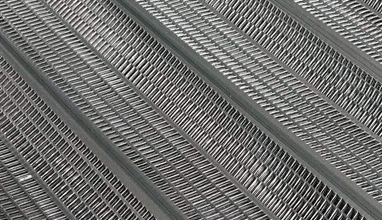
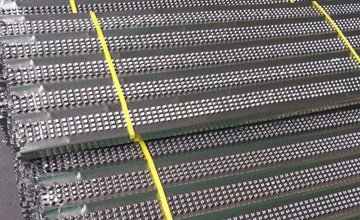
Specified welded wire reinforcement can be used in concrete products, while specialized lath provides support for plaster and stucco systems. These are not interchangeable materials. For construction lath, read What Is Expanded Metal Lath? and confirm the relevant project specification before ordering.
Industrial Machinery Protection
Welded mesh and expanded metal are used in machine guarding, factory partitions, and equipment enclosures. Selection depends on access prevention, visibility, ventilation, required safety distance, and frame design. See Expanded Metal Mesh for Machinery Protection for a related product application.
Architecture and Decorative Screens
Expanded metal and selected woven metal products can create open decorative surfaces for ceilings, partitions, and building exteriors. For exterior facades, consider corrosion, panel support, wind load, attachment details, and finish durability. Our Expanded Metal Mesh Facade article explores this application in more detail.
Filtration and Industrial Screening
Fine woven wire mesh is often used as a screening or filtration medium. Expanded metal may also serve as a coarse screen or a support layer for finer filter media. Select materials based on particle size, process fluid, temperature, pressure, cleaning, and chemical compatibility. Read more about Expanded Metal Filters.
Agriculture, Warehousing, and General Fencing
Galvanized welded mesh, chain link fabric, and hexagonal netting can be considered for property boundaries, agricultural enclosures, and warehouse partitions. Opening dimensions and wire strength should reflect the animals, equipment, or access-control needs involved. The post and fastening system also determines the behavior of the installed fence.
What Affects Wire Mesh Pricing?
A meaningful wire mesh price comparison needs an identical technical specification and supply scope. Unit prices alone can be misleading when materials, thickness, mesh opening, coatings, packaging, or shipping terms differ.
Metal type and grade: carbon steel, stainless steel, and aluminum have different material and fabrication costs.
Wire diameter or sheet thickness: changes in metal content and processing requirements affect unit weight and cost.
Opening size and mesh construction: smaller openings, specialty weaves, and custom patterns may require different production methods.
Surface treatment: galvanizing, powder coating, and other finishes add processing and inspection requirements.
Order quantity and custom work: cutting, framing, small batches, or specialized tolerances may change the quotation.
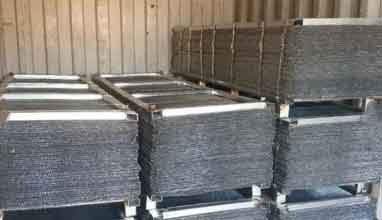
Packaging and freight: bulky panels may be constrained by shipment volume, while dense metal products may be weight-limited.
For expanded metal cost factors, see the related Expanded Metal Pricing Guide. Any published example price should be confirmed against a current, specification-based quotation.
Six Steps to Buy Wire Mesh from a Supplier
Step 1: Define the Application
Explain what the mesh must do: filter particles, provide ventilation, protect equipment, reinforce a designed assembly, form a fence, or produce a decorative effect. Include the installation environment and any load or corrosion considerations.
Step 2: Choose the Product Structure
Decide whether welded wire mesh, woven mesh, chain link, expanded metal, or perforated metal best fits the use. Avoid substituting one product for another solely because the opening pattern looks similar.
Step 3: Send Clear Dimensions
Include material grade, opening size, wire diameter or sheet thickness, width, length, finish, and required tolerances. For expanded metal, provide SWD/LWD and strand dimensions. Attach drawings or product photographs when possible.
Step 4: Agree on Inspection and Documentation
If the project requires material certificates, coating records, dimensional checks, samples, or third-party testing, establish these requirements before production. Verify which documents are actually available for the requested product.
Step 5: Compare the Complete Commercial Offer
Ask for itemized pricing, estimated production lead time, packing information, and an agreed delivery term such as EXW, FOB, or CIF. Confirm whether samples, special cutting, and export documentation have additional charges.
Step 6: Verify Packaging and Delivery Arrangements
Request the estimated gross weight, package dimensions, quantity per bundle or roll, and planned dispatch location. Actual transit times, shipping methods, and import responsibilities should be confirmed for the destination and selected trade terms.
Wire Mesh RFQ Checklist for International Buyers
Use the following checklist when sending a request for quotation (RFQ):
| Required Information | Example or Question to Answer |
|---|---|
| Product category | Welded, woven, chain link, expanded, or perforated |
| Application | Filtration, fencing, guarding, facade, or construction |
| Material | Carbon steel, galvanized steel, SS304, SS316, aluminum |
| Wire diameter / thickness | Specify in mm or inches |
| Opening specification | Clear opening, mesh count, or SWD × LWD |
| Sheet / roll size | Width × length, with units |
| Finish | Galvanized, powder coated, mill finish, etc. |
| Edge / fabrication | Cut, framed, folded, formed, or as supplied |
| Quantity | Number of sheets, rolls, or total area |
| Destination and Incoterm | Delivery port/country and EXW, FOB, CIF, etc. |
| Documentation | Drawings, certificates, inspection or packaging needs |
Tip: If you are replacing an existing product, attach its photograph and a measured sample or drawing. A clear specification usually produces a more useful quotation than a generic request for “the best wire mesh price.”
Frequently Asked Questions About Wire Mesh
What is the difference between wire mesh and expanded metal?
Conventional wire mesh is made from separate wires joined by weaving or welding. Expanded metal is produced by slitting and stretching one continuous metal sheet. Their dimensions, structures, and applications differ, so they should be specified separately.
Is stainless steel mesh always better than galvanized mesh?
No. Stainless steel may be appropriate when corrosion resistance or process compatibility is important, while galvanized steel can suit many general outdoor fencing and industrial uses. The best choice depends on the environment, specification, and project budget.
Which wire mesh is used for fine filtration?
Fine woven wire mesh is commonly used for screening and filtration. The actual choice depends on clear opening size, material compatibility, flow requirements, operating pressure, and the complete filter design.
Is 4 × 8 ft a standard wire mesh sheet size?
It is a commonly requested sheet format for some metal mesh products, but available sizes vary with manufacturing method, material, and wire or sheet thickness. Always confirm availability for the exact product.
Can wire mesh be customized?
Depending on the product and manufacturing feasibility, buyers may request specific openings, wire diameters, sheet sizes, materials, coatings, edge treatments, or fabricated shapes. Detailed drawings are helpful for nonstandard work.
What is the minimum order quantity for wire mesh?
There is no universal MOQ across all mesh products. Minimum quantities depend on material, stock availability, manufacturing method, customization, and supplier policy. Request an MOQ for the exact specification.
Can I request samples and test reports?
Samples or documents may be available depending on the product and supplier. Confirm any sample charges, freight costs, testing method, and certificate requirements before placing an order.
How do I calculate shipping costs for mesh panels?
Provide the product dimensions, quantity, estimated gross weight, packed volume, destination, and trade term. The freight cost should be calculated from the actual packing plan and current carrier quotation, not a fixed number of sheets per container.
Request a Wire Mesh Quotation
ANPING METAL MESH provides information on industrial mesh products and accepts project-based specification enquiries. If you are sourcing wire mesh, expanded metal sheets, or related fabricated mesh components, send your required material, opening dimensions, sheet or roll size, finish, order quantity, and destination. Drawings or reference photographs are especially helpful for custom projects.
Review the Metal Mesh Product Range or Contact ANPING METAL MESH to discuss your requirements and request a quotation.
Need help choosing a metal mesh?
Share your material, dimensions, intended use and required quantity. We can review the details for a quotation.