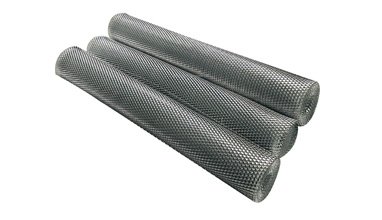
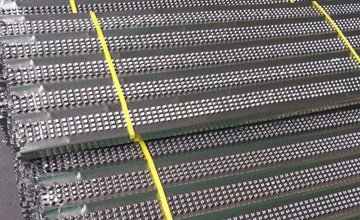
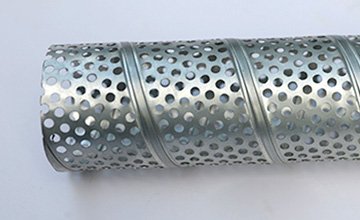
Compare expanded metal mesh sheet sizes in metric and imperial units. Explore 4x8 sheets, SWD, LWD, thickness, tolerances and custom cutting options.
Expanded metal mesh sheet sizes refer to the overall width and length of a finished expanded metal sheet. For an accurate specification, buyers must also consider the original metal thickness, diamond pattern dimensions, strand width, surface profile, and dimensional tolerances.
Expanded metal is manufactured by slitting and stretching solid metal sheets to form interconnected openings, commonly in a diamond-shaped pattern. It is used in construction, architectural screening, industrial machinery protection, fencing, ventilation, and metal fabrication.
Common sheet formats include 2 × 4 ft, 4 × 8 ft, 4 × 10 ft, 1000 × 2000 mm, and 1250 × 2500 mm. Larger formats and custom-cut dimensions may also be considered depending on manufacturing capabilities.
However, an advertised nominal sheet size does not necessarily represent the exact finished dimensions.
For example, a true 4 × 8 ft sheet measures 1219.2 × 2438.4 mm, while 1220 × 2440 mm is a commonly used rounded commercial format.
For international importers, contractors, architects, and fabricators, confirming exact dimensions before purchasing helps avoid cutting waste, installation problems, and incorrect material calculations.
This guide explains standard and custom expanded metal mesh sheet sizes, metric and imperial conversions, dimensional terminology, cutting requirements, material considerations, and purchasing specifications.
Explore available product categories in the ANPING METAL MESH Product Center.
Standard Expanded Metal Mesh Sheet Sizes: Metric and Imperial Chart
Expanded metal sheets are sold in various metric and imperial sizes. Availability depends on the manufacturer, raw material dimensions, expanding equipment, opening pattern, and finishing process.
The following table shows common sheet formats and their conversions.
Expanded Metal Sheet Size Conversion Chart
| Nominal Sheet Size | Exact Imperial-to-Metric Conversion | Common Commercial Format | Typical Applications |
|---|---|---|---|
| 2 × 4 ft | 609.6 × 1219.2 mm | 610 × 1220 mm | Small fabrication, repairs |
| 3 × 6 ft | 914.4 × 1828.8 mm | 914 × 1829 mm | Screens, partitions |
| 4 × 8 ft | 1219.2 × 2438.4 mm | 1220 × 2440 mm | Industrial sheets, fencing |
| 4 × 10 ft | 1219.2 × 3048 mm | 1220 × 3050 mm | Large fabrication panels |
| 5 × 10 ft | 1524 × 3048 mm | 1524 × 3048 mm | Large-format applications |
| Metric Format | — | 1000 × 2000 mm | Industrial fabrication |
| Metric Format | — | 1200 × 2400 mm | Construction, general supply |
| Metric Format | — | 1250 × 2500 mm | Architecture, fabrication |
| Metric Format | — | 1500 × 3000 mm | Large panels |
| Custom Cut | Based on drawings | Project-specific | Customized installations |
Important: The dimensions listed above are commonly encountered formats and conversion references. They are not a guarantee that every size is available for every material, mesh pattern, or manufacturer.
The commercial 1500 × 3000 mm format is not exactly equivalent to 5 × 10 ft. Buyers should distinguish between nominal and actual panel sizes.
Why Is the 4 × 8 ft Expanded Metal Sheet Commonly Used?
The 4 × 8 ft format is frequently requested for general metal fabrication and industrial sheet applications.
Its practical characteristics include:
A convenient format for many fabrication workshops.
Compatibility with selected cutting and storage equipment.
Availability in various product categories.
A manageable starting size for estimating project material requirements.
Potential use in fencing, machinery guards, and decorative panels.
However, 4 × 8 ft is not the only standard format worldwide, and it is not necessarily the best option for every project.
Some metric-based projects use 1000 × 2000 mm, 1200 × 2400 mm, or 1250 × 2500 mm sheets.
The appropriate format depends on installation dimensions, material availability, transportation arrangements, and fabrication requirements.
Expanded Metal Mesh Sheet Sizes by Application
The required sheet dimensions depend on how the product will be fabricated and installed.
General Industrial Fabrication
Common sheet formats such as 1000 × 2000 mm and 1220 × 2440 mm may be useful for industrial fabrication.
These sheets can be cut into equipment covers, machinery guards, protective screens, and other components.
The selected sheet dimensions should match the intended cutting layout.
Architectural Facade Panels
Architectural projects may require standard sheets or custom-sized expanded metal panels.
Larger panels can reduce the number of visible joints in some designs, but they may also require stronger supporting frames and more careful handling.
The final panel dimensions should be determined according to:
Facade module dimensions.
Structural support locations.
Wind load requirements.
Thermal movement.
Fixing details.
Mesh orientation.
Manufacturing limitations.
For architectural applications, the complete panel assembly should be evaluated rather than selecting the largest available sheet automatically.
Security Screens and Fencing
Expanded metal sheets may be fabricated into fencing panels, protective doors, window guards, and equipment barriers.
The finished panel size should match the supporting frame and installation details.
The required mesh specification also depends on the intended protection level.
Decorative Interior Panels
Smaller sheets or cut-to-size components may be useful for ceiling systems, wall features, retail displays, and interior partitions.
For visible architectural applications, edge quality, pattern alignment, and surface finish are important.
Construction and Plastering
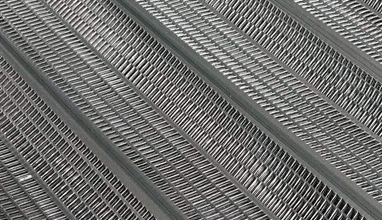
Expanded metal lath is a specialized construction product and often uses different dimensions from ordinary industrial expanded metal sheets.
Depending on the market and product type, metal lath may be supplied in formats such as 27 × 96 inches, approximately 686 × 2438 mm.
Construction buyers should follow the relevant plastering or stucco system specifications rather than assuming that all lath products use 4 × 8 ft sheets.
Read our Expanded Metal Lath for Stucco guide for related information.
Industrial Walkways and Grating
Certain heavy-duty expanded metal products are manufactured for engineered walkway and platform systems.
Sheet length and width are only two parts of the specification.
Load-bearing suitability also depends on the material, strand dimensions, mesh orientation, support spacing, and expected loads.
An ordinary 4 × 8 ft expanded metal sheet should not automatically be treated as structural grating.
Key Dimensions Used to Specify Expanded Metal Mesh
An expanded metal specification includes both the outside sheet dimensions and the geometry of the openings.
These measurements serve different purposes and should not be confused.
1. Overall Sheet Width
Overall width is the finished outside width of the expanded metal sheet.
It should be measured according to the agreed drawing and inspection procedure.
For architectural panels, buyers should confirm whether the specified width refers to the raw expanded sheet, trimmed sheet, or framed finished panel.
2. Overall Sheet Length
Overall length is the finished outside length of the sheet.
Cutting and fabrication can change the final length from the original expanded material.
Where the exact finished size matters, the required tolerance should be stated in the purchase specification.
3. Original Sheet Thickness
Original sheet thickness refers to the thickness of the metal used before expansion.
It influences material consumption, weight, and mechanical characteristics.
For raised expanded metal, the overall finished thickness may be greater than the original sheet thickness because of the angled strands.
4. SWD — Short Way of Diamond
SWD describes the short-way dimension of the repeating diamond pattern.
It is commonly associated with the short-direction pattern pitch.
SWD does not automatically mean the clear opening width.
5. LWD — Long Way of Diamond
LWD describes the long-way dimension of the expanded metal diamond pattern.
Together, SWD and LWD help define the geometry and appearance of the mesh.
6. SWO — Short Way of Opening
SWO describes the short-way clear opening.
It is important when the actual opening clearance matters, such as in screening or protective applications.
7. LWO — Long Way of Opening
LWO describes the long-way clear opening.
The actual opening dimensions should be distinguished from the repeating diamond pattern dimensions.
8. Strand Width
Strand width is the width of the metal strips forming the interconnected mesh.
It affects the finished weight, open area, appearance, and mechanical properties.
9. Mesh Orientation
Expanded metal has directional geometry.
The orientation of the diamond pattern can influence the appearance of an architectural panel and how the sheet is incorporated into a supporting frame.
Buyers should specify the required orientation in their drawings.
For additional dimensional references, read our Expanded Metal Dimensions Chart.
Expanded Metal Diamond Opening Size Reference
Diamond opening dimensions are separate from the finished length and width of the expanded metal sheet.
The following examples illustrate different pattern size categories.
| Pattern Category | Illustrative SWD × LWD | Potential Applications |
|---|---|---|
| Micro Diamond | 3 × 6 mm | Fine screening, decorative components |
| Small Diamond | 5 × 10 mm | Ventilation grilles |
| Medium Diamond | 10 × 20 mm | General protective screens |
| Medium Diamond | 15 × 30 mm | Partitions, fabrication |
| Large Diamond | 20 × 40 mm | Industrial guards |
| Large Diamond | 40 × 80 mm | Specialized industrial panels |
Specification Notice: These are illustrative pattern dimensions rather than confirmed stock specifications or product recommendations.
The finished characteristics depend on strand width, thickness, material grade, opening direction, and manufacturing method.
SWD and LWD values should not be treated as clear opening dimensions unless the technical drawing explicitly defines them that way.
Expanded Metal Mesh Sheet Sizes by Material
Different metals have different mechanical properties, densities, and manufacturing characteristics.
These differences may affect the available sheet dimensions and practical handling requirements.
1. Aluminum Expanded Metal Sheet Sizes
Aluminum expanded metal is commonly used for architectural and decorative applications.
Possible sheet formats include 1000 × 2000 mm, 1220 × 2440 mm, and other project-specific dimensions, subject to manufacturing availability.
Aluminum has a lower density than steel, which may help reduce the weight of a comparable panel.
Typical Applications:
Architectural facades.
Decorative screens.
Interior partitions.
Ceiling systems.
Sun-shading panels.
Ventilation covers.
Large aluminum panels may still require adequate framing and handling support.
Their dimensional stability depends on thickness, opening pattern, panel size, fabrication, and installation.
2. Galvanized Steel Expanded Metal Sheet Sizes
Galvanized expanded metal is used for selected outdoor and industrial applications.
Common sheet formats may include 1220 × 2440 mm and other available manufacturing sizes.
Typical Applications:
Industrial fencing.
Protective screens.
Equipment guards.
Outdoor partitions.
General fabrication.
Buyers should confirm the galvanizing method and whether galvanizing takes place before or after expansion.
Cut edges and additional fabrication may affect the protective coating.
3. Carbon Steel Expanded Metal Sheet Sizes
Carbon steel expanded metal is commonly used in industrial fabrication.
Sheet sizes depend on the original material, opening pattern, thickness, and production equipment.
Thicker products may require different cutting and handling methods.
For outdoor applications, appropriate corrosion protection may be necessary.
4. Stainless Steel 304 Expanded Metal Sheet Sizes
Stainless steel 304 expanded metal is considered for selected industrial and architectural applications requiring general corrosion resistance.
The available sheet dimensions depend on the manufacturing process and material specification.
Larger or thicker sheets may require additional handling considerations because of their weight.
5. Stainless Steel 316 Expanded Metal Sheet Sizes
Stainless steel 316 generally provides improved resistance to certain chloride-related corrosion conditions compared with 304 stainless steel.
It may be considered for coastal or specialized industrial environments.
However, the chosen material grade does not determine the available sheet size by itself.
Manufacturing feasibility and project requirements must also be reviewed.
Standard vs. Custom Expanded Metal Sheet Sizes
Buyers may purchase expanded metal in commonly supplied sheet formats or request project-specific dimensions.
Each option has different advantages.
Standard Sheet Sizes
Commonly supplied sheet dimensions may be suitable for general fabrication, protective screens, and products intended for further processing.
Potential Advantages:
Easier comparison between suppliers.
Potentially simpler purchasing arrangements.
Compatibility with existing fabrication layouts.
Lower cutting requirements in some projects.
Possible stock availability, depending on supplier.
However, the term "standard" does not guarantee stock availability or immediate shipment.
Custom Expanded Metal Sheet Sizes
Custom dimensions may be considered when the installation requires specific panel sizes.
Typical Applications:
Architectural facade modules.
Equipment enclosures.
Custom protective screens.
Specialized ventilation panels.
Fabricated industrial components.
Interior decorative assemblies.
The required dimensions should be reviewed against raw material sizes, mesh orientation, cutting equipment, and available production capabilities.
Important Custom Cutting Requirements
For non-standard dimensions, buyers should confirm:
Finished width and length.
Overall dimensional tolerances.
Material thickness.
Mesh direction.
Pattern alignment.
Edge treatment.
Surface finish.
Quantity.
Fabrication drawings.
Is There a Maximum Custom Sheet Size?
There is no single maximum sheet size applicable to all expanded metal manufacturers.
Maximum dimensions depend on the equipment, material, sheet thickness, opening pattern, and handling limitations.
Large-format and custom-cut requests should be reviewed individually.
Expanded Metal Sheet Dimensional Tolerances
Dimensional tolerances define the acceptable variation between the specified size and the finished product.
Tolerances are especially important for architectural and precision fabrication projects.
Overall Length and Width Tolerance
The required tolerance depends on the product, manufacturing process, and cutting method.
A general industrial sheet may be supplied with different tolerances from a precision-cut architectural panel.
Buyers should state their required tolerance in the technical drawing or purchasing agreement.
Diamond Pattern Tolerance
SWD and LWD tolerances should be established using an agreed measurement method.
Opening geometry can be influenced by material characteristics, expanding equipment, and subsequent processing.
Strand Width Tolerance
Strand width should be specified where it affects product weight, appearance, or performance.
The required dimensional variation should be confirmed with the supplier.
Original Thickness Tolerance
Original sheet thickness is affected by the specifications of the base metal.
The relevant material standard and tolerance should be confirmed for the selected metal grade.
Squareness, Camber and Flatness
Finished expanded metal sheets may require additional dimensional controls.
These can include:
Squareness of the finished sheet.
Camber or edge deviation.
Surface flatness.
Edge alignment.
Pattern orientation.
Overall dimensions after flattening.
For architectural installations, these characteristics can affect panel joints and visual consistency.
Recommended Tolerance Specification
| Measurement | What Buyers Should Confirm |
|---|---|
| Overall Width | Nominal size and permitted variation |
| Overall Length | Nominal size and permitted variation |
| SWD / LWD | Measurement convention and tolerance |
| Strand Width | Target width and variation |
| Original Thickness | Material standard and tolerance |
| Flatness | Required levelness or flatness |
| Squareness | Permitted diagonal or corner variation |
| Edge Condition | Trimmed, open or specified finish |
Important: No universal ±5 mm tolerance should be assumed for all expanded metal sheets. The tolerance must be appropriate to the selected material, process, applicable standard, and agreed product specification.
Raised vs. Flattened Expanded Metal: Does the Sheet Size Change?
Raised and flattened expanded metal have different surface profiles.
Flattening can also influence the finished dimensions and geometry.
Raised Expanded Metal
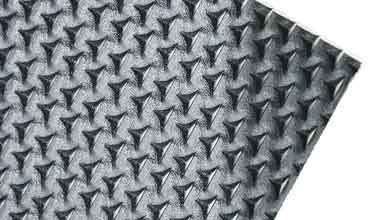
Raised expanded metal retains the three-dimensional form produced by the expanding process.
Its strands are angled relative to the original sheet plane.
For purchasing, buyers should confirm the overall finished dimensions and the relevant pattern direction.
Flattened Expanded Metal
Flattened expanded metal undergoes additional rolling or leveling.
The process creates a flatter surface and can affect the diamond geometry and sheet dimensions.
Main Comparison
| Feature | Raised Expanded Metal | Flattened Expanded Metal |
|---|---|---|
| Manufacturing | Slitting and stretching | Expansion followed by rolling |
| Surface Profile | Three-dimensional | Relatively flat |
| Sheet Dimensions | Based on finished expanded form | May change during rolling |
| Typical Uses | Guards, industrial applications | Decorative panels, partitions |
| Cutting Requirements | Depends on product | Depends on product |
| Tolerances | Must be specified | Must be specified |
For precision fabrication, buyers should verify dimensions after all required processing has been completed.
How to Calculate Expanded Metal Sheet Area
Sheet area is useful for estimating material quantities, comparing prices, and preparing project budgets.
Basic Area Formula
For a rectangular expanded metal sheet:
Area (m²) = Width (m) × Length (m)
Example 1: Commercial 4 × 8 ft Sheet
Using the rounded commercial format of 1220 × 2440 mm:
1.22 m × 2.44 m = 2.9768 m²
This is the overall sheet area, not the area of solid metal within the diamond mesh.
Example 2: Metric Sheet
For a 1000 × 2000 mm sheet:
1.00 m × 2.00 m = 2.00 m²
Example 3: Large Panel
For a 1500 × 3000 mm panel:
1.50 m × 3.00 m = 4.50 m²
Calculating Project Quantity
If a project requires 120 m² of gross expanded metal sheet area and each sheet measures 1220 × 2440 mm:
120 ÷ 2.9768 = approximately 40.31 sheets
Before allowing for cutting waste, the buyer would need to round this up to 41 sheets.
Actual purchasing quantities may be higher because of cutting layouts, edge trimming, framing, and installation requirements.
How to Reduce Cutting Waste with the Right Sheet Size
Selecting appropriate sheet dimensions can help reduce material waste.
However, the best sheet format depends on how the finished components will be cut.
1. Calculate the Required Panel Dimensions
Determine the finished width and length of each panel.
Include allowances for frames, overlapping connections, and installation details where necessary.
2. Prepare a Cutting Layout
Arrange the required panel sizes within the available raw sheet dimensions.
For example, a 1220 × 2440 mm sheet could potentially be divided into six nominal 600 × 800 mm rectangular panels, depending on cutting allowances and orientation.
The cutting method, edge trimming, and mesh geometry must still be evaluated.
3. Consider Pattern Direction
Expanded metal has directional openings.
If all finished panels require the same diamond orientation, some cutting layouts may create more waste than others.
4. Consider Edge Requirements
Some projects require closed edges, trimmed strands, or framed panels.
These requirements can affect the usable sheet area.
5. Compare Standard and Custom Dimensions
A custom-sized sheet may reduce waste, but it may also increase manufacturing or processing costs.
Compare both options using the total project cost rather than the unit sheet price alone.
Choosing Expanded Metal Sheet Sizes for Different Projects
Architectural Facades
Facade panel dimensions should match the architectural module and support layout.
Large panels may create a cleaner visual appearance with fewer joints, but engineering and installation requirements must be considered.
For more information, see our Expanded Metal Mesh Facade Guide.
Security Screens
The finished sheet size should match the security frame.
Mesh thickness, opening dimensions, strand width, fastening, and the entire assembly should be specified according to the intended protection requirements.
Machinery Guards
Expanded metal guards should be sized according to the equipment and required safety distances.
The complete guarding system should follow applicable machinery safety requirements.
Decorative Ceilings
Smaller modules may be easier to handle and replace in some ceiling systems.
The supporting structure and fire-related requirements must be considered.
Industrial Walkways
Where expanded metal is used in an engineered walkway system, sheet size must be selected together with load requirements, supporting spans, and appropriate grating specifications.
Ventilation and Screening
The required sheet dimensions should match the ventilation opening or equipment enclosure.
Airflow performance depends on the open area, mesh geometry, and complete assembly.
Expanded Metal Mesh Sheet Sizes and Material Weight
Sheet dimensions affect the overall product area, but weight also depends on the metal content of the expanded mesh.
Two expanded metal sheets of the same outside size may have significantly different weights.
Main Weight Factors
Material density.
Original sheet thickness.
SWD and LWD.
Strand width.
Open area.
Surface treatment.
Overall sheet dimensions.
General Calculation Method
When a verified weight per square meter is available:
Total Net Weight = Weight Per m² × Total Sheet Area
For example, if a specified product has a verified unit weight of 5 kg/m² and the total gross sheet area is 100 m²:
Total Net Weight = 500 kg
This is a calculation example.
Actual product weight should be confirmed using manufacturer data or physical measurements, particularly for freight planning or load-sensitive applications.
Packing and Shipping Expanded Metal Mesh Sheets
Expanded metal sheets require packaging appropriate to their dimensions, weight, material, and surface finish.
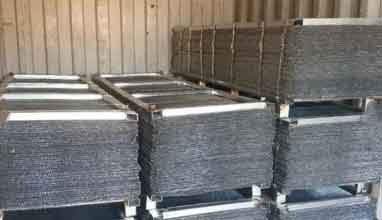
Standard Sheet Packaging
Packaging may include:
Bundling.
Pallets.
Protective separators.
Edge protection.
Suitable crates.
Securing materials.
The appropriate method depends on the product and transport arrangements.
Large-Format Sheets
Larger expanded metal sheets may require special handling or additional supporting structures during transportation.
Buyers should confirm loading dimensions and handling limitations before ordering.
Shipping Container Planning
Expanded metal can occupy considerable volume or have substantial weight depending on its specifications.
Container loading capacity depends on:
Sheet dimensions.
Material and mesh weight.
Bundle height.
Pallet dimensions.
Packaging.
Loading method.
Container payload and internal dimensions.
A 4 × 8 ft sheet format does not guarantee a fixed number of sheets per container.
Packing List Requirements
For international orders, the packing list should identify:
Number of bundles.
Quantity per bundle.
Net weight.
Gross weight.
Package dimensions.
Total shipment volume where relevant.
This information helps buyers and freight forwarders plan transportation and cargo handling.
What Affects Expanded Metal Mesh Sheet Size Prices?
The final cost of expanded metal mesh sheets depends on both product specifications and order requirements.
1. Material Grade
Carbon steel, galvanized steel, aluminum, and stainless steel have different raw material and processing costs.
2. Overall Sheet Dimensions
Larger sheets have a greater gross area, but the actual cost also depends on the mesh geometry and metal content.
3. Original Thickness
Thicker material may increase material consumption and processing requirements.
4. Diamond Pattern Dimensions
SWD, LWD, and strand width influence the mesh geometry and finished weight.
5. Custom Cutting
Custom dimensions may require additional cutting, trimming, or setup.
6. Surface Finishing
Galvanizing, powder coating, anodizing, and other treatments can affect the price.
7. Dimensional Tolerances
Tighter tolerances may require more controlled manufacturing, additional processing, or inspection.
8. Order Quantity
Larger orders may provide production and logistics efficiencies, depending on supplier arrangements.
9. Packaging and Freight
Sheet size and shipment weight affect packaging and international transportation costs.
For accurate price comparisons, buyers should request quotations using identical specifications.
How to Order Custom Expanded Metal Mesh Sheet Sizes
International buyers should prepare complete technical information before requesting a quotation.
Step 1: Confirm the Material
Select the required material and grade.
Step 2: Specify the Finished Sheet Size
Provide width and length in millimeters or inches.
Do not rely exclusively on rounded nominal dimensions where precision is required.
Step 3: Confirm the Diamond Pattern
Provide SWD, LWD, and strand width.
If clear opening dimensions are important, include SWO and LWO.
Step 4: Specify the Original Sheet Thickness
State the required metal thickness and applicable material specification.
Step 5: Select Raised or Flattened
Confirm whether the mesh should retain its raised profile or receive additional flattening.
Step 6: Define Tolerances
Provide acceptable dimensional variations and any requirements for flatness, squareness, or edge quality.
Step 7: Specify Surface Treatment
Confirm whether the product requires galvanizing, powder coating, anodizing, or another appropriate finish.
Step 8: Confirm Quantity and Destination
Provide the number of sheets, delivery destination, and preferred shipping or trade terms.
Expanded Metal Mesh Sheet Size RFQ Checklist
| Required Information | Example |
|---|---|
| Product Type | Raised / Flattened / Decorative / Heavy Duty |
| Material | Carbon Steel / Galvanized Steel / Aluminum / Stainless Steel |
| Material Grade | Required alloy or steel grade |
| Finished Width | Required dimension in mm |
| Finished Length | Required dimension in mm |
| Original Sheet Thickness | Thickness in mm |
| SWD | Short Way of Diamond |
| LWD | Long Way of Diamond |
| Strand Width | Width in mm |
| Clear Opening | SWO / LWO where required |
| Mesh Orientation | Horizontal / Vertical according to drawing |
| Surface Finish | Mill / Galvanized / Powder Coated / Other |
| Dimensional Tolerance | According to drawing or agreed specification |
| Edge Treatment | Trimmed / Open / Framed |
| Quantity | Number of sheets or total m² |
| Application | Construction / Fencing / Facade / Industrial |
| Destination | Country and port |
| Technical Drawings | PDF / CAD / Reference Photograph |
For custom projects, buyers should provide accurate drawings and identify all critical dimensions.
Frequently Asked Questions About Expanded Metal Mesh Sheet Sizes
1. What is the most common expanded metal mesh sheet size?
The 4 × 8 ft format is commonly requested for general industrial expanded metal sheets.
Metric formats such as 1000 × 2000 mm and 1250 × 2500 mm are also used.
The most suitable size depends on the product, project, and supplier.
2. What is the exact size of a 4 × 8 ft expanded metal sheet?
The exact imperial conversion is 1219.2 × 2438.4 mm.
The rounded commercial format of 1220 × 2440 mm is also commonly used.
Buyers should confirm which dimension is being supplied.
3. What is the difference between sheet size and diamond opening size?
Sheet size refers to the overall finished width and length.
Diamond opening size describes the geometry of the mesh pattern.
Both should be specified separately.
4. What do SWD and LWD mean?
SWD means Short Way of Diamond, while LWD means Long Way of Diamond.
They describe the repeating expanded metal pattern and should be distinguished from clear opening measurements.
5. Are all expanded metal mesh sheets available in 4 × 8 ft?
No.
Availability depends on material, thickness, pattern geometry, manufacturing equipment, and supplier stock.
6. Can expanded metal be cut into custom dimensions?
Custom cutting may be available depending on product specifications and manufacturing capabilities.
Buyers should provide finished dimensions and tolerances.
7. What is the maximum expanded metal sheet size?
There is no single maximum size applicable to every manufacturer.
Maximum width and length depend on the equipment, material, pattern, and handling requirements.
8. Do aluminum and steel expanded metal have the same available sizes?
Not necessarily.
Different material properties, raw sheet dimensions, and manufacturing equipment can affect available sizes.
9. What tolerance applies to expanded metal sheet dimensions?
There is no universal tolerance that applies to every expanded metal product.
The applicable tolerance should be specified according to the product, manufacturing process, relevant standards, and purchasing agreement.
10. Does flattening change expanded metal sheet dimensions?
Flattening can change the overall mesh geometry and finished dimensions.
Buyers should confirm measurements after the required processing.
11. Is expanded metal lath usually supplied as 4 × 8 ft sheets?
Not necessarily.
Specialized expanded metal lath is often supplied in different widths and lengths, including formats such as 27 × 96 inches.
The appropriate size depends on the construction system and market.
12. Can different expanded metal sheet sizes be ordered together?
Mixed-size orders may be possible depending on supplier arrangements and manufacturing requirements.
Buyers should list each specification and quantity separately.
13. How do I calculate the area of an expanded metal sheet?
Multiply the finished width by the finished length using the same measurement units.
For example, a 1220 × 2440 mm sheet covers approximately 2.98 m² of gross sheet area.
14. Does a larger expanded metal sheet always reduce installation costs?
Not always.
Larger sheets may reduce the number of joints, but handling, structural support, cutting waste, and installation requirements can increase other costs.
15. Where can I get an expanded metal sheet size chart?
You can review the Expanded Metal Dimensions Chart for technical reference information.
For procurement, the final product specification should be confirmed through a current supplier quotation or technical drawing.
Conclusion: Choosing the Right Expanded Metal Mesh Sheet Sizes
Expanded metal mesh sheet sizes are an important part of product selection for construction, architecture, industrial fabrication, and protective applications.
Common sheet formats include 4 × 8 ft, 4 × 10 ft, 1000 × 2000 mm, 1250 × 2500 mm, and other nominal or custom dimensions.
However, the outside sheet dimensions alone are not enough to identify an expanded metal product.
Buyers should also confirm the material grade, original sheet thickness, SWD, LWD, strand width, mesh orientation, surface form, finishing, and dimensional tolerances.
For custom projects, accurate technical drawings help reduce manufacturing misunderstandings and installation problems.
Comparing standard and custom dimensions can also help buyers evaluate cutting waste, fabrication costs, and transportation requirements.
ANPING METAL MESH provides expanded metal product information and supports specification-based enquiries for international buyers.
Request Custom Expanded Metal Mesh Sheet Sizes
Looking for standard or custom expanded metal mesh sheet sizes for your project?
Send us your required material, finished width and length, original sheet thickness, diamond pattern dimensions, strand width, surface finish, estimated quantity, and delivery destination.
For precision applications, please include drawings showing dimensional tolerances, edge requirements, and mesh orientation.
Our team can review your specifications and discuss suitable product options and quotation arrangements.
Standard Expanded Metal Sheets | 4 × 8 ft Expanded Metal | Metric Sheet Sizes | Custom Cutting | Aluminum Mesh | Galvanized Steel | Stainless Steel | B2B Procurement
Explore our Expanded Metal Products or Contact ANPING METAL MESH to discuss your requirements and request a quotation.
Need help choosing a metal mesh?
Share your material, dimensions, intended use and required quantity. We can review the details for a quotation.