Compare welded, chain link, 3D curved and expanded metal mesh fences. Explore materials, panel sizes, coatings, applications and specifications for bulk buying.
What Is a Wire Mesh Fence?
A wire mesh fence is a metal fencing system constructed from mesh panels or woven wire fabric, supporting posts, connecting components, and installation accessories. It is widely used to establish property boundaries, control access, separate working areas, and provide protective barriers while maintaining airflow and visibility.
Unlike solid concrete walls or opaque metal barriers, wire mesh fencing has an open structure that allows natural light and air to pass through. Depending on the mesh design, material, and installation method, it can be used for permanent perimeter fencing, temporary construction barriers, agricultural enclosures, industrial security, and decorative landscape projects.
Common wire mesh fence products include welded wire mesh fences, chain link fences, expanded metal fences, and 3D curved welded mesh panels.
Each type offers different characteristics in terms of rigidity, flexibility, appearance, corrosion resistance, installation requirements, and overall project cost.
For international buyers, understanding these differences is important when choosing suitable products for industrial facilities, construction projects, warehouses, agricultural land, and commercial properties.
At ANPING METAL MESH, we focus on metal mesh products and project-based specifications for industrial, construction, and fencing applications. Buyers can provide technical drawings, reference photographs, or detailed requirements to discuss suitable mesh structures and materials.
Main Types of Wire Mesh Fence
Wire mesh fences can be classified according to their manufacturing methods, panel structures, and intended applications.
The main product types include welded wire mesh fencing, chain link fencing, expanded metal fencing, and 3D curved mesh panels.
1. Welded Wire Mesh Fence
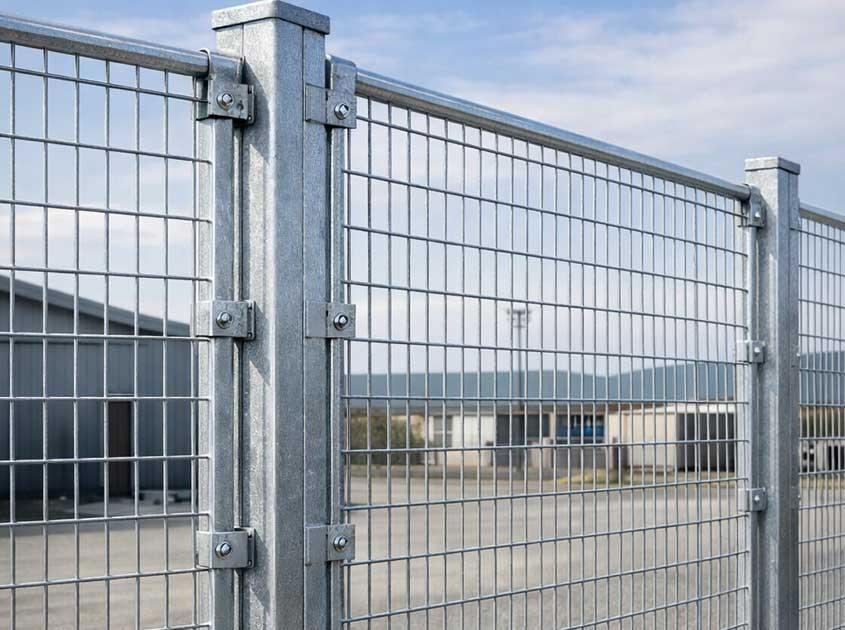
Welded wire mesh fencing is manufactured by positioning horizontal and vertical metal wires at predetermined intervals and joining them at their intersections through resistance welding.
This manufacturing method produces a regular mesh structure with square or rectangular openings.
Welded wire mesh panels are commonly used for residential boundaries, industrial fencing, commercial properties, warehouse partitions, and agricultural enclosures.
Key Characteristics:
Uniform square or rectangular mesh openings.
Welded wire intersections.
Relatively rigid panel structure.
Different wire diameters available.
Suitable for framed fencing systems.
Compatible with several surface treatments.
Typical Applications:
Factory perimeter fencing.
Residential garden fences.
Warehouse partitions.
School boundaries.
Agricultural enclosures.
Commercial property fencing.
The mechanical performance of welded wire mesh fencing depends on wire diameter, mesh spacing, welding quality, panel dimensions, and supporting post design.
For projects requiring permanent outdoor installation, corrosion protection and connection durability should receive particular attention.
2. Chain Link Fence
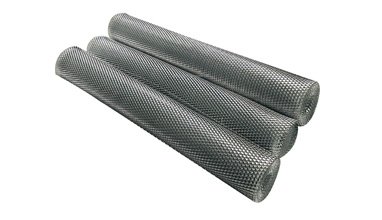
Chain link fencing is manufactured by interlocking bent metal wires to form a flexible diamond-shaped mesh structure.
It is also known as diamond wire mesh fencing.
Unlike rigid welded wire mesh panels, chain link fabric can be supplied in rolls and tensioned between supporting posts.
This characteristic makes chain link fencing suitable for long perimeter boundaries and projects involving different ground conditions.
Key Characteristics:
Flexible interlocking wire structure.
Diamond-shaped mesh openings.
Available in galvanized or coated wire.
Suitable for long fence runs.
Can follow suitable changes in ground elevation.
Requires a properly designed post and tensioning system.
Typical Applications:
Sports field fencing.
Agricultural land boundaries.
Industrial perimeter fencing.
Recreational areas.
Temporary fencing projects.
Commercial property boundaries.
Chain link fences are often considered when buyers need a practical and adaptable fencing solution for relatively large areas.
The required wire diameter, diamond opening size, fence height, and supporting structure should be confirmed before ordering.
3. Expanded Metal Mesh Fence
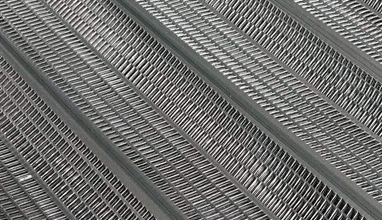
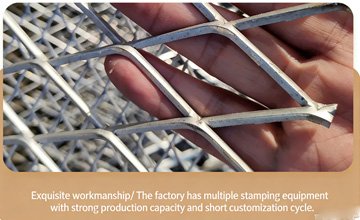
Expanded metal fencing is manufactured from a continuous metal sheet that is slit and stretched to create interconnected openings.
Unlike welded wire mesh and chain link fencing, expanded metal mesh is not made by joining separate wires.
Its continuous metal structure commonly features diamond-shaped openings and can be supplied in raised or flattened configurations.
Key Characteristics:
Continuous metal sheet construction.
Diamond-shaped mesh openings.
No welded intersections within the expanded sheet.
Different sheet thicknesses and strand widths.
Available in raised and flattened patterns.
Suitable for framed panel applications.
Typical Applications:
Industrial perimeter fencing.
Machinery protection barriers.
Warehouse enclosures.
Decorative boundary fencing.
Commercial building screens.
Infrastructure fencing.
Expanded metal mesh can be considered when a project requires a rigid metal panel with a distinctive opening pattern.
For security-related applications, the effectiveness of the complete fence depends on opening dimensions, material thickness, panel framing, fixing components, and installation design.
4. 3D Curved Wire Mesh Fence
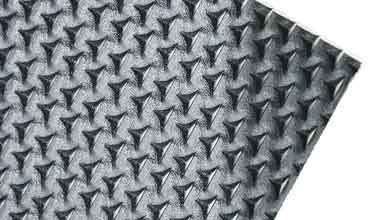
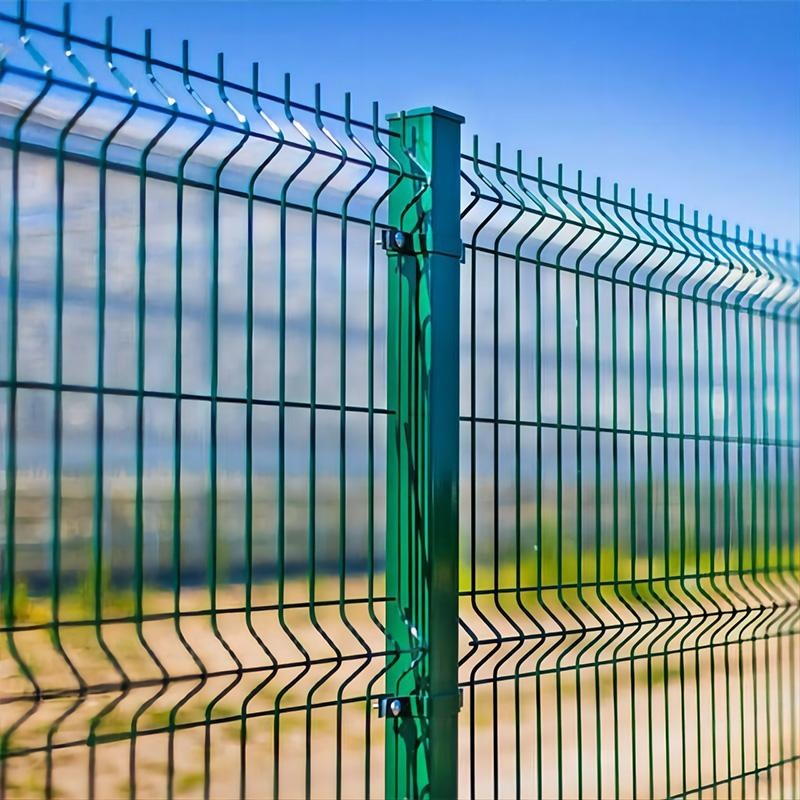
A 3D curved wire mesh fence is a type of welded wire mesh panel that incorporates horizontal V-shaped folds or reinforcing bends.
These bends are formed during panel manufacturing to improve panel rigidity and create a distinctive three-dimensional appearance.
This fencing style is commonly used in residential, commercial, educational, and industrial projects.
Key Characteristics:
Welded wire mesh construction.
V-shaped reinforcing bends.
Regular rectangular openings.
Different panel heights and widths.
Galvanized and coated surface options.
Compatible with suitable steel posts and fixing clips.
Typical Applications:
Residential communities.
Commercial parks.
School playgrounds.
Factory boundaries.
Public parks.
Garden fencing.
3D curved wire mesh fences are often selected when buyers require a balance between functional separation, panel rigidity, and decorative appearance.
The number of reinforcing folds and panel dimensions should be matched to the project requirements.
5. Temporary Wire Mesh Fence Panels
Temporary wire mesh fencing is designed for projects requiring movable or removable boundary separation.
These systems commonly use welded wire mesh panels combined with portable supporting feet, clamps, and connectors.
They are used for construction sites, temporary events, road maintenance, and selected industrial projects.
Key Characteristics:
Removable panel system.
Portable supporting components.
Suitable for temporary site separation.
Different panel configurations.
Designed for transportation and repeated installation where appropriate.
Typical Applications:
Construction site boundaries.
Road maintenance areas.
Temporary event fencing.
Industrial maintenance projects.
Public access separation.
When selecting temporary fencing, buyers should consider ground conditions, wind exposure, crowd loads, support stability, and local safety requirements.
Comparison of Different Wire Mesh Fence Types
Different fencing products have different structural characteristics and advantages.
The following table provides a general comparison for international buyers.
| Fence Type | Structural Features | Main Advantages | Common Applications |
|---|---|---|---|
| Welded Wire Mesh Fence | Wires welded at intersections | Regular openings, rigid panels | Residential, industrial |
| Chain Link Fence | Interlocking diamond wire fabric | Flexible configuration, long fence runs | Sports fields, farms |
| Expanded Metal Fence | Slit and stretched metal sheets | Continuous sheet construction | Industrial, security, decorative |
| 3D Curved Mesh Fence | Welded panels with reinforcing folds | Panel rigidity, decorative appearance | Commercial, residential |
| Temporary Mesh Fence | Removable framed mesh panels | Portable and reusable systems | Construction, events |
The correct choice depends on project requirements rather than a single product characteristic.
For example, chain link fencing may be suitable for a large sports field, while welded mesh panels may be more appropriate for a framed industrial partition.
Expanded metal fencing can provide a different appearance and panel structure for architectural or protective applications.
Materials Used for Wire Mesh Fence Panels
Material selection directly affects corrosion resistance, mechanical properties, appearance, maintenance requirements, and overall project cost.
Common materials include low-carbon steel, galvanized steel, stainless steel, and coated steel products.
1. Low Carbon Steel
Low-carbon steel is commonly used for welded wire mesh panels and supporting fence components.
It offers practical mechanical properties and can be processed using welding, cutting, and forming techniques.
For outdoor installation, suitable corrosion protection is generally required.
2. Hot-Dip Galvanized Steel
Hot-dip galvanizing applies a protective zinc coating to steel through immersion in molten zinc.
The coating helps protect the underlying steel from atmospheric corrosion.
Main Advantages:
Suitable for many outdoor environments.
Improved corrosion resistance.
Compatible with industrial fencing.
Different coating specifications available.
Buyers should confirm coating thickness or coating mass, the galvanizing method, and applicable technical requirements.
3. Electro-Galvanized Steel
Electro-galvanized steel receives a zinc coating through an electroplating process.
It can provide a relatively smooth surface appearance, although corrosion protection depends on coating thickness and service conditions.
For demanding outdoor projects, buyers should compare coating specifications rather than selecting a product based only on the term "galvanized."
4. PVC-Coated Wire Mesh Fence
PVC-coated fencing uses a protective polymer layer applied to suitable metal wire or fencing components.
PVC coating is a surface finish rather than a separate mesh manufacturing method.
It can be used with chain link fencing and selected other wire mesh products.
Main Advantages:
Additional surface protection.
Different color options.
Suitable for decorative fencing.
Can improve resistance to some environmental exposure conditions.
Common colors include green, black, and other project-specific finishes.
Coating durability depends on material formulation, thickness, adhesion, ultraviolet exposure, and installation conditions.
5. Stainless Steel Wire Mesh
Stainless steel fencing can be considered for projects requiring improved corrosion resistance.
Common material grades include SS304 and SS316.
SS316 generally offers better resistance to chloride-related corrosion than SS304 and may be appropriate for certain coastal or industrial environments.
The suitable stainless steel grade should be selected according to actual exposure conditions and project requirements.
Key Technical Specifications for Wire Mesh Fence Procurement
Before purchasing wire mesh fence panels, international buyers should confirm the main technical parameters.
Important specifications include wire diameter, mesh opening size, panel dimensions, surface finish, post configuration, and installation accessories.
1. Wire Diameter
Wire diameter refers to the thickness of the individual metal wires used in welded or chain link fencing.
Different wire diameters provide different combinations of material weight, rigidity, and mechanical characteristics.
Examples of commonly requested diameters include:
2.0 mm.
3.0 mm.
4.0 mm.
5.0 mm.
6.0 mm.
These are illustrative specifications, not guaranteed product availability.
The correct wire diameter depends on the mesh type, fence height, supporting structure, and intended application.
2. Mesh Opening Size
Mesh opening size is an important parameter for selecting wire mesh fences.
For welded wire mesh, openings are commonly square or rectangular.
For chain link fencing, the openings form a diamond-shaped pattern.
Examples of welded mesh opening dimensions include:
50 × 50 mm.
50 × 100 mm.
50 × 200 mm.
75 × 150 mm.
Other project-specific dimensions.
The appropriate opening size depends on visibility, fencing function, structural requirements, and safety considerations.
3. Fence Panel Height
Fence height is determined by the application, property requirements, and local regulations.
Commonly requested fencing heights include:
1.2 m.
1.5 m.
1.8 m.
2.0 m.
2.4 m.
Custom heights may be considered depending on panel type and manufacturing feasibility.
Higher fences generally require additional consideration of wind loads, post strength, foundations, and installation stability.
4. Fence Panel Width
Panel width affects installation layout, transportation dimensions, and supporting post spacing.
Buyers should provide the required panel width and complete fence layout whenever possible.
Standard panel dimensions are not universal across all fencing products.
5. Specifications for Expanded Metal Fencing
Expanded metal fence panels require different dimensional information from welded wire mesh.
Important parameters include:
Original sheet thickness.
Strand width.
Short Way of Diamond (SWD).
Long Way of Diamond (LWD).
Overall panel dimensions.
Raised or flattened finish.
These specifications help determine the opening geometry, panel weight, and fabrication requirements.
6. Surface Treatment
Surface treatments commonly used for metal fencing include:
Hot-dip galvanizing.
Electro-galvanizing.
PVC coating.
Powder coating.
Suitable stainless steel finishes.
The required finish should be selected based on outdoor exposure, color requirements, maintenance expectations, and project specifications.
7. Fence Posts and Accessories
A complete wire mesh fencing system requires more than the mesh material.
Common components include:
Metal fence posts.
Support rails.
Fixing clips.
Connecting brackets.
Bolts and nuts.
Base plates.
Ground anchors.
Protective caps.
Suitable gates and access components.
Buyers should confirm whether posts and accessories are included in the product quotation.
Common Applications of Wire Mesh Fence Systems
Wire mesh fencing is used in a wide range of residential, commercial, industrial, agricultural, and public infrastructure projects.
1. Residential and Garden Fencing
Residential properties use wire mesh fencing to define boundaries, separate gardens, and create protective enclosures.
Welded wire mesh fences and 3D curved panels are commonly considered for applications requiring a regular panel structure and decorative appearance.
Color-coated finishes can help integrate fencing with surrounding buildings and landscaping.
2. Agricultural and Farm Fencing
Wire mesh fencing is widely used for agricultural land separation, farm boundaries, livestock enclosures, and selected animal protection systems.
Chain link fencing and welded wire mesh panels are among the available options.
The correct mesh opening, wire diameter, fence height, and material should be selected according to the animal species and enclosure requirements.
3. Industrial and Manufacturing Facilities
Factories and industrial parks use fencing systems to define property boundaries and separate operational areas.
Common applications include:
Factory perimeter fencing.
Warehouse enclosures.
Machinery protection.
Restricted-access areas.
Industrial storage partitions.
Welded mesh panels and expanded metal fencing can be considered for suitable industrial applications.
For machinery protection, the complete guarding system should comply with applicable machine safety requirements.
4. Sports Fields and Recreational Areas
Chain link fencing is commonly used around sports fields and recreational facilities.
Its flexible mesh construction makes it suitable for different fence layouts.
Projects should consider fence height, wire material, impact exposure, and supporting post design.
5. Commercial Properties and Business Parks
Commercial properties use wire mesh fencing to provide boundary separation while preserving visibility.
3D curved panels and coated welded mesh fences are often considered for locations where appearance and functional separation are both important.
6. Municipal and Public Infrastructure
Metal mesh fencing is also used for public infrastructure projects, including selected railway boundaries, utility facilities, parks, and public service areas.
These projects often require specific technical standards, material documentation, and engineering approval.
7. Temporary Construction Projects
Temporary fencing provides movable separation for construction sites, public events, and maintenance areas.
The panel design, supporting feet, bracing, and connection systems must be appropriate for the expected site conditions.
How to Choose the Right Wire Mesh Fence for Your Project
Selecting suitable wire mesh fencing requires evaluating the project environment, fence structure, material, technical specifications, and complete purchasing cost.
The following process can help international buyers prepare an accurate purchasing request.
Step 1: Define the Application
First, determine how the fence will be used.
For example:
Residential property boundary.
Industrial perimeter protection.
Agricultural enclosure.
Sports field fencing.
Commercial building separation.
Temporary construction barrier.
Different applications require different product specifications.
Step 2: Select the Fence Type
Choose between welded wire mesh, chain link, expanded metal, or 3D curved panel fencing.
Consider the required flexibility, rigidity, visibility, appearance, and installation conditions.
Step 3: Select the Material
The operating environment influences material selection.
Galvanized steel is commonly considered for general outdoor fencing.
Stainless steel may be suitable for more demanding corrosion environments.
PVC-coated and powder-coated products can provide additional finishing and appearance options.
Step 4: Confirm Technical Dimensions
Provide the required:
Wire diameter.
Mesh opening.
Fence height.
Panel width.
Surface finish.
Post dimensions.
Installation accessories.
For expanded metal fencing, include SWD, LWD, strand width, and sheet thickness.
Step 5: Review Product Quality
When evaluating potential suppliers, confirm the required material and manufacturing specifications.
Relevant quality considerations include:
Wire diameter consistency.
Welding quality.
Mesh opening accuracy.
Panel flatness.
Surface coating condition.
Post and connector dimensions.
Packaging protection.
Any required testing or documentation should be agreed upon before production.
Step 6: Compare the Complete Quotation
Buyers should compare the complete supply scope instead of focusing only on the price of mesh panels.
A quotation may involve:
Mesh panel cost.
Supporting posts.
Installation accessories.
Surface treatment.
Packaging.
Transportation.
Applicable taxes and import duties.
A complete quotation helps identify differences between suppliers and reduces unexpected purchasing costs.
Wire Mesh Fence Installation Considerations
Installation quality directly influences the stability and performance of a completed fencing system.
Different mesh structures may require different installation methods.
Site Preparation
Before installation, confirm the property boundaries, ground conditions, fence layout, and required post positions.
The project should follow approved drawings and applicable local regulations.
Fence Post Installation
Fence posts are essential supporting components.
Post spacing, foundation dimensions, anchoring methods, and structural requirements should be determined according to the fence design and expected loads.
Mesh Panel Installation
Welded wire mesh and 3D curved panels are typically attached to posts using appropriate brackets, clips, or other fixing components.
Chain link fencing requires a suitable tensioning system.
Expanded metal fence panels may require framed support and compatible mechanical connections.
Final Inspection
After installation, inspect panel alignment, fixing components, post stability, exposed edges, surface damage, and access points.
For public, commercial, and industrial projects, the completed installation should satisfy the applicable engineering and safety requirements.
Maintenance and Corrosion Protection
Regular inspection and suitable maintenance help maintain the performance of wire mesh fence systems.
The required maintenance depends on the base material, coating system, installation environment, and service conditions.
Galvanized Steel Fence Maintenance
Inspect galvanized surfaces for coating damage, corrosion, and mechanical wear.
Any damaged protective coating should be repaired using an appropriate system.
PVC-Coated and Powder-Coated Fence Maintenance
Check for scratches, peeling, cracking, or other coating damage.
Cleaning methods should be compatible with the coating material.
Stainless Steel Fence Maintenance
Stainless steel fencing may require periodic cleaning, particularly in coastal or industrial environments.
The cleaning frequency depends on environmental exposure and surface conditions.
Connection and Post Inspection
Inspect bolts, clips, brackets, posts, and foundations for movement, damage, or loosening.
Maintenance should cover the complete fencing system rather than the mesh panels alone.
What Affects Wire Mesh Fence Prices?
Wire mesh fence prices vary according to product type, material, technical specifications, order quantity, and delivery requirements.
Several factors influence the total cost.
1. Material Type
Carbon steel, galvanized steel, stainless steel, and coated products have different material and processing costs.
2. Wire Diameter and Mesh Opening
Wire diameter and mesh spacing influence material consumption and finished panel weight.
Their effect on price also depends on the manufacturing process.
3. Panel Dimensions
Different panel heights and widths affect material usage, production efficiency, packaging, and transportation.
4. Surface Treatment
Galvanizing, PVC coating, and powder coating add processing requirements.
The finished cost depends on the coating type, specification, and production quantity.
5. Supporting Accessories
Posts, brackets, clips, fasteners, and gates can represent a significant part of a complete fencing system.
6. Order Quantity
Bulk orders may offer production and transportation efficiencies depending on the product specification.
7. Shipping and Destination
International freight costs depend on packing dimensions, shipment weight, destination, delivery terms, and transport method.
Buyers should request a complete quotation based on actual project specifications.
International Shipping and Bulk Fence Procurement
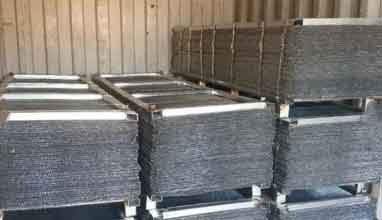
International shipments of wire mesh fence products require careful packaging and logistics planning.
Fence panels can occupy considerable cargo space, even when the weight is relatively low.
As a result, shipping costs depend on both weight and volume.
Packaging Requirements
Before shipping, buyers should confirm:
Number of panels per package.
Package dimensions.
Gross and net weight.
Surface protection.
Post and accessory packaging.
Loading and unloading requirements.
Freight Planning
Sea freight is commonly considered for bulk fencing shipments.
The practical loading quantity depends on panel dimensions, packaging arrangements, cargo weight, and container capacity.
Buyers should not rely on fixed container loading quantities without confirming the actual packing specifications.
International Trade Terms
Common international trade terms include:
EXW – Ex Works.
FOB – Free on Board.
CIF – Cost, Insurance and Freight.
DDP – Delivered Duty Paid.
The available terms should be confirmed with the supplier before placing an order.
Import documentation and customs clearance requirements depend on the destination country and agreed commercial terms.
What Information Is Needed for a Wire Mesh Fence Quotation?
A detailed purchasing request helps suppliers identify suitable products and prepare accurate quotations.
International buyers should provide the following information.
| Required Information | Example |
|---|---|
| Fence Type | Welded / Chain Link / Expanded Metal / 3D Curved |
| Material | Galvanized Steel / Stainless Steel / Coated Steel |
| Wire Diameter | Required diameter in mm |
| Mesh Opening | Required opening dimensions |
| Panel Height | Required height |
| Panel Width | Required width |
| Surface Treatment | Galvanized / PVC / Powder Coated |
| Fence Posts | Required dimensions and quantity |
| Accessories | Clips, brackets, bolts, caps |
| Order Quantity | Panels, rolls or total fence length |
| Application | Industrial / Agricultural / Commercial |
| Destination | Country and delivery port |
| Drawings | Technical drawings or reference photographs |
For expanded metal fences, buyers should also include the required sheet thickness, strand width, SWD, and LWD.
Customized projects should include dimensioned drawings whenever possible.
Frequently Asked Questions About Wire Mesh Fence
1. What is the difference between welded wire mesh fence and chain link fence?
Welded wire mesh fencing uses metal wires welded together at their intersections to form regular grid panels.
Chain link fencing uses interlocking bent wires to create a flexible diamond mesh structure.
Both are suitable for different fencing applications.
2. Which wire mesh fence is suitable for outdoor use?
Galvanized steel fencing is commonly used for general outdoor environments.
Stainless steel or appropriately coated products may be considered for more corrosive locations.
The correct selection depends on environmental exposure and project requirements.
3. What is a 3D curved wire mesh fence?
A 3D curved wire mesh fence is a welded wire mesh panel with horizontal reinforcing folds.
These folds create a three-dimensional appearance and help increase panel rigidity.
4. Is PVC-coated fencing a separate wire mesh type?
No. PVC coating is a surface treatment.
It can be applied to suitable wire mesh products, including chain link fencing.
5. What are common wire mesh fence heights?
Commonly requested heights include 1.2 m, 1.5 m, 1.8 m, 2.0 m, and 2.4 m.
Actual availability depends on the fence type and production specifications.
6. Can wire mesh fence panels be customized?
Depending on manufacturing feasibility, customized requirements can include wire diameter, mesh opening, panel dimensions, material, surface treatment, and supporting accessories.
7. What is the difference between galvanized and stainless steel fences?
Galvanized steel uses a protective zinc coating to improve corrosion resistance.
Stainless steel contains alloying elements that provide corrosion resistance through the material itself.
The appropriate material depends on the environment and performance requirements.
8. How can buyers compare wire mesh fence quotations?
Buyers should compare material specifications, wire diameter, mesh opening, panel dimensions, coating requirements, accessories, packaging, delivery terms, and total costs.
9. Do wire mesh fence quotations include posts and accessories?
Not necessarily.
Some quotations may cover mesh panels only, while others include complete fence systems.
Buyers should confirm the supply scope before placing an order.
10. What information is required for an international fence order?
The main information includes fence type, material, dimensions, mesh opening, surface treatment, order quantity, supporting accessories, and destination.
Technical drawings can help improve quotation accuracy.
Conclusion: Selecting the Right Wire Mesh Fence for Your Project
Wire mesh fencing is widely used for residential boundaries, industrial protection, agricultural enclosures, commercial properties, and public infrastructure.
Different fence structures offer different characteristics.
Welded wire mesh fences provide regular grid panels, chain link fencing offers a flexible diamond mesh structure, expanded metal fencing uses continuous metal sheets, and 3D curved panels combine welded mesh construction with reinforcing folds.
When selecting a product, buyers should carefully consider material grade, wire diameter, mesh opening, panel dimensions, corrosion protection, supporting posts, and installation requirements.
A suitable fencing system should meet the functional requirements of the project while considering safety, environmental exposure, and long-term maintenance.
ANPING METAL MESH provides metal mesh product information and supports project-based specification discussions for international buyers.
Whether you are an importer, distributor, contractor, fabricator, or industrial procurement manager, providing clear spe
Need help choosing a metal mesh?
Share your material, dimensions, intended use and required quantity. We can review the details for a quotation.