Explore wire mesh wall types, materials, specifications and applications. Compare galvanized steel, stainless steel and aluminum mesh walls for fencing, construction, security and architectural projec
What Is a Wire Mesh Wall?
A wire mesh wall is a partition or boundary structure made from metal mesh panels combined with supporting frames, posts, connectors, and installation accessories. It is designed to divide spaces, provide security, control access, and maintain ventilation and visibility.
Unlike traditional brick, concrete, or solid metal walls, wire mesh wall systems feature an open structure that allows air and natural light to pass through. Depending on the mesh type, material, and structural design, they can be used for permanent outdoor fencing, temporary construction enclosures, indoor partitions, industrial protection, and decorative architectural projects.
Wire mesh walls are commonly used in factories, warehouses, commercial buildings, residential communities, agricultural facilities, and public infrastructure.
The performance of a wire mesh wall depends on several factors, including mesh opening size, wire diameter or strand dimensions, panel thickness, frame construction, material selection, and surface treatment.
For international buyers, understanding these specifications is important when selecting suitable mesh wall panels for different project requirements.
At ANPING METAL MESH, we focus on metal mesh products and customized mesh solutions. Buyers can provide project drawings, reference photographs, or technical specifications to help identify suitable product structures and materials.
Different Types of Wire Mesh Wall Structures
Wire mesh walls are not manufactured using only one production method. Different mesh structures offer different advantages in terms of strength, appearance, ventilation, visibility, and installation.
Understanding the differences between these structures helps buyers select the right product.
1. Welded Wire Mesh Wall
Welded wire mesh walls are made by welding horizontal and vertical metal wires at their intersection points to form a regular grid structure.
The resulting panels feature uniform openings and a relatively flat surface. They are commonly used for general-purpose fencing, partitioning, and boundary protection.
Main Characteristics:
Regular square or rectangular mesh openings.
Welded intersections between metal wires.
Multiple wire diameters and aperture options.
Suitable for framed panel construction.
Available with different corrosion protection treatments.
Typical Applications:
Factory boundary fencing.
Warehouse partitions.
Residential property fencing.
Agricultural enclosures.
Commercial building partitions.
Construction site fencing.
Welded wire mesh is a practical option for projects requiring regular openings, straightforward panel assembly, and general-purpose separation.
2. Expanded Metal Mesh Wall
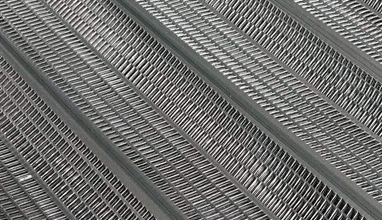
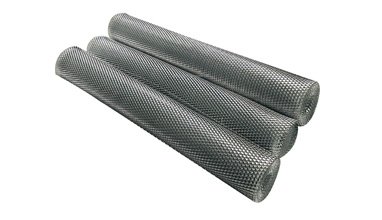
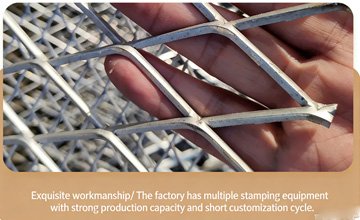
Expanded metal mesh walls are manufactured by slitting and stretching a solid metal sheet to create interconnected openings, commonly in diamond shapes.
Unlike welded wire mesh, expanded metal is formed from one continuous sheet, without welded intersections between individual strands.
This structure provides a distinctive appearance and can be used in both functional and decorative wall systems.
Main Characteristics:
Continuous one-piece metal construction.
Diamond-shaped openings.
No welded intersections.
Different opening sizes and strand dimensions.
Available in raised and flattened structures.
Suitable for architectural and industrial applications.
Typical Applications:
Industrial security barriers.
Building facade panels.
Machine protection enclosures.
Decorative wall partitions.
Ventilation screens.
Security fence panels.
Expanded metal mesh is especially suitable for projects requiring a combination of open structure, visual appearance, and interconnected metal construction.
For more information, visit our Expanded Metal Fence Panels guide.
3. Woven Wire Mesh Wall
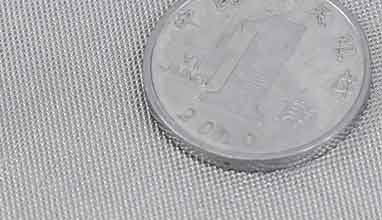
Woven wire mesh is produced by interlacing metal wires in different directions to form a mesh structure.
Depending on the weaving method and wire diameter, the finished mesh can feature different opening sizes and flexibility.
Main Characteristics:
Interwoven wire structure.
Different opening shapes and dimensions.
Available in fine and coarse mesh options.
Suitable for selected screening and partition applications.
Typical Applications:
Industrial screening.
Equipment protection.
Ventilation panels.
Interior decorative partitions.
Specialized separation systems.
Woven wire mesh should be selected according to the required opening dimensions, wire material, and installation structure.
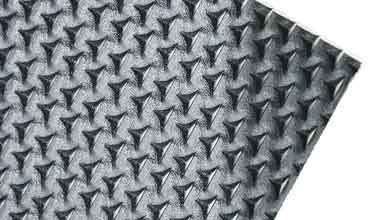
4. Perforated Metal Wall Panels
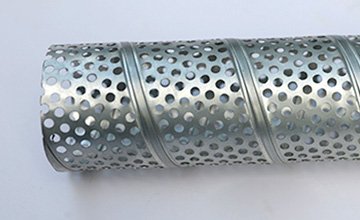
Perforated metal panels are manufactured by punching holes into solid metal sheets.
Although perforated metal is not technically wire mesh, it is often considered as an alternative for architectural screens and metal wall partitions because it provides an open structure and customizable appearance.
Main Characteristics:
Round, square, or customized hole shapes.
Uniform or decorative hole arrangements.
Different metal sheet thicknesses.
Customizable open area.
Suitable for architectural finishing.
Typical Applications:
Commercial building facades.
Decorative wall cladding.
Interior partitions.
Ventilation panels.
Equipment covers.
When comparing perforated metal and expanded metal, buyers should consider opening geometry, structural requirements, visual appearance, and material consumption.
Main Types of Wire Mesh Walls by Application
In addition to manufacturing methods, wire mesh wall systems can also be classified according to their intended use.
1. Permanent Outdoor Wire Mesh Wall
Permanent outdoor wire mesh walls are designed for long-term boundary separation and property protection.
They are commonly installed around factories, warehouses, residential communities, schools, agricultural land, and industrial facilities.
These systems usually consist of metal mesh panels, supporting posts, fixing brackets, and foundation structures.
Key Requirements:
Suitable corrosion protection.
Appropriate panel rigidity.
Stable post and frame construction.
Resistance to local weather conditions.
Reliable installation connections.
Hot-dip galvanized steel is commonly considered for outdoor steel mesh structures. Stainless steel and aluminum may also be suitable depending on the environment and project budget.
2. Temporary Construction Wire Mesh Wall
Temporary construction wire mesh walls are used to separate construction areas, road projects, temporary workspaces, and event locations.
They are generally designed for convenient transportation, installation, removal, and reuse where the panel system allows.
Key Requirements:
Lightweight panel construction.
Convenient connection systems.
Stable supporting feet or posts.
Easy installation and removal.
Appropriate visibility and safety separation.
Temporary fencing specifications should be selected according to site conditions, expected use duration, wind exposure, and local safety requirements.
3. Indoor Partition Wire Mesh Wall
Indoor wire mesh partition walls are used to divide spaces without completely blocking light or airflow.
They are suitable for office buildings, commercial spaces, warehouses, exhibition halls, workshops, and modern interior design projects.
Different mesh openings, panel frames, and surface finishes can create different visual effects.
Typical Applications:
Office space separation.
Warehouse storage partitions.
Retail display areas.
Exhibition space division.
Workshop safety barriers.
Decorative interior screens.
Aluminum, stainless steel, and coated steel are potential material options depending on the desired appearance and operating environment.
4. Security Wire Mesh Wall
Security wire mesh walls are designed to provide physical separation and help control access to restricted areas.
They may be used around industrial facilities, warehouses, infrastructure sites, equipment areas, and other locations requiring additional protection.
Common design considerations include:
Smaller mesh openings.
Appropriate wire or strand thickness.
Reinforced posts and frames.
Secure panel connections.
Tamper-resistant fasteners.
Optional anti-climbing components.
For higher-security projects, the complete fence system should be evaluated rather than selecting mesh panels based on appearance alone.
Panel construction, post spacing, foundation design, fixing methods, and applicable security requirements all influence the final performance.
5. Decorative Landscape Wire Mesh Wall
Decorative wire mesh walls are used in parks, commercial buildings, residential landscapes, gardens, and public spaces.
They combine space separation with architectural and visual design.
Depending on the project, designers may choose expanded metal mesh, framed wire mesh, or other decorative metal panel structures.
Typical Applications:
Garden boundaries.
Landscape partitions.
Commercial building decoration.
Decorative facade screens.
Outdoor seating areas.
Public space separation.
Aluminum and coated steel are commonly considered for decorative applications because they offer different combinations of weight, appearance, and surface finishing options.
Materials Used for Wire Mesh Wall Panels
Material selection directly affects the strength, weight, corrosion resistance, appearance, and maintenance requirements of wire mesh wall systems.
Different materials should be selected according to the operating environment and project requirements.
1. Galvanized Steel
Galvanized steel is widely used for outdoor fencing, industrial partitions, and construction mesh panels.
A zinc coating helps protect the underlying steel against corrosion.
Main Advantages:
Good general-purpose strength.
Suitable for many outdoor applications.
Different wire and sheet thickness options.
Practical material choice for industrial fencing.
Hot-dip galvanizing and electro-galvanizing are different processes. Buyers should confirm the required coating type and relevant coating specifications when requesting quotations.
2. Carbon Steel
Carbon steel is a common material for industrial metal mesh structures.
It offers useful mechanical strength and can be processed into different mesh forms, frames, and supporting components.
Main Advantages:
Suitable for different structural designs.
Available in various thicknesses.
Can be welded, cut, and fabricated.
Can receive additional protective coatings.
For outdoor applications, suitable corrosion protection should be considered.
3. Stainless Steel 304
Stainless steel 304 is commonly used where corrosion resistance, durability, and appearance are important.
It is suitable for many indoor and general industrial environments.
Typical Applications:
Interior partitions.
Commercial decoration.
Equipment protection.
Industrial screening.
Architectural metal panels.
4. Stainless Steel 316
Stainless steel 316 contains molybdenum and generally offers better resistance to chloride-related corrosion than 304 stainless steel.
It is often considered for coastal, marine, and more corrosive environments.
The actual material grade should be confirmed according to the operating conditions and project specifications.
5. Aluminum Alloy
Aluminum alloy is lightweight and naturally develops a protective oxide layer.
It is commonly considered for architectural decoration, lightweight partitions, and exterior metal screen applications.
Main Advantages:
Lower weight compared with many steel options.
Good corrosion resistance in suitable environments.
Different surface finishing possibilities.
Suitable for decorative panel designs.
Aluminum can also be anodized or powder coated according to project requirements.
Key Technical Specifications for Wire Mesh Wall Procurement
Before purchasing wire mesh wall panels, buyers should confirm the main technical specifications.
Different mesh structures require different measurement methods, so specifications should be clearly identified in technical drawings.
1. Wire Diameter or Strand Thickness
For welded or woven wire mesh, wire diameter is an important specification.
For expanded metal mesh, the original sheet thickness and strand dimensions should be confirmed.
These measurements affect product weight, rigidity, appearance, and overall material consumption.
2. Mesh Opening Size
Mesh opening size refers to the dimensions of the open areas within the mesh structure.
Common opening shapes include:
Square.
Rectangular.
Diamond.
Customized geometric patterns.
Smaller openings can provide greater visual screening and may make access more difficult, while larger openings generally provide more open visibility and airflow.
The appropriate opening size depends on the project purpose.
3. Panel Height and Width
Panel dimensions determine the overall wall layout and installation requirements.
Buyers should confirm:
Total wall height.
Individual panel width.
Panel length.
Required number of panels.
Post spacing.
Ground clearance.
For large projects, a dimensioned drawing can help reduce installation errors and material waste.
4. Frame Specifications
The supporting frame plays an important role in maintaining the stability of a wire mesh wall system.
Common frame components include square steel tubes, rectangular steel tubes, metal posts, brackets, and connecting plates.
The frame material, profile dimensions, wall thickness, and connection method should be selected according to the panel size and expected loads.
5. Surface Treatment
Surface treatment helps protect the metal and determine its final appearance.
Common options include:
Hot-dip galvanizing.
Electro-galvanizing.
Powder coating.
PVC coating.
Anodizing for suitable aluminum products.
Stainless steel polishing.
For outdoor applications, the coating system should be selected according to humidity, rainfall, salt exposure, and other environmental conditions.
6. Installation Accessories
A complete wire mesh wall system may require additional components, including:
Supporting posts.
Fixing brackets.
Bolts and screws.
Connecting plates.
Base plates.
Ground anchors.
Protective caps.
Buyers should confirm whether these accessories are included in the quotation or need to be purchased separately.
Comparison of Different Wire Mesh Wall Types
The following table provides a general comparison of common mesh structures.
| Mesh Type | Structural Features | Main Advantages | Typical Applications |
|---|---|---|---|
| Welded Wire Mesh | Wires welded at intersections | Regular openings, rigid panels | Fencing, partitions |
| Expanded Metal Mesh | Slit and stretched metal sheet | Continuous structure, diamond openings | Security, facades, barriers |
| Woven Wire Mesh | Interlaced metal wires | Flexible mesh configurations | Screening, filtration, partitions |
| Perforated Metal | Holes punched into metal sheets | Decorative patterns, controlled open area | Wall panels, facades |
The most suitable product depends on the required opening size, structural performance, material, and installation method.
Applications of Wire Mesh Wall Across Different Industries
1. Industrial Parks and Manufacturing Facilities
Factories and industrial parks use metal mesh wall systems to separate production areas, restrict unauthorized access, and protect equipment.
Common applications include:
Factory boundary fencing.
Warehouse partitions.
Machinery protection.
Equipment enclosures.
Storage area separation.
Galvanized steel and appropriately coated metal products are commonly considered for these applications.
For equipment protection projects, buyers can also review our Expanded Metal Frame guide.
2. Residential Communities and Villas
Residential properties use metal mesh walls for garden boundaries, courtyard fencing, balcony separation, and community perimeter protection.
Compared with solid walls, mesh structures provide better visibility and airflow.
Aluminum, galvanized steel, and decorative metal panels can be selected according to architectural style and environmental conditions.
3. Construction Sites and Road Engineering
Temporary mesh walls are commonly used to separate construction areas and control pedestrian or vehicle access.
The main purchasing considerations include panel dimensions, connection methods, stability, transportation, and installation convenience.
4. Commercial Buildings and Exhibition Spaces
Commercial buildings, shopping centers, offices, and exhibition halls use metal mesh partitions for interior separation and decorative purposes.
Expanded metal and decorative mesh panels can provide an open visual structure while maintaining a defined boundary between spaces.
5. Farms and Agricultural Facilities
Agricultural facilities use metal mesh fencing to divide land, create livestock enclosures, and protect selected areas.
The mesh opening, material strength, panel height, and corrosion protection should be selected according to the type of livestock and the surrounding environment.
6. Parks and Landscape Projects
Landscape designers use decorative metal mesh walls for garden boundaries, green space separation, and architectural decoration.
Customized panel dimensions, colors, and opening patterns can help integrate metal structures with surrounding buildings and landscaping.
How to Choose the Right Wire Mesh Wall for Your Project
Selecting the correct mesh wall requires evaluating the intended application, structural requirements, environmental conditions, and total project budget.
The following steps can help buyers make a more informed decision.
Step 1: Identify the Main Application
First, determine the purpose of the wall.
For example:
Factory boundary protection.
Temporary construction enclosure.
Indoor warehouse partition.
Residential garden fencing.
High-security perimeter protection.
Architectural decoration.
Different applications require different mesh structures and supporting systems.
Step 2: Select the Mesh Manufacturing Type
Determine whether the project requires welded wire mesh, expanded metal mesh, woven wire mesh, or perforated metal panels.
The selection should consider opening geometry, structural characteristics, visibility, and installation requirements.
Step 3: Confirm Material and Surface Treatment
Select carbon steel, galvanized steel, stainless steel, or aluminum according to the environment and performance requirements.
For coastal and humid environments, corrosion resistance should receive particular attention.
Step 4: Confirm Panel and Frame Dimensions
Provide the required panel height, width, opening size, wire diameter or sheet thickness, and supporting frame dimensions.
Technical drawings are recommended for customized projects.
Step 5: Evaluate Installation Conditions
Consider the ground type, foundation requirements, post spacing, wind exposure, connection method, and local construction regulations.
A properly designed supporting structure is essential for the performance of the complete wall system.
Step 6: Compare the Total Procurement Cost
Do not compare suppliers based only on the price per panel.
A complete quotation should consider:
Mesh panel price.
Supporting frames and posts.
Surface treatment.
Installation accessories.
Packaging.
Transportation.
Import duties and applicable taxes.
Comparing the complete supply scope helps buyers evaluate different quotations more accurately.
Installation and Maintenance of Wire Mesh Wall Systems
Correct installation is important for the safety and stability of a wire mesh wall.
Although different panel systems use different fixing methods, a typical installation project involves several basic stages.
1. Site Preparation
Before installation, confirm the wall layout, ground conditions, post positions, and required foundation dimensions.
The installation area should be prepared according to the project drawings.
2. Post Installation
Supporting posts should be installed at the specified positions.
The post foundation, embedment depth, anchoring method, and alignment should follow the engineering requirements of the project.
3. Mesh Panel Installation
Mesh panels are connected to the posts or supporting frames using suitable brackets, bolts, clamps, or other fixing components.
The panel alignment and connection points should be checked during installation.
4. Final Inspection
After installation, inspect:
Panel alignment.
Connection tightness.
Frame stability.
Surface coating condition.
Sharp edges and exposed fasteners.
Ground clearance and access points.
For large or high-security projects, installation should follow approved engineering drawings and applicable local regulations.
5. Regular Maintenance
Regular inspections help identify corrosion, loose fasteners, damaged coatings, and structural movement.
For galvanized and powder-coated products, damaged coating areas should be repaired using an appropriate protective system.
The maintenance frequency depends on the environment, material, coating, and operating conditions.
What Information Is Needed When Requesting a Wire Mesh Wall Quotation?
Providing complete project information helps suppliers evaluate specifications and prepare a more accurate quotation.
We recommend including the following details:
| Information | Details to Provide |
|---|---|
| Product Type | Welded / Expanded / Woven / Perforated |
| Application | Outdoor fencing / Partition / Security / Decoration |
| Material | Galvanized Steel / Carbon Steel / Stainless Steel / Aluminum |
| Mesh Opening | Width × Height or drawing |
| Wire Diameter | For welded or woven mesh |
| Sheet Thickness | For expanded or perforated metal |
| Panel Dimensions | Height × Width |
| Frame Specification | Material, profile and thickness |
| Surface Treatment | Galvanized / Powder Coated / Anodized |
| Quantity | Number of panels or total square meters |
| Accessories | Posts, brackets, bolts and connectors |
| Destination | Country, port or delivery address |
If you already have a project drawing, product photograph, or reference sample, you can send it for technical review.
This information helps reduce specification misunderstandings and makes it easier to compare quotations from different suppliers.
Frequently Asked Questions About Wire Mesh Wall
1. What is the difference between wire mesh wall and a traditional solid wall?
Wire mesh walls use open metal mesh panels and supporting structures. They allow air and light to pass through while providing separation and protection.
Traditional solid walls generally provide greater visual privacy but block more airflow and natural light.
2. What is the difference between welded wire mesh and expanded metal mesh?
Welded wire mesh is manufactured by welding separate metal wires at their intersections.
Expanded metal mesh is produced by slitting and stretching a continuous metal sheet to create openings.
The two products have different structures, manufacturing processes, and application characteristics.
3. Which material is suitable for outdoor wire mesh walls?
Galvanized steel is commonly considered for general outdoor applications.
Stainless steel and aluminum may be appropriate for specific environments, including coastal or decorative projects.
The final material should be selected according to exposure conditions, maintenance requirements, and budget.
4. Can wire mesh wall panels be customized?
Yes, mesh wall projects can involve customized panel dimensions, opening sizes, material thicknesses, frame profiles, and surface treatments.
The available customization depends on the selected mesh manufacturing process and production capabilities.
5. What is the difference between permanent and temporary wire mesh walls?
Permanent mesh walls are designed for longer-term installation and generally require more consideration of foundations, corrosion protection, and structural stability.
Temporary mesh walls focus more on transportation, installation, removal, and potential reuse.
6. Are wire mesh walls suitable for factories and warehouses?
Yes. They are commonly used for factory boundaries, warehouse partitions, equipment enclosures, and workshop separation.
The mesh structure, panel rigidity, and supporting frame should be selected according to the specific application.
7. Can wire mesh walls be used in coastal areas?
Yes, but material and surface treatment selection is important.
Aluminum and suitable stainless steel grades may be considered for coastal environments. Galvanized steel can also be evaluated according to the expected exposure and required maintenance.
8. What information is needed for a customized wire mesh wall order?
The main information includes product type, material, mesh opening, wire diameter or sheet thickness, panel dimensions, frame specifications, surface treatment, quantity, and destination.
Technical drawings are especially useful for customized projects.
Conclusion: Find the Right Wire Mesh Wall Solution for Your Project
Wire mesh walls provide flexible solutions for boundary protection, industrial separation, construction enclosures, architectural decoration, and commercial space division.
Different mesh structures offer different advantages.
Welded wire mesh provides regular grid openings, expanded metal mesh offers a continuous diamond-shaped structure, and woven wire mesh is suitable for selected screening and partition applications.
When choosing a wire mesh wall, buyers should carefully evaluate material, opening size, panel dimensions, supporting frames, surface treatment, and installation requirements.
A well-matched mesh structure can help improve project performance, installation efficiency, and long-term maintenance.
ANPING METAL MESH provides metal mesh product information and supports project-based specification discussions for industrial, construction, and architectural applications.
Whether you are a distributor, importer, contractor, fabricator, or project purchaser, sharing your technical requirements is the first step toward identifying a suitable metal mesh solution.
Request a Wire Mesh Wall Quotation
Looking for suitable metal mesh panels for your next project?
Send us your product requirements, technical drawings, reference photographs, and estimated order quantity.
Our team can review your requirements and discuss suitable mesh structures, materials, dimensions, and surface treatments.
Metal Mesh Panels | Customized Specifications | Multiple Material Options | Project-Based Solutions
Contact ANPING METAL MESH Today to Discuss Your Project.
Need help choosing a metal mesh?
Share your material, dimensions, intended use and required quantity. We can review the details for a quotation.