Explore expanded metal mesh patterns, including standard diamond, small hole, raised, flattened and custom designs. Compare materials, opening sizes, specifications and applications. Request a custom
What Are Expanded Metal Mesh Patterns?
Expanded metal mesh patterns refer to the opening shapes and structural arrangements created when a solid metal sheet is slit and stretched through a specialized expanding process. This manufacturing method produces a continuous metal mesh with interconnected strands and uniform openings, without welding or weaving.
The pattern is one of the most important factors affecting the performance and appearance of expanded metal mesh. Different opening shapes and sizes influence strength, airflow, light transmission, visibility, weight, and suitability for specific applications.
Expanded metal mesh is widely used in construction, architectural facades, industrial flooring, security protection, filtration, ventilation, and decorative projects.
At ANPING METAL MESH, we provide expanded metal mesh solutions in different materials, opening sizes, thicknesses, and surface finishes. Standard and customized specifications can be considered according to project drawings and application requirements.
Main Types of Expanded Metal Mesh Patterns
Different expanded metal mesh patterns are designed to meet specific functional and aesthetic requirements. Diamond openings are the most widely used, while smaller openings and customized designs are suitable for specialized applications.
1. Standard Diamond Expanded Metal Mesh
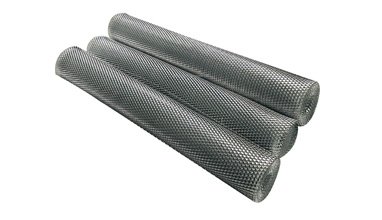
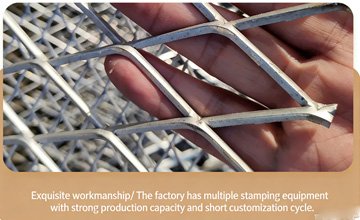
Standard diamond expanded metal mesh is one of the most common types of expanded metal products. It features symmetrical diamond-shaped openings formed through the slitting and stretching of metal sheets.
The interconnected metal strands provide structural stability while maintaining relatively low material weight. Its open structure also allows air, light, and liquids to pass through.
Key Characteristics:
Traditional diamond-shaped openings.
Continuous one-piece metal construction.
Good strength-to-weight performance.
Suitable for different sheet thicknesses and opening sizes.
Available in multiple metal materials.
Typical Applications:
Industrial security fencing.
Machine protection guards.
Construction reinforcement.
Equipment enclosures.
General industrial screening.
Standard diamond expanded metal is a practical choice for buyers looking for a balance between strength, ventilation, durability, and manufacturing cost.
2. Small Hole Expanded Metal Mesh
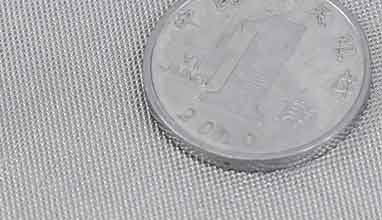
Small hole expanded metal mesh features compact diamond-shaped openings and relatively narrow metal strands. It is designed for applications requiring smaller apertures, a more uniform appearance, and controlled airflow.
Compared with conventional expanded metal mesh, small hole patterns provide a finer visual structure and are particularly suitable for decorative screens, protective grilles, ventilation panels, and certain screening applications.
Key Characteristics:
Small and uniform diamond openings.
Lightweight construction options.
Good ventilation and visibility control.
Multiple material and surface treatment options.
Custom opening dimensions available according to requirements.
Typical Applications:
Industrial screening and filter support.
Ventilation grilles.
Equipment protection panels.
Architectural decorative panels.
Speaker and electronic equipment grilles.
Interior design applications.
For projects requiring smaller openings and precise dimensions, visit our Small Hole Expanded Metal Mesh product page to review available materials and specifications.
3. Large Opening and Heavy-Duty Diamond Patterns
Large opening expanded metal mesh is designed for industrial applications where structural performance, drainage, and ventilation are important.
This type generally uses larger diamond openings and wider metal strands. Depending on the original sheet thickness and strand dimensions, it can be manufactured for different levels of industrial duty.
Key Characteristics:
Larger diamond-shaped openings.
Wider and thicker metal strands.
Good structural rigidity.
Allows water, air, and debris to pass through.
Suitable for industrial fabrication and heavy-duty applications.
Typical Applications:
Industrial walkways.
Platform flooring.
Stair treads.
Drainage covers.
Industrial equipment protection.
Safety barriers.
For flooring and load-bearing applications, the mesh thickness, strand dimensions, support spacing, and design load should all be confirmed before selecting a specification.
4. Square Expanded Metal Mesh Patterns
Square expanded metal mesh features a more geometric opening arrangement compared with traditional diamond patterns.
These designs are mainly considered for decorative and architectural projects where appearance, ventilation, and visual consistency are important.
Key Characteristics:
Square or rectangular opening appearance.
Modern geometric design.
Suitable for decorative applications.
Different material and finish options.
Custom dimensions subject to production feasibility.
Typical Applications:
Decorative wall panels.
Ceiling systems.
Interior partitions.
Architectural screens.
Furniture components.
Square-pattern designs should be confirmed through product drawings or samples to ensure that the finished opening geometry meets the project requirements.
5. Hexagonal Expanded Metal Mesh Patterns
Hexagonal expanded metal mesh patterns provide a distinctive geometric appearance inspired by honeycomb structures.
These designs are suitable for architectural and decorative applications where a different visual effect is required.
Key Characteristics:
Honeycomb-style opening appearance.
Distinctive decorative effect.
Customizable dimensions.
Suitable for selected architectural applications.
Typical Applications:
Building facade decoration.
Decorative partitions.
Interior wall panels.
Architectural screening.
Customized metal design projects.
Special hexagonal patterns should be evaluated according to the required opening dimensions, material, production method, and final application.
6. Custom Decorative Expanded Metal Mesh Patterns
Custom expanded metal mesh patterns are developed for projects with specific architectural, industrial, or decorative requirements.
Unlike standard diamond patterns, customized designs may require special tooling, production adjustments, and sample confirmation.
Depending on the design and manufacturing feasibility, customization may include:
Opening shape and dimensions.
Long Way of Diamond (LWD).
Short Way of Diamond (SWD).
Strand width.
Sheet thickness.
Overall sheet dimensions.
Surface treatment and color.
Special panel configurations.
Custom expanded metal mesh is commonly considered for commercial building facades, decorative screens, interior installations, and specialized industrial equipment.
Buyers can provide drawings, reference photographs, or sample dimensions to help determine the appropriate production solution.
Raised vs. Flattened Expanded Metal Mesh
In addition to opening patterns, expanded metal mesh is also classified according to its surface structure.
Raised and flattened expanded metal are two important product types. They generally share the same basic expanding process but have different finished surface characteristics.
Raised Expanded Metal Mesh
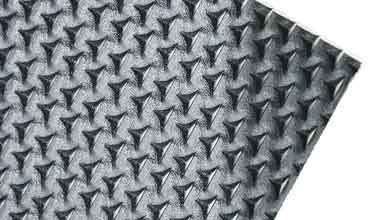
Raised expanded metal mesh retains the three-dimensional surface formed during the expanding process.
Its strands create a textured surface that can provide additional grip in suitable flooring applications.
Main Advantages:
Three-dimensional diamond structure.
Textured surface.
Good rigidity for appropriate specifications.
No additional flattening process required.
Common Applications:
Industrial walkways.
Stair treads.
Platform flooring.
Machine guards.
Safety barriers.
Flattened Expanded Metal Mesh
Flattened expanded metal mesh is produced by passing raised expanded metal through a leveling or rolling process to create a flatter surface.
The resulting product has a smoother appearance and is often selected for architectural and decorative applications.
Main Advantages:
Smooth and relatively uniform surface.
Modern decorative appearance.
Easier integration into selected panel systems.
Suitable for cutting and fabrication.
Common Applications:
Building facade panels.
Interior decoration.
Ceiling systems.
Furniture components.
Decorative partitions.
The choice between raised and flattened expanded metal should depend on the installation method, surface requirements, and intended application.
Materials Used for Different Expanded Metal Mesh Patterns
The material used to manufacture expanded metal mesh directly influences corrosion resistance, strength, weight, appearance, and overall project cost.
Different materials can be selected according to the operating environment and performance requirements.
| Material | Main Characteristics | Common Applications |
|---|---|---|
| Carbon Steel | Good strength and general industrial performance | Machinery guards, platforms, fencing |
| Galvanized Steel | Improved corrosion resistance | Construction, outdoor fencing, industrial screening |
| Aluminum Alloy | Lightweight and corrosion-resistant | Building facades, decorative panels |
| Stainless Steel 304 | Good corrosion resistance and durability | Industrial equipment, architectural screens |
| Stainless Steel 316 | Improved resistance in chloride-containing environments | Coastal and marine applications |
| Copper / Brass | Distinctive decorative appearance | Interior decoration and specialty projects |
Surface Treatment Options
Depending on the base material and intended application, expanded metal mesh can also be supplied with different surface treatments.
Common options include:
Hot-dip galvanizing.
Electro-galvanizing.
Powder coating.
PVC coating.
Anodizing for suitable aluminum products.
Polishing.
Other customized finishing options.
For outdoor applications, buyers should consider humidity, rain exposure, salt spray, chemical exposure, and maintenance requirements when selecting materials and coatings.
Important Specifications of Expanded Metal Mesh Patterns
Selecting expanded metal mesh requires more than identifying the opening shape. Buyers should also understand the main technical dimensions used in product specifications.
1. LWD – Long Way of Diamond
LWD refers to the long dimension of the diamond opening.
It is an important measurement used to identify the opening geometry and overall pattern arrangement.
2. SWD – Short Way of Diamond
SWD refers to the short dimension of the diamond opening.
Together, LWD and SWD help define the diamond pattern and are commonly included in expanded metal mesh drawings.
3. Strand Width
Strand width refers to the width of the metal strips forming the mesh structure.
It influences the appearance, open area, and structural characteristics of the finished product.
4. Sheet Thickness
Sheet thickness refers to the thickness of the original metal sheet before the expanding process.
It is an important parameter when evaluating the strength, weight, and manufacturing requirements of expanded metal mesh.
5. Overall Thickness
The overall thickness of raised expanded metal may differ from the original sheet thickness because of the three-dimensional raised structure.
For projects requiring accurate installation dimensions, buyers should confirm both measurements.
6. Sheet Dimensions
Expanded metal mesh can be supplied in standard sheet sizes or customized dimensions.
The 4 ft × 8 ft format, approximately 1220 × 2440 mm, is a commonly used sheet size. Actual available dimensions depend on material, equipment, and product specifications.
For more detailed information, see our Expanded Metal Dimensions Chart.
Applications of Expanded Metal Mesh Patterns
Expanded metal mesh patterns are used in a wide range of industries because they combine an open structure with interconnected metal strands.
Construction and Building Projects
In construction, expanded metal mesh is used for reinforcement, protective barriers, screening, and plastering applications.
Standard diamond patterns are commonly used for general construction and industrial protection.
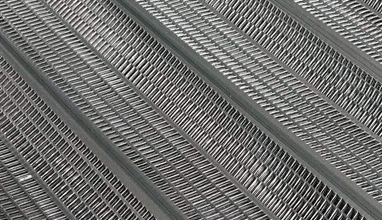
For plastering and rendering projects, specialized expanded metal lath should be selected according to the required construction specification.
Learn more about Expanded Metal Lath for Rendering.
Architectural Facades and Building Decoration
Architectural expanded metal mesh is used in exterior cladding, sun shading systems, decorative screens, and building envelope designs.
Flattened aluminum mesh and selected decorative patterns can create modern visual effects while allowing natural light and airflow.
Material, opening size, panel dimensions, surface finish, and installation structure should be considered together.
Read our guide to Expanded Metal Mesh Facades.
Industrial Flooring and Walkways
Raised expanded metal mesh is frequently considered for industrial flooring and walkway applications.
Its textured structure and open design can provide useful surface characteristics for industrial environments.
The correct product must be selected according to the expected loads, support spacing, safety requirements, and installation conditions.
Filtration and Ventilation
Small hole expanded metal mesh is suitable for selected screening, ventilation, protective grille, and filter-support applications.
Its opening dimensions and open area can be adjusted according to specific project requirements.
For filtration applications, the mesh opening must be evaluated against the required particle retention and filtration performance.
Security and Equipment Protection
Expanded metal mesh is also used for security fencing, machinery guards, equipment enclosures, and protective barriers.
The opening size, sheet thickness, strand width, and material should be selected according to the required protection level.
How to Choose the Right Expanded Metal Mesh Pattern
Selecting the correct expanded metal mesh pattern can improve product performance, installation efficiency, and overall project cost.
The following factors should be evaluated before placing an order.
Step 1: Identify the Application
First, determine how the expanded metal mesh will be used.
For example:
Industrial flooring: consider raised heavy-duty diamond mesh.
Architectural decoration: consider flattened or customized patterns.
Filtration and ventilation: evaluate small hole expanded metal mesh.
Security fencing: consider standard diamond patterns.
Plaster reinforcement: select specialized expanded metal lath.
Step 2: Determine the Opening Size
The opening dimensions directly affect the mesh appearance, open area, ventilation, and visibility.
Buyers should specify the required LWD and SWD dimensions wherever possible.
Step 3: Confirm Material and Thickness
Material selection should be based on the working environment, expected mechanical requirements, corrosion exposure, and budget.
The original sheet thickness and strand width should be confirmed before production.
Step 4: Select Raised or Flattened Surface
Raised expanded metal is suitable for applications requiring a textured surface.
Flattened expanded metal is generally preferred for projects requiring a smoother appearance.
Step 5: Confirm Surface Treatment
For outdoor or corrosive environments, appropriate galvanized, coated, or corrosion-resistant materials should be considered.
For architectural projects, powder coating and anodizing may also be relevant.
Step 6: Confirm Sheet Size and Quantity
Finally, confirm the required sheet length, width, quantity, and any cutting or fabrication requirements.
Providing accurate information at the quotation stage helps reduce specification misunderstandings and unnecessary production adjustments.
What Information Should You Provide When Requesting a Quote?
If you are purchasing expanded metal mesh for a construction, industrial, or architectural project, providing clear specifications will help suppliers evaluate your requirements more accurately.
We recommend preparing the following information:
| Required Information | Example |
|---|---|
| Product Type | Standard / Small Hole / Flattened / Raised |
| Material | Carbon Steel / Galvanized Steel / Aluminum / Stainless Steel |
| Opening Size | LWD × SWD |
| Strand Width | According to drawing |
| Sheet Thickness | According to project requirements |
| Sheet Size | 1220 × 2440 mm or customized |
| Surface Treatment | Galvanized / Powder Coated / Anodized |
| Quantity | Sheets or square meters |
| Application | Facade / Flooring / Fencing / Filtration |
| Destination | Country or delivery port |
If you have an existing technical drawing, product photograph, or physical sample, you can also provide it for specification review.
Frequently Asked Questions About Expanded Metal Mesh Patterns
1. What is the most common expanded metal mesh pattern?
The standard diamond pattern is one of the most widely used expanded metal mesh designs. It is suitable for construction, industrial protection, fencing, and general screening applications.
2. What is the difference between raised and flattened expanded metal?
Raised expanded metal retains its original three-dimensional structure after expansion, while flattened expanded metal is processed through rolling to create a smoother surface.
The choice depends on the required surface characteristics and application.
3. Can expanded metal mesh patterns be customized?
Yes. Customized specifications may include opening dimensions, strand width, sheet thickness, overall sheet size, and selected opening designs. Special patterns should be confirmed according to manufacturing feasibility.
4. Which expanded metal mesh pattern is suitable for building facades?
Flattened diamond patterns, small hole designs, and selected decorative patterns are commonly considered for architectural facades.
Material, panel dimensions, appearance, ventilation requirements, and installation structure should all be evaluated.
5. Which expanded metal mesh is suitable for industrial flooring?
Raised expanded metal mesh with appropriate strand dimensions and thickness is commonly used for industrial walkways, platforms, and stair treads.
The final specification must be checked against the required load and support conditions.
6. What materials are available for expanded metal mesh?
Common material options include carbon steel, galvanized steel, aluminum alloy, stainless steel 304, stainless steel 316, copper, and brass.
Availability depends on the product type and required specifications.
7. What information is needed to calculate an expanded metal mesh quotation?
The main information includes material, opening size, strand width, sheet thickness, sheet dimensions, surface treatment, order quantity, and destination.
Technical drawings or reference samples can help improve quotation accuracy.
8. Can expanded metal mesh be used for both indoor and outdoor applications?
Yes. Different materials and surface treatments can be selected for indoor and outdoor applications. The appropriate option depends on corrosion exposure, weather conditions, mechanical requirements, and maintenance expectations.
Conclusion: Find the Right Expanded Metal Mesh Pattern for Your Project
Choosing the right expanded metal mesh pattern requires understanding the relationship between opening geometry, surface structure, material, dimensions, and application requirements.
Standard diamond patterns are suitable for many general industrial and construction applications. Small hole expanded metal mesh is useful for finer screening and decorative requirements, while raised and flattened products offer different surface characteristics for flooring and architectural projects.
For specialized applications, customized opening dimensions, sheet sizes, materials, and surface treatments can be evaluated according to project drawings and technical requirements.
ANPING METAL MESH provides expanded metal mesh product options for construction, industrial, architectural, and decorative applications.
Whether you are an importer, wholesaler, distributor, fabricator, contractor, or project purchaser, providing your required specifications will help us identify a suitable product solution.
Request a Custom Expanded Metal Mesh Quote
Looking for a reliable expanded metal mesh supplier?
Send us your required material, opening dimensions, sheet thickness, product quantity, and application details.
Our team can help review your specifications and provide product information for your project.
Standard Patterns | Custom Specifications | Multiple Materials | Technical Support | Global Supply
Contact ANPING METAL MESH Today to Request a Quote.
Need help choosing a metal mesh?
Share your material, dimensions, intended use and required quantity. We can review the details for a quotation.